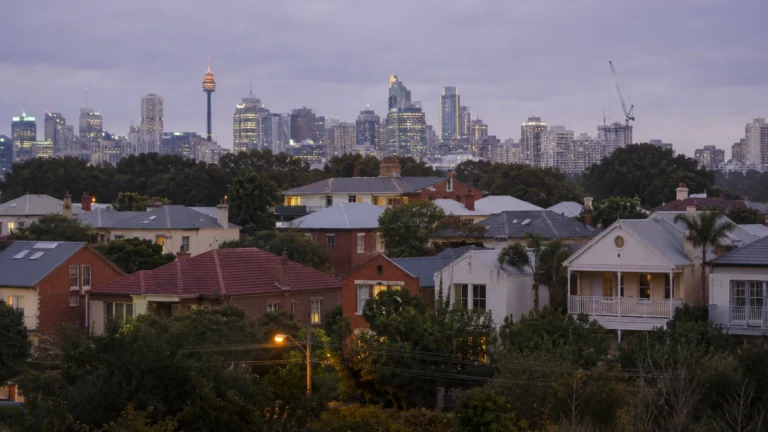
National home prices dropped 0.7% in July, the sharpest monthly fall in 20 months. What makes this different from earlier pullbacks is the breadth: Brisbane, Adelaide and Perth have all turned negative after months of gains, joining Sydney and Melbourne in retreat.
Three forces are lining up at once. Borrowing costs have climbed back to their last cyclical peak after three rate increases this year. The federal government’s negative gearing and capital gains tax changes are making property less attractive to investors. And rising fuel costs plus weak consumer confidence are keeping buyers on the sidelines.
Why this downturn is different
Australia’s housing market has delivered remarkably consistent gains since the mid-1990s. During that stretch, even the corrections were brief and shallow. Prices dipped seven times across two decades, but each time the market recovered within 12 to 18 months and pushed higher.
This time, the policy settings have shifted. Higher-for-longer interest rates and reduced tax advantages for investors are structural headwinds, not cyclical blips. If the housing shortage closes faster than expected, through accelerated building or demand cooling, the three-decade upswing could stall for good.
The counter-argument: chronic undersupply, cautious sellers and the boosted first-home buyer deposit scheme should all limit how far prices can fall. Forced selling remains rare, and unemployment is still low enough that most borrowers can hold on.
The forecast range
Base case is a 7% national decline from peak to trough. Sydney could fall 11%, with around half already recorded. The bottom is expected mid-2027, roughly when the Reserve Bank of Australia is forecast to start cutting rates.
Cheaper properties and units are holding up better. They didn’t run as hard during the boom, and first-home buyers using low-deposit schemes are keeping entry-level demand steady. Houses at the top end are softening faster.
If unemployment spikes and forces distressed selling, the downside widens. If the RBA cuts earlier than expected or migration accelerates, the fall could be shallower. Neither scenario looks probable right now.
What’s missing from the policy response
The federal government attributes the fall to interest rates and fuel costs, not tax changes. Treasury’s position is that price corrections are normal and not a reason to adjust policy.
That sidesteps the investor question. Negative gearing and capital gains tax changes took effect this year, and investor loan volumes have dropped sharply at major lenders. Brokers report clients pulling back from new purchases and holding existing stock longer.
The policy assumption is that reduced investor competition helps first-home buyers. The risk is that it also reduces rental supply and slows construction activity, since investors fund a large share of new builds.
Callout: Risks to watch
Unemployment is the circuit-breaker. If job losses climb, forced selling follows and prices fall faster. Watch monthly labour force data and mortgage arrears. A second risk: if the housing shortage closes faster than expected, either through supply surges or demand cooling, the structural tailwind disappears. Third: offshore investors pulling capital out of Australian property if returns turn negative.
Where prices go next
Expect continued softening into 2026. The downturn is still early, with most capital cities only a few months into declines. Sydney and Melbourne will likely lead the fall, but regional markets and smaller capitals are no longer insulated.
The timeframe matters for buyers and sellers. If you’re buying, don’t expect bargains in the next quarter, but patience could save 5-7% by late 2026. If you’re selling, list sooner rather than later unless you can hold through 2027.
Investors face a different calculus. Negative gearing changes and higher borrowing costs mean cashflow is tighter, and capital growth expectations are muted. Run the numbers on yield and serviceability before committing new capital.
What changes the trajectory
Three variables could shift the path. First, RBA rate cuts earlier than mid-2027 would lift buyer confidence and shorten the downturn. Second, a surge in migration or overseas investor demand could absorb supply and stabilise prices. Third, a sharp acceleration in construction approvals and completions could ease the shortage faster than expected.
None of those look imminent. Rate cuts depend on inflation falling consistently, and the RBA has signalled it will move slowly. Migration policy is under review but unlikely to shift dramatically in the next 12 months. Construction is still constrained by workforce shortages and planning delays.
The investor question
For three decades, Australian property has been a one-way bet. Buy, hold, borrow against equity, repeat. That playbook assumed rising prices, low interest rates and generous tax treatment.
Two of those three assumptions are now reversed. The question is whether the shortage alone can sustain price growth, or whether investors need the full policy tailwind to make the numbers work.
Historical parallels are thin. No comparable developed market has combined Australia’s immigration rate, land scarcity and tax settings. The closest analogue might be Canada, where policy tightening and higher rates have cooled prices sharply in Toronto and Vancouver.
What to do if you’re deciding now
If you’re buying, pressure-test your serviceability at current rates plus 1%. Assume no capital growth for three years. Can you hold the property on yield alone? If yes, the entry point matters less. If no, wait.
If you’re holding, review your mortgage buffers and consider whether refinancing to a lower rate frees up cashflow. Don’t assume prices bounce back quickly.
If you’re selling, price realistically and move fast. Auction clearance rates are falling, and buyers have more choice. The longer you wait, the more likely you are to compete with distressed sellers in 2026.
Subscribe to the Australian Property Review newsletter for weekly market signals and data that cuts through the noise.
General info, not financial advice.