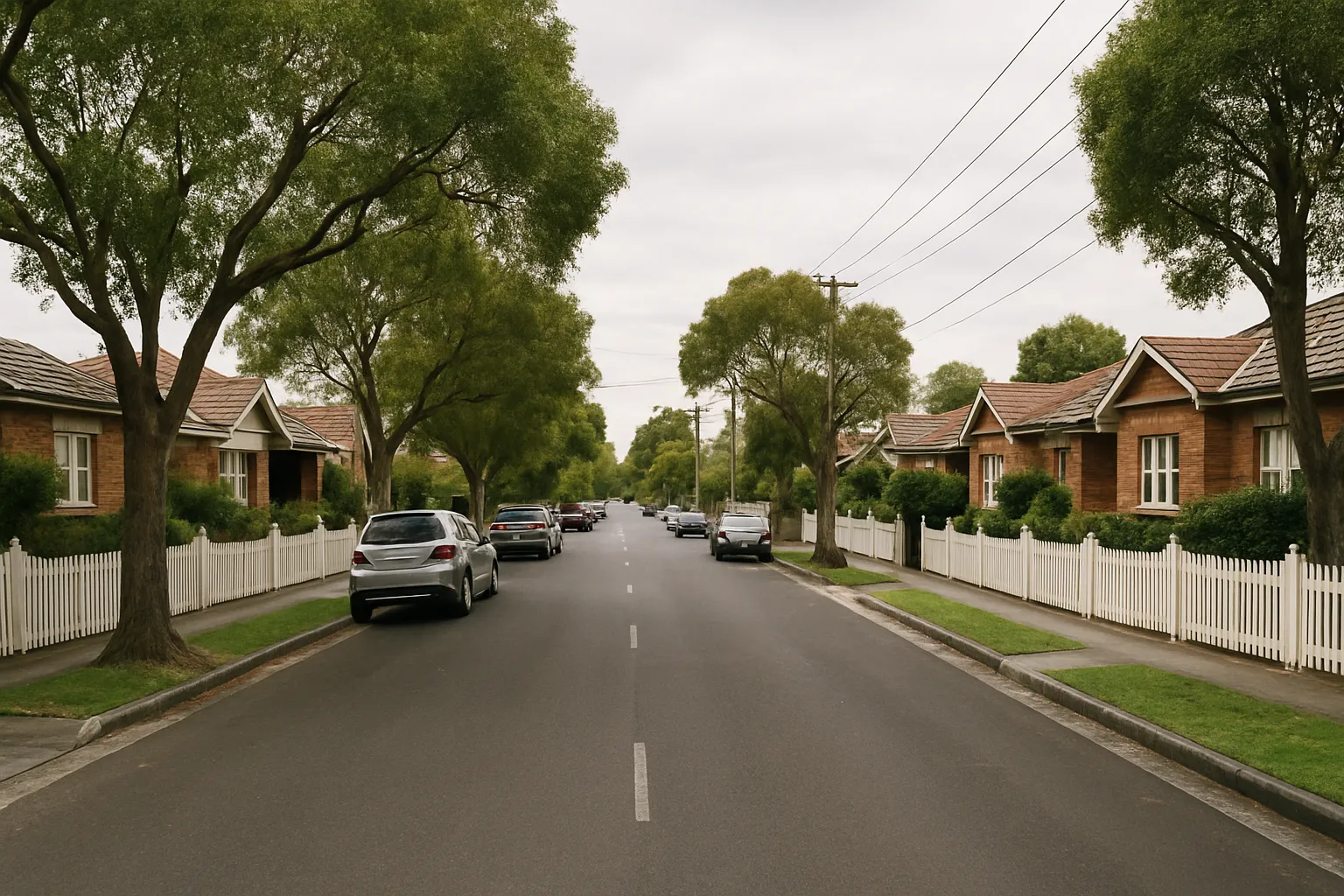
A three-bedroom Pascoe Vale South house that hosted two generations of Halloween parties and Christmas gatherings passed in at auction last weekend with a $1 million bid, well short of the $1.1 million to $1.15 million asking range. The owner cited rising interest rates and Victoria’s increased land tax as making the property unviable to hold as a rental.
The family bought the house in 1995, renovated and extended it for $11,500, then moved out in 2006 when their daughter needed more space. The owner’s father rented it until his death in 2023, after which a new tenant moved in. Despite the owner’s attachment to the property, the combined weight of servicing costs and the state’s 2024 land tax increase forced the decision to sell.
Four young couples expressed interest during the campaign, but financing delays and settlement contingencies kept bids below the reserve. One couple offered $1.02 million post-auction, still under the advertised range. The agent expects a deal within two weeks as the property remains listed for private sale.
The policy change that tipped the scales
Victoria’s 2024 land tax changes introduced higher rates for investment and secondary properties worth $50,000 or more. The policy was announced in May 2023 under the previous premier but passed into law under the current government later that year.
For properties held through decades of rate cycles, land tax is now a fixed annual cost that rises with valuations but doesn’t adjust when rents soften or vacancy increases. Interest rates were cited alongside land tax as a pressure point, but land tax is the non-negotiable line item, you can refinance a loan, but you can’t negotiate down a state tax bill.
The Pascoe Vale South case suggests the policy is reaching properties that weathered the 2022-2023 rate shock but couldn’t absorb the additional land tax impost on top of higher servicing costs.
Who else is exposed
The risk profile is clearest for investors holding single properties in middle-ring Melbourne suburbs where land values have appreciated faster than rents over the past decade. These owners typically have:
- One investment property, often the former family home
- Modest rental yields (3-4 per cent gross in many middle-ring locations)
- Limited offset or buffer to absorb multiple cost increases in quick succession
- Emotional attachment that delayed selling until the numbers forced the decision
Properties in Pascoe Vale South, Coburg, Preston, Reservoir, Heidelberg West, Broadmeadows and similar middle-ring suburbs with median house prices between $800,000 and $1.2 million sit in the zone where land tax becomes material but rental yields are too thin to carry it.
This is distinct from high-yield regional properties or prestige inner-city holdings where rents can absorb higher taxes, and from negative-gearing strategies where depreciation and capital growth expectations offset cashflow losses.
What could trigger a wave
Three scenarios would turn isolated forced sales into a measurable uplift in listings:
- Another land tax adjustment: If the state government lifts rates again or lowers the $50,000 threshold, the cohort of affected properties expands immediately
- Rental market softening: Middle-ring vacancy rates are already rising; if rents flatten or fall while costs stay fixed, more investors hit the same breaking point
- Banks tightening serviceability: If lenders reassess cashflow on investment loans and require principal repayments or higher buffers, borderline-viable properties become unviable overnight
The base case is that forced sales remain scattered rather than systematic, because most investors who’ve held through multiple cycles have enough equity or offset to weather the land tax increase. But the margin for error is now thinner.
Second-order effects
If land tax pressure pushes a meaningful number of middle-ring investment properties onto the market over the next 12 months, the immediate beneficiaries are first-home buyers and upgraders who face less competition from investors at auction.
The risk is that reduced investor buying also reduces the pool of rental stock available when tenants turn over, which would push rents higher in the same middle-ring suburbs where investors are exiting. That dynamic is already visible in parts of regional Victoria where investor selling has outpaced new rental supply.
For policymakers, the trade-off is between discouraging investors (which improves housing affordability for buyers in the short term) and maintaining rental supply (which keeps rents stable for tenants). The Pascoe Vale South case shows the policy is working as intended to pressure marginal investment holdings, but the question is whether the rental market can absorb the supply contraction.
Callout: What this costs in real terms
A $1.1 million property in Pascoe Vale South would face annual land tax of approximately $3,000 to $4,500 under the 2024 rates, depending on the land component of the valuation. Add $12,000 to $15,000 in interest costs at current variable rates, $1,500 to $2,000 in council rates, $800 to $1,200 in insurance, and $1,000 to $2,000 in maintenance and agent fees. Total annual holding cost: roughly $18,300 to $24,700. Rent at $550 per week delivers $28,600 gross, leaving $3,900 to $10,300 net cashflow before tax, but only if the property stays tenanted and no major repairs hit. One vacancy period or unexpected capital expense wipes out the margin entirely.
What to watch over the next quarter
Track the volume of owner-occupier versus investor sales in middle-ring Melbourne suburbs with median prices between $800,000 and $1.2 million. If investor selling lifts materially above the five-year average, the land tax effect is spreading beyond isolated cases.
Watch rental vacancy rates in the same suburbs. If vacancy rises while investor selling increases, the rental supply contraction thesis breaks down and the policy is simply moving properties from investor to owner-occupier hands without tightening the rental market.
Monitor state government commentary on land tax settings. If revenue from the policy exceeds projections or political pressure builds around rental supply, adjustments could follow within 12 to 18 months.
The practical decision for investors holding similar properties
If you’re holding one investment property in middle-ring Melbourne with cashflow this tight, run the numbers assuming land tax stays at current levels, interest rates stay flat or rise 25 basis points, and rent grows 2 to 3 per cent annually. If the net position is negative or break-even with no buffer for vacancy or repairs, the property is now a capital growth bet rather than a cashflow hold.
If you believe middle-ring Melbourne will deliver 5 per cent-plus annual growth over the next five years, the land tax cost is the price of staying in. If you think growth will be flat to 3 per cent, selling now and redeploying the equity into higher-yield regional property or paying down debt on your principal residence is the lower-risk move.
The Pascoe Vale South case shows the decision point arrives when multiple cost pressures hit at once. Waiting for market conditions to improve only works if costs don’t keep rising in the meantime.
Subscribe to the newsletter for weekly analysis on policy changes, market shifts and what they mean for your next decision.
General info, not financial advice.