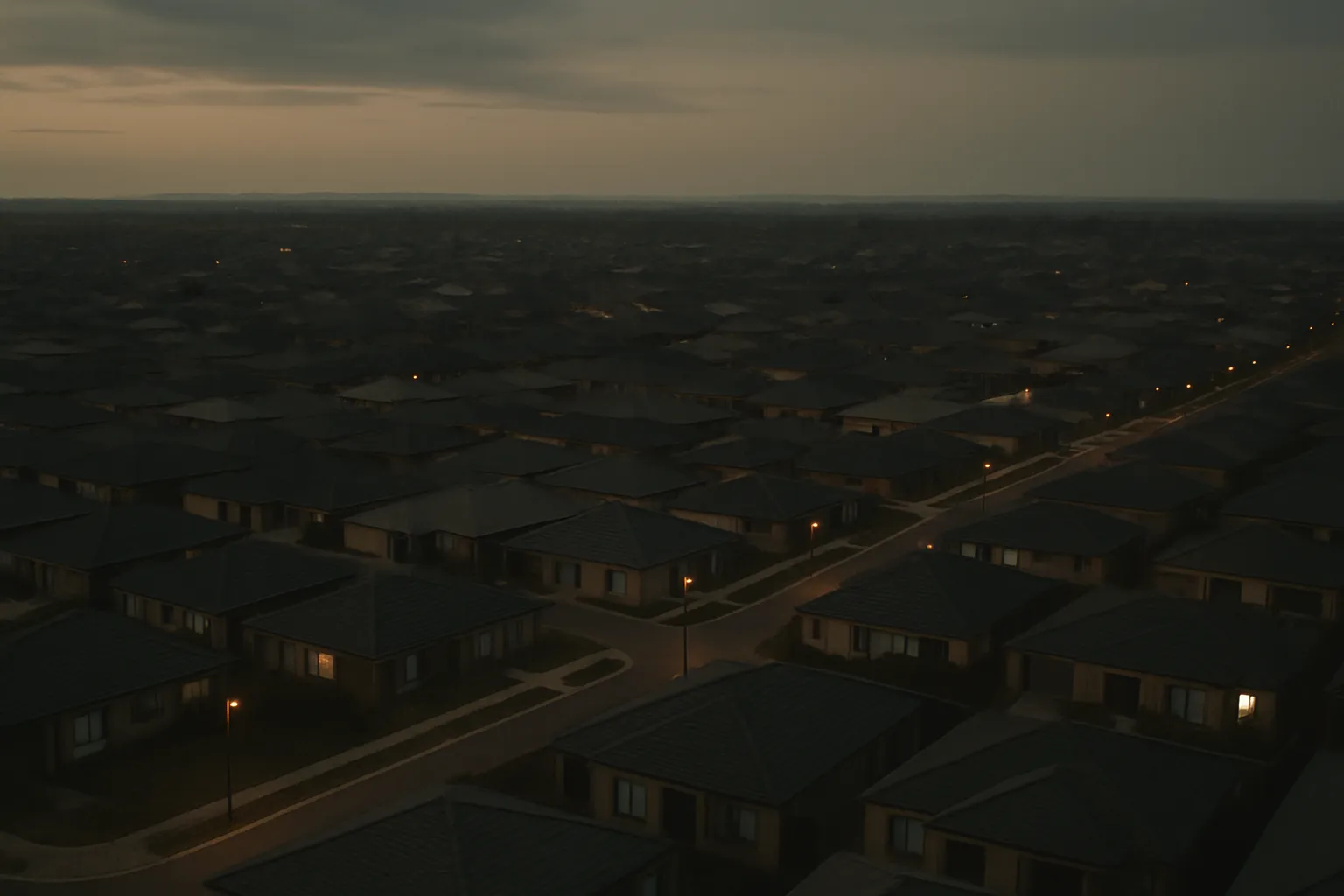
Default risk across Australian mortgages rose 18 per cent in the three months to July 2026, the steepest quarterly increase since tracking began in 2001. That figure, drawn from household cashflow surveys covering roughly 52,000 borrowers, marks a shift from stress (missing one payment) to structural inability to service debt over multiple quarters.
Three rate hikes between February and May added pressure, but the jump reflects a longer grind: households who stretched to buy in 2020–21 have now burned through savings buffers and reached the point where monthly outgoings exceed income. Lenders have responded with hardship variations, interest-only switches and internal refinances to avoid crystallising defaults on their books. That intervention is keeping formal arrears figures lower than underlying stress would suggest, but it also means the cohort at risk is larger and more leveraged than headline delinquency data implies.
Which segments are cracking first
Outer-suburban postcodes in Melbourne, Brisbane and Sydney dominate the top-risk rankings. Victoria recorded 611,000 households in stress by July, up from 537,000 in January. NSW saw a 25 per cent jump in default risk over the same window. Queensland added 9,500 households to negative cashflow in one quarter, the second-largest state increase.
The common thread: high loan-to-income ratios among recent buyers in growth corridors where price appreciation stalled or reversed after 2021. In parts of outer Brisbane, mortgage repayments consume 40–45 per cent of household income. In Melbourne’s fringe suburbs, buyers who purchased near the 2021 peak now face flat or negative equity, meaning a forced sale delivers a loss after transaction costs.
South Australia’s Morphett Vale recorded a 39 per cent quarterly increase in default risk, the highest suburb-level jump nationally. Western Australia, despite a smaller total volume of stressed borrowers, saw the largest net addition of households entering negative cashflow.
Why lenders are working around the numbers
Banks have strong incentives to avoid registering defaults: a crystallised loss triggers provisioning, capital allocation and public disclosure. Internal hardship programs, temporary interest-only periods, extended loan terms, capitalised arrears, let borrowers stay current on paper while deferring the question of whether the loan is ultimately viable.
That strategy works when stress is cyclical and incomes recover. It becomes a problem when stress is structural: wage growth insufficient to close the gap, no near-term rate relief, and property values static or falling in the postcodes where leverage is highest. The risk is a delayed, larger wave of forced sales once forbearance options exhaust.
The numbers that matter
- Default risk climbed 18% nationally in Q2 2026, the steepest quarterly rise since tracking began in 2001
- Victoria now has 611,000 households in mortgage stress, up from 537,000 in January
- Queensland added 9,500 households to negative cashflow in three months, the second-largest state increase
- NSW saw default risk jump 25% in the same period
- Outer-suburban postcodes in Melbourne, Brisbane and Sydney hold the highest concentrations of at-risk borrowers
- In high-growth corridors, mortgage repayments consume 40–45% of household income in some areas
The leverage-timing trap
Borrowers who purchased in 2020–21 face a specific squeeze: they entered at peak prices with historically low rates, then absorbed three years of rate hikes without corresponding income growth or capital gains. Serviceability buffers, assessed at purchase using a 3 per cent add-on to the loan rate, assumed rates would eventually fall or incomes would rise faster than debt servicing costs. Neither occurred.
For investment borrowers in this cohort, negative gearing still offsets some holding costs, but only if rental yield and capital growth expectations justify the cashflow drag. In suburbs where rents are rising but prices are flat, the tax benefit doesn’t compensate for eroding equity.
First-home buyers and upgraders who moved from apartments to houses in outer rings during the pandemic now face a three-part problem: higher absolute debt, higher rates, and properties that haven’t appreciated. A forced sale in that scenario crystallises a loss and potentially leaves residual debt after the property is sold.
What could shift the trajectory
Base case: rates hold through year-end, defaults remain suppressed by lender forbearance, but the volume of loans on hardship arrangements continues to climb. That delays the problem without solving it.
Upside scenario: wage growth accelerates above 4 per cent annually, inflation falls faster than expected, and the RBA cuts by Q1 2027. Borrowers in negative cashflow regain margin, and property values in outer suburbs stabilise. Risk recedes over 12–18 months.
Downside scenario: unemployment rises above 4.5 per cent, a second-income loss tips dual-income households into arrears, and lenders exhaust forbearance options. Forced sales cluster in the same outer-suburban postcodes, pushing local prices down further and triggering a feedback loop. Default volumes double from current levels by mid-2027.
Constraints the data doesn’t show
Official arrears figures, currently around 1.5 per cent for major banks, capture loans that are 90+ days overdue. They don’t capture households on hardship variations, interest-only extensions, or those draining offsets and redraw to stay current. The cashflow-stress figure (611,000 in Victoria alone) is roughly ten times the formal arrears count, indicating a wide gap between underlying distress and what shows up in bank disclosures.
That gap matters for two reasons. First, it means the aggregate risk is larger than headline NPL ratios suggest. Second, it means any shock, job loss, rate hike, major expense, can tip a household from managed stress to crystallised default faster than historical models predict.
One clear step
If you’re carrying a mortgage and your monthly expenses now exceed income, request a formal cashflow review with your lender before you miss a payment. Hardship variations, interest-only periods, extended terms, are easier to negotiate when you’re still current. Waiting until you’re in arrears narrows your options and accelerates the path to default.
For investors holding negatively geared properties in outer-suburban growth corridors, pressure-test the next 12 months assuming no rate cuts and no capital growth. If the cashflow gap is widening and you’re drawing down reserves to cover it, model what happens when those reserves run out. The exit may be voluntary now; it won’t be if you’re forced to sell at the bottom of a localised correction.
Subscribe to the newsletter for monthly default-risk updates and borrower-stress breakdowns by postcode.
General info, not financial advice.