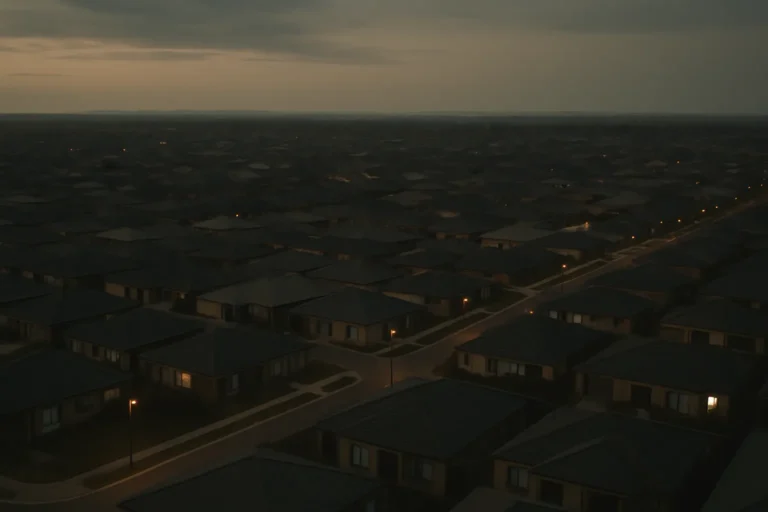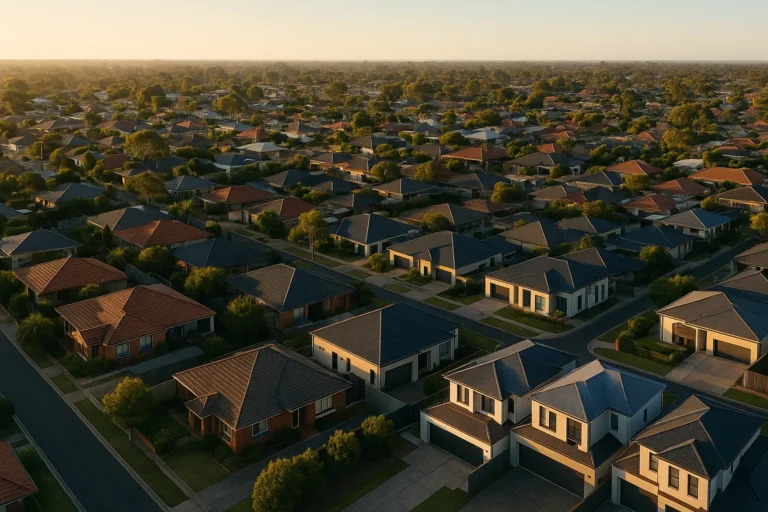
Federal budget tax changes are pulling investor capital out of outer suburbs at a faster rate than inner-ring markets, new transaction data shows. The gap suggests the policy isn’t just dampening overall investor appetite, it’s redirecting where that capital lands.
Outer-ring areas that relied on high-volume, low-margin investor activity are recording the steepest declines in loan applications and settlement volumes. Inner suburbs closer to employment hubs and premium amenity are seeing smaller drops, and in some pockets, no decline at all.
Why outer suburbs are losing investors faster
The tax changes increased holding costs for negatively geared properties and reduced depreciation deductions on newer builds. Both hit harder in outer suburbs where:
- Purchase prices are lower, so absolute tax benefits were already smaller
- Rental yields sit around 4–5%, meaning negative gearing was doing more of the heavy lifting
- Depreciation schedules on newer estates contributed a larger share of post-tax returns
- Capital growth assumptions were the main reason to accept negative cashflow
When those assumptions weaken, either from softer price forecasts or higher holding costs, the math stops working. Investors who were already stretching serviceability in outer markets are the first to pull back.
Inner-ring investors, by contrast, typically bought with larger deposits, lower LVRs, and rental income closer to covering interest. The tax changes still reduce their after-tax return, but not below the threshold where the deal no longer makes sense.
The catch
This isn’t a temporary dip, it’s a reallocation. Capital that used to flow into greenfield estates and outer growth corridors is now chasing yield or land-constrained inner suburbs where supply can’t respond quickly. That creates two diverging markets: outer areas where investor retreat puts downward pressure on prices, and inner pockets where reduced competition among buyers may not materialise because investor demand is holding.
Who this hits next
Developers in outer growth zones face a double squeeze: fewer pre-sales from investors, and banks tightening presale requirements in response to weaker investor appetite. Projects that were marginal before the budget changes are now being shelved or redesigned for owner-occupiers, which means fewer dwellings entering the supply pipeline in 12–18 months.
Renters in outer suburbs may see less new supply, but also less upward rent pressure if prices soften and fewer investors are competing for stock. The net effect depends on how quickly owner-occupier demand fills the gap left by investors.
First-home buyers in outer markets get a short-term window: less investor competition, softer asking prices, but also uncertainty about whether prices will stabilise or keep falling. Timing the bottom is harder when the policy driver is structural, not cyclical.
Trade-offs the policy creates
The budget changes were designed to reduce tax concessions that favour investors over owner-occupiers. The outer-suburb data suggests the policy is working as intended, investor activity is falling fastest where it was most tax-driven.
But the trade-off is supply. Outer suburbs are where most new housing gets built, and that supply depends on investor pre-sales to get projects off the ground. Fewer investors means fewer projects, which over time means less total housing, not just a shift in who owns it.
The policy also assumes owner-occupiers will step in to replace investor demand. That’s happening in some inner markets where affordability hasn’t locked out buyers entirely. In outer suburbs where prices were already at the edge of first-home-buyer serviceability, the gap between what investors were willing to pay and what owner-occupiers can afford is wider.
Scenarios over the next 12 months
Base case: Investor activity in outer suburbs stays 20–30% below pre-budget levels, prices soften 5–8% in growth corridors heavily reliant on investor demand, and developers pause or cancel projects where presales don’t stack up. Inner suburbs see smaller investor pullback (10–15%) and prices hold steadier, supported by constrained supply and owner-occupier demand.
Upside for outer buyers: If the RBA cuts rates earlier than expected and serviceability improves, owner-occupiers move into outer markets faster, stabilising prices by mid-2027 and preventing a deeper correction.
Downside: If banks tighten lending further in response to falling outer-suburb prices, both investor and owner-occupier demand drops, creating a feedback loop where developers pull back harder, reducing jobs and local confidence, and prices fall 10–15% in the most exposed growth zones.
What to watch in the next six months
- Presale rates on new outer-suburb developments, if they’re sitting below 40%, expect project delays or cancellations
- Loan application data broken down by geography, if the gap between inner and outer investor demand keeps widening, the two-speed market becomes structural
- Rental vacancy rates in outer suburbs, rising vacancies signal investor retreat is outpacing tenant demand, which puts downward pressure on rents and makes the investment case weaker still
- Developer announcements, any wave of project deferrals or site sales in growth corridors confirms the supply pipeline is shrinking
For a deeper look at how falling investor loan applications are playing out across the broader market, read Investor loan applications down 28%, but the floor is already in.
If you’re deciding now
If you’re an investor still holding outer-suburb property, pressure-test your serviceability assumptions against a scenario where rents stay flat and prices don’t recover for 18–24 months. If the numbers only work with capital growth, consider whether you’re holding for the right reasons.
If you’re a first-home buyer looking in outer markets, the next six months may offer better buying conditions than we’ve seen in years, but only if you’re confident in local jobs, infrastructure timelines, and your own ability to hold through a longer, flatter market. Don’t assume prices have bottomed just because investor competition has eased.
If you’re comparing inner versus outer markets as a buyer, run the numbers on both. Outer suburbs may look cheaper on price, but inner markets with stronger fundamentals and less policy-driven risk may cost you less over a five-year hold once capital growth and holding costs are factored in.
Subscribe to the newsletter for monthly breakdowns of where investor capital is actually flowing.
General info, not financial advice.