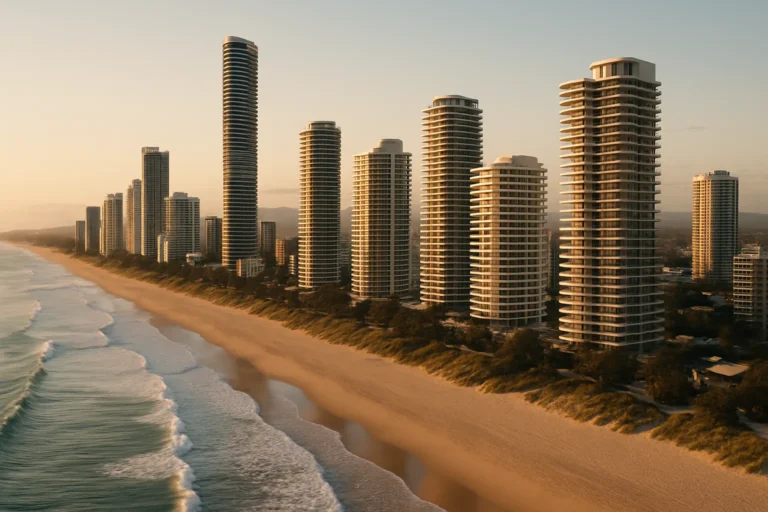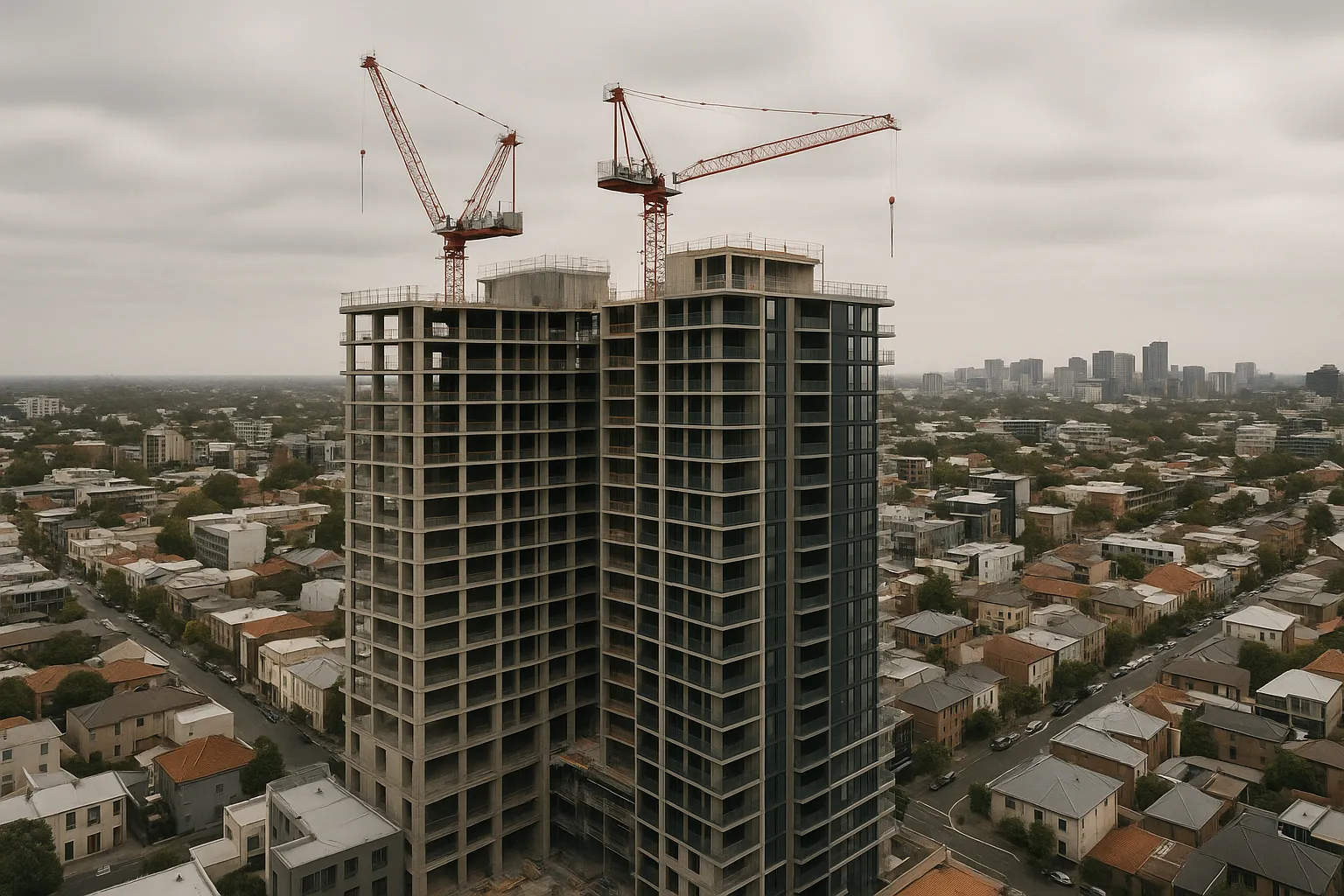
A major Australian developer has posted a loss driven by asset writedowns, with luxury apartment projects bearing the brunt. The result offers a window into demand conditions at the top end of the market, and what happens when feasibility models no longer stack up.
The loss centres on premium residential developments where pre-sales have slowed and margin assumptions proved too optimistic. For developers operating at scale, that combination forces a choice: delay launches, rework the product mix, or shelve projects entirely.
What’s different at the premium end
Luxury apartment demand moves faster than the broader market because the buyer pool is smaller and more discretionary. When offshore buyers pull back, interest rates stay elevated, or equity markets wobble, the top quartile of the price distribution feels it first.
Pre-sales, the deposits that de-risk a project before construction starts, have softened across inner-city markets over the past twelve months. Developers typically need 60-70% pre-sold before they can secure construction finance. Miss that threshold and the project sits.
The writedowns reflect that reality: apartments approved and marketed eighteen months ago no longer meet today’s feasibility benchmarks. The gap between land cost, construction cost, and what buyers will pay has narrowed to the point where proceeding destroys value.
The supply impact
Fewer luxury projects doesn’t mean less housing supply in aggregate, it means less supply in the specific locations and formats where these developments were planned. Inner-city, high-rise, amenity-rich stock that typically absorbs downsizers, offshore buyers, and investors seeking premium yields.
The housing construction slowdown has already reduced the pipeline of mid-market apartments. Now the premium tier is contracting as well. Combined, that leaves inner-city vacancy rates structurally tighter over the next 18-24 months, even if headline demand softens.
Developers facing margin pressure have three levers: cut costs (limited when construction input prices remain elevated), raise prices (difficult when pre-sales are already slow), or pause projects and wait for conditions to improve. The third option is the path of least damage, which is why approvals and commencements have diverged.
Key numbers
- Pre-sale thresholds for construction finance typically sit at 60-70% of units sold
- Luxury apartment settlements have fallen approximately 15-20% year-on-year in Sydney and Melbourne
- Developer margins on premium projects have compressed from historical averages of 18-22% to single digits in some cases
- Inner-city apartment commencements are running 30% below the five-year average
Who this hits next
The immediate impact lands on construction businesses and trades already navigating a thinner pipeline. Fewer luxury starts means fewer high-margin jobs, which flows through to subcontractor cashflow and employment.
For buyers in the market now, the calculus shifts. Fewer new projects launching means less choice at the premium end, but also removes some of the competitive pressure on pricing for existing stock. Developers with completed or near-complete inventory face a smaller cohort of new rival listings.
Investors holding inner-city apartments see two offsetting forces: weaker capital growth prospects as buyer appetite cools, but tighter supply supporting rental yields. The housing supply shortage hasn’t been solved by falling construction activity, it’s been deferred.
What could change the trajectory
Three variables would shift feasibility models back toward viability: construction cost deflation (unlikely while labour remains tight), a meaningful fall in interest rates (possible but not imminent based on current RBA guidance), or a recovery in offshore buyer appetite (dependent on currency, visa settings, and capital controls in source markets).
None of those look probable in the next six months. That suggests the slowdown in luxury apartment launches extends through the second half of 2026 and into early 2027.
The risk scenario: if broader apartment demand weakens while supply remains constrained, vacancy rates stay low but price growth stalls. Developers then face an extended period where new projects can’t clear feasibility hurdles, locking in a supply deficit that takes years to unwind once conditions improve.
The practical question
If you’re watching the premium apartment market, as a buyer, investor, or someone tracking supply dynamics, the signal here is clear: expect fewer new launches, longer project timelines, and a bifurcated market where existing stock in prime locations holds value better than new developments trying to establish a price point.
For developers, the playbook is wait-and-see. For buyers, it’s a market where patience and selectivity matter more than urgency. The next wave of luxury supply won’t arrive until feasibility models work again, and that’s a function of variables largely outside any single participant’s control.
Stay across the shifts that matter: subscribe to the Australian Property Review newsletter.
General info, not financial advice.