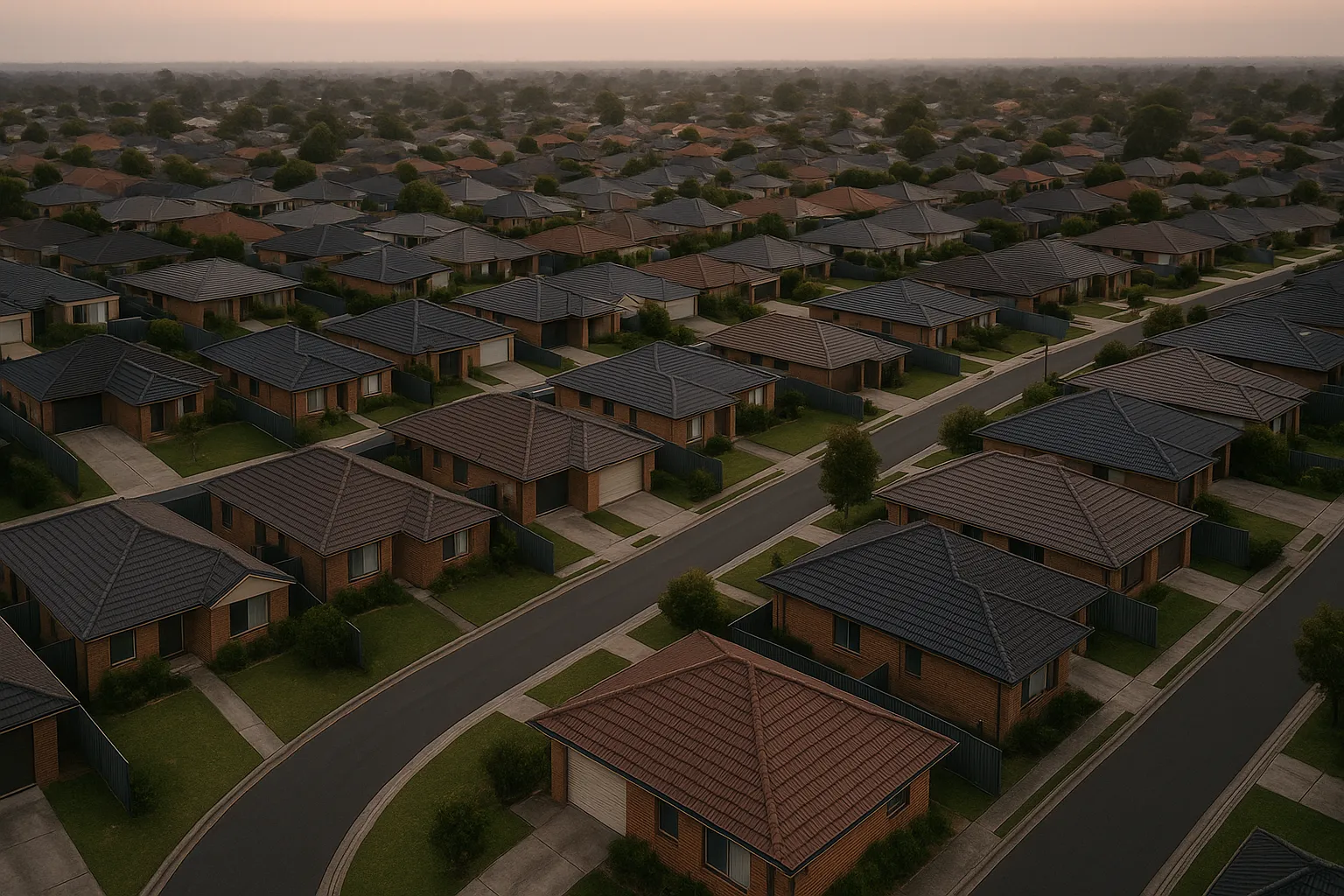
The Australian housing market has flipped into a clear buyers market, 93% of capital city suburbs recorded price falls over winter, national listings are 24% higher than a year ago, and auction clearance rates have sat below 50% for weeks. Vendors are discounting more, homes are sitting longer, and the National Home Value Index has dropped 3.6% since March.
But here’s the problem: the same conditions creating leverage for buyers are also destroying their ability to use it. Borrowing capacity has been slashed by rate rises, real wages are still falling in purchasing-power terms, and the May federal budget changes to property taxation are shifting investor focus toward yield over capital growth. The window is open, but fewer people can fit through it.
The imbalance driving price pressure
Supply is sitting on the market longer because absorption has slowed. New listings are actually lower than last year, but total advertised stock is 8% above the five-year average, homes aren’t selling fast enough to clear inventory.
Transaction volumes tell the same story. Quarterly home sales are down 15.5% year-on-year and 11.5% below the five-year average. Sydney, Brisbane and Perth each recorded sales declines exceeding 20%.
Longer selling times, bigger vendor discounts and weak clearance rates all point to buyers holding negotiating power. The question is whether they can finance a purchase at all.
Serviceability is the binding constraint
Borrowing capacity has been cut by cumulative rate rises and tighter loan serviceability buffers. Even if a property is cheaper than it was in March, monthly repayments on a new loan are higher than they would have been at the peak.
Real wages are still falling after inflation, consumer sentiment is weak, and economists are pricing in a risk of another rate rise in September or November if inflation stays sticky. That combination keeps first-time and upgrading buyers on the sidelines, and it limits how much existing investors can borrow to add to their portfolios.
The May budget’s property tax changes have also shifted the math. Investors are now placing heavier emphasis on cashflow and rental income rather than banking on capital growth to carry negative gearing losses. That narrows the pool of properties that pencil out under current settings.
Where the opportunity sits
Sydney is leading the correction, dwelling values are down 7.1% from the February peak, a faster pace than the 2022-23 downturn over the same timeframe. Melbourne and Canberra both fell 1.1% in August, Brisbane dropped 1.0%, and previously hot markets Adelaide and Perth each declined 0.8%.
For investors with existing equity and serviceability headroom, this is the window: premium markets at a material discount, with vendor motivation rising as stock piles up.
But it’s a narrow window. The investor cohort that can act on this are those with low loan-to-value ratios, stable income, and cashflow buffers, not the highly geared buyers who drove the boom.
The catch
Rental yields are rising as prices fall and rents climb, but they’re nowhere near covering holding costs while rates stay elevated. National gross rental yields hit 3.79% in August, the highest since September 2019, but even with rents up $200 per week over five years, the gap between rental income and interest expense is still wide for most leveraged investors.
Yield picture improving but still tight
Rents rose 0.4% in August and are up 5.7% year-on-year, adding $38 per week compared to last year. Over five years, rents have surged 39%, or around $200 per week.
The national vacancy rate edged up to 1.9%, the highest since January 2025 but still tight by historical standards. Vacancy has mostly held below 2% nationally since early 2022, keeping upward pressure on rents even as demand for purchases softens.
Rising rents and falling prices are pushing yields higher, but the improvement is gradual. Yields would need to climb substantially from current levels before rental income alone offsets the cost of debt at today’s interest rates.
Investors chasing yield will find better opportunities than they did six months ago, but cashflow-positive purchases remain rare outside regional or lower-priced segments.
Spring outlook and downside risks
Demand-side headwinds are becoming entrenched heading into spring. Weak consumer sentiment, declining real wages and stabilising population growth all point to subdued buyer activity continuing through the traditionally busier months.
If the RBA raises rates again, economists see risk in September or November if inflation doesn’t moderate, serviceability will tighten further and price pressure will intensify.
Spring normally brings a seasonal lift in new listings, but the flow is unlikely to be as strong as usual this year. Even so, the existing imbalance between supply and demand suggests prices have further to fall unless buyer confidence rebounds sharply.
Practical next step
If you’re holding equity and can service a loan comfortably, run the numbers on Sydney, Melbourne or Brisbane properties that have been sitting for 60+ days. Focus on gross yields above 4% and suburbs where vacancy is stable or falling, those are the markets where rental income will carry more weight if capital growth stays flat.
If you’re stretched on serviceability or relying on capital growth to make the investment work, this isn’t your window. Wait for either a definitive rate-cut cycle or a sharper yield improvement before committing.
For more on how falling prices interact with credit availability, see Property market downturn hits 93% of Australian suburbs.
Subscribe to the weekly newsletter for the next signal on where prices and yields are heading.
General info, not financial advice.