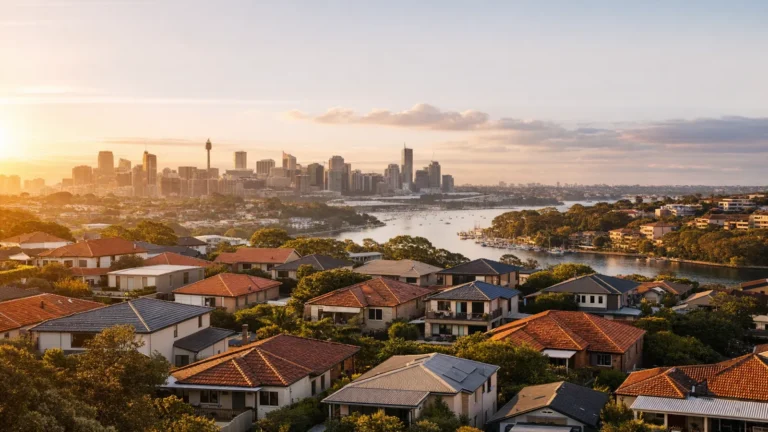
A typical-income household in Australia could afford to buy just 12% of homes sold in the 2026 financial year, the lowest share on record and worse than the previous floor of 14% hit during the global financial crisis in 2008. For low-income earners at the 30th percentile (around $76,000 annually), the share dropped to 2%, effectively locking them out of ownership entirely.
The driver isn’t price growth this time. Dwelling values softened through the back half of FY26 in several capitals, and wage growth continued at a steady clip. What changed was borrowing capacity: the Reserve Bank’s three consecutive rate hikes in February, March and May reduced how much households could borrow by enough to more than offset any relief from falling prices or rising incomes. The result is a structural deterioration in access, not just a valuation problem.
Serviceability trumps price in the affordability equation
When borrowing costs rise, the same deposit and income service a smaller loan. Even if a property’s sticker price drops 5%, a household’s maximum affordable purchase can fall 10% or more if rates climb half a percentage point. That mechanical relationship has rewritten the affordability map over the past year.
Median home values nationally still grew faster than wages over FY26, but the price-to-income ratio alone misses the squeeze. A household earning $125,000 could afford 43% of homes sold in FY21 when the cash rate sat at 0.1%. Five years later, at a cash rate of 4.85%, that same household could afford 12%, a two-thirds collapse in access driven almost entirely by the cost of debt, not the cost of the asset.
For higher-income households (top 20% of earners), affordability also hit a record low. These buyers now face the same constrained choice set that median-income households had in 1997, underscoring that the problem has climbed the income ladder. Homes at the premium end appreciated less than entry-level stock over the year, but rate rises compressed borrowing power across all income bands.
South Australia overtakes NSW as least affordable state
South Australia recorded the sharpest affordability deterioration of any state over the past six years and now ranks as the least affordable in the country, displacing New South Wales for the first time. Adelaide’s median home value of $940,000 combines with the state’s typically lower incomes to leave median-earning households able to afford just 7% of sales.
New South Wales dropped to second-least affordable, with softening prices in Sydney slowing the decline relative to other states. Victoria is now the most affordable state nationally, overtaking Western Australia, where rapid price growth in recent years eroded access faster than wage gains could keep pace.
Queensland and Tasmania sit slightly better than the national average, but affordability worsened in every state over FY26 without exception. The variation reflects local price trajectories and income distributions, not any state avoiding the borrowing-cost shock.
The catch
- A median-income household ($125,000/year) could afford 43% of homes in FY21 vs 12% now
- Low-income earners ($76,000/year) locked out: just 2% of sales within reach
- South Australia now least affordable state; Adelaide median $940,000
- Three RBA rate hikes (Feb, Mar, May) reduced borrowing capacity faster than prices fell
- Every state recorded worsening affordability in FY26
The supply-demand mismatch persists beneath the rate story
Even if the RBA cuts rates by 50 basis points over the next year, restoring some borrowing capacity, affordability would remain historically stretched because the underlying supply shortage hasn’t been addressed. High-income households now compete for the same share of stock that median earners accessed a generation ago, a sign that new supply has not kept pace with household formation or wealth accumulation at the top.
The structural fix requires lifting dwelling completions well above long-run averages for multiple years, alongside planning reforms that reduce the time and cost of adding density in established areas. Rate settings control access via the credit channel, but they don’t create homes. Without a material lift in supply, any easing in borrowing costs will translate quickly back into price growth, leaving affordability no better off in real terms.
Policy attention has focused on first-home-buyer grants and deposit schemes, which increase demand without addressing supply and risk inflating prices further. The more effective lever is removing planning bottlenecks, releasing well-located land, and funding infrastructure that makes higher-density development viable in middle-ring suburbs. Australian Rental Prices Hit Record as Supply Breaks covers the rental side of the same supply constraint, where vacancy rates remain near record lows and asking rents continue to outpace wages.
Who this affects and how decisions shift
First-time buyers who saved a deposit over the past two years now find their borrowing power has shrunk, even if the property they were targeting has dropped in nominal price. The effective price, what they can actually bid, has fallen faster than the asking price in many cases, leaving them further from ownership than when they started saving.
Investors face a different trade-off: yields have improved as rents outpaced prices in some markets, but higher debt costs mean cash flow remains tight unless the property was purchased with significant equity. Property Investing in Australia: The First Deal Trap outlines the common error of underestimating holding costs when borrowing capacity is constrained.
Existing owners with variable-rate debt have absorbed the full rate increase, with monthly repayments up 30-40% since early 2025 for many borrowers. Refinancing to a lower fixed rate isn’t an option when the entire market has repriced higher. The cashflow impact is immediate and ongoing until rates fall or incomes catch up.
What could shift the trajectory in the next 12 months
The base case is that affordability stays near record lows unless rates fall materially or a supply surge arrives (neither is likely in the short term). Inflation needs to settle durably in the RBA’s target band before cuts begin, and construction pipelines remain constrained by labour shortages, material costs, and planning approvals that still take 18-24 months in most jurisdictions.
Upside scenario: inflation cools faster than expected, the RBA cuts 75-100 basis points by mid-2027, and borrowing capacity recovers 10-15%. Prices would likely rise in response, but the net effect could improve access modestly for median-income households. High-income buyers would see the most benefit, as they can leverage equity from existing holdings.
Downside scenario: inflation proves stickier, rates stay elevated through 2027, and price softening accelerates in overleveraged markets (parts of regional Queensland, outer suburbs in capital cities with high investor concentration). Access worsens further for first-time buyers, and distressed sales begin to appear among borrowers who refinanced at low rates in 2021-22 and now face serviceability tests they can’t meet.
The timeline for any structural improvement, higher supply, lower price-to-income ratios, restored access for low- and median-income households, runs in years, not quarters. Until completions exceed 200,000 dwellings annually on a sustained basis (well above the current ~170,000), affordability will remain a binding constraint on household formation and a driver of intergenerational wealth divergence.
If you’re deciding whether to buy now
Run the numbers on three scenarios: rates stay here for 18 months, rates fall 50 basis points within 12 months, rates rise another 25 basis points if inflation doesn’t cooperate. Stress-test your repayments at 7.5% (the serviceability buffer most lenders apply) to see if you can hold the property through a downturn or an income shock.
If borrowing near your maximum, consider whether you’re buying access to housing or betting on capital growth. The former is a consumption decision with known costs; the latter is a leveraged position in an asset class where affordability is at record lows and supply constraints remain unresolved. Why One Canberra House Sold $300,000 Over Guide Just Before the Rate Hike shows how sentiment can drive individual transactions well above fundamentals when buyers fear missing out, even at the start of a rate-hike cycle.
For those locked out by borrowing limits, renting and investing the deposit elsewhere avoids leverage risk and keeps capital liquid. The cultural framing of ownership as the only path to wealth accumulation doesn’t hold when debt costs are high and price growth is uncertain. Subscribe to the newsletter for the weekly data that tracks when conditions shift.
General info, not financial advice.