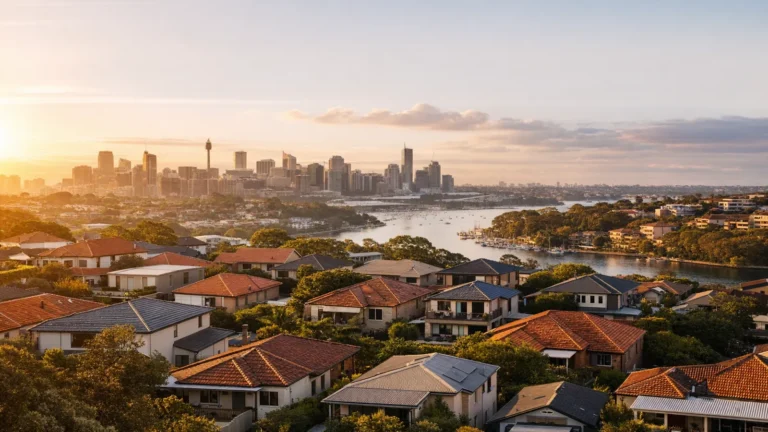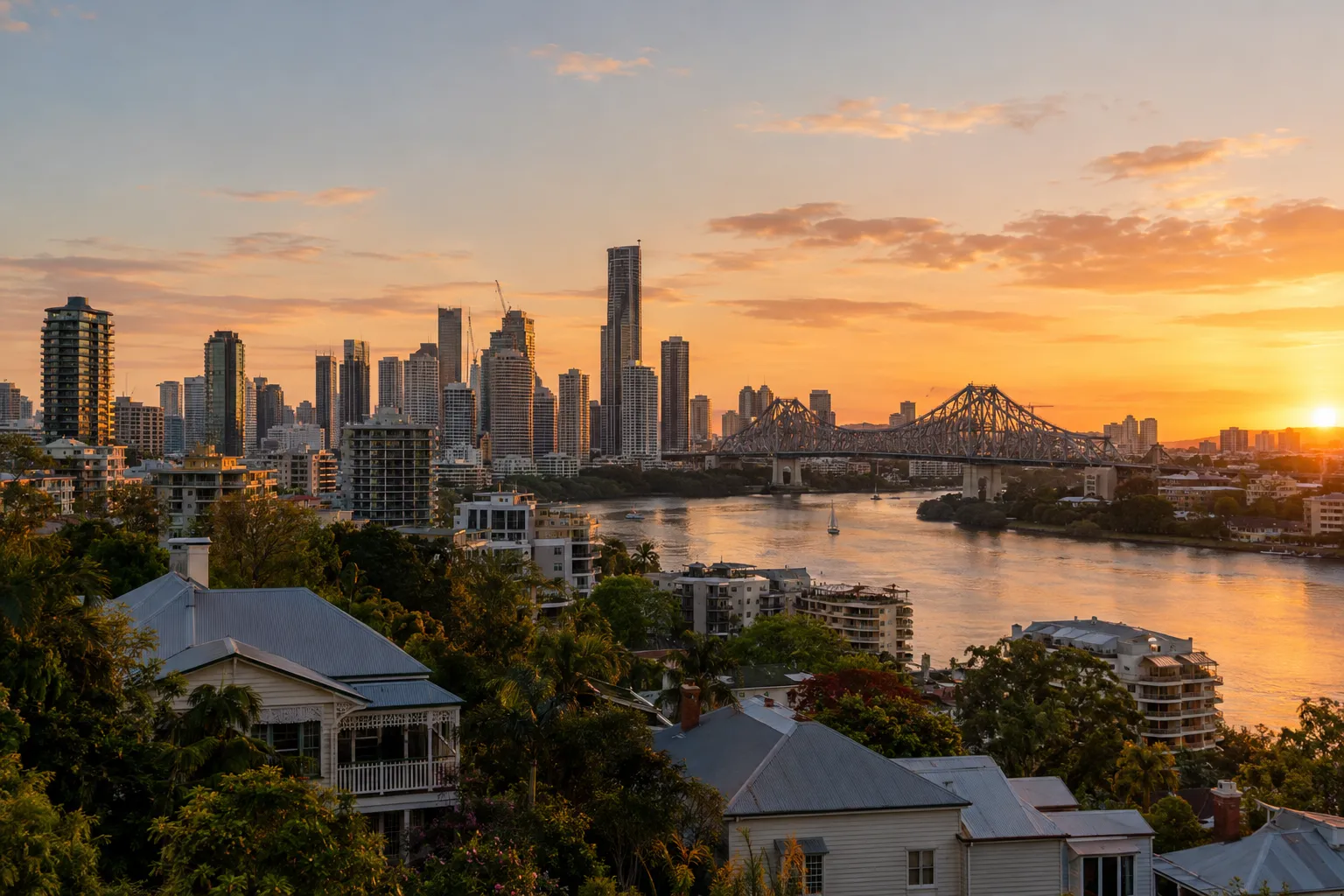
Brisbane has been the strongest housing market in Australia for years. Now its house prices are falling, and the reason is not mysterious: stretched affordability met higher interest rates, and buyers ran out of room to borrow.
That is the short version. The longer version matters more for anyone buying, selling or holding property in Queensland, because a market that rose this far, this fast, does not usually turn quietly.
Why the strongest market is the one now giving way
Brisbane’s run was built on a simple gap. It was cheaper than Sydney and Melbourne, interstate buyers kept arriving, and borrowers were willing to stretch to get in before prices rose again. Each of those supports has weakened.
When prices climb faster than incomes for long enough, the pool of people who can afford the next sale shrinks. Add rate rises and that pool shrinks again, because the amount a lender will let you borrow falls with each increase. Buyers can only pay what their borrowing power allows, and that ceiling has come down.
Brisbane did not need a shock to fall. It needed the buyers at the top of the market to stop being able to pay.
A three-city pattern, not a Brisbane story
Brisbane is not falling in isolation. Perth and Sydney have also shown weakness, which points to a common cause rather than a local one. Different cities, different histories, same pressure: loan sizes that were comfortable at lower rates are not comfortable now.
Key numbers
- Brisbane has led Australian house price growth for several years, according to the major price indices
- Higher rates cut borrowing capacity with every increase, regardless of city
- Falls in the three large markets suggest a shared driver, not three separate stories
The exact size of Brisbane’s drop will vary by index and by month, so treat any single figure with caution until the monthly data from the likes of CoreLogic or PropTrack is compared side by side.
Why the pattern matters for house price growth in Australia
When the market that has been carrying national growth turns down, the national picture changes. Brisbane’s gains were doing a lot of the work in keeping headline house price growth in Australia positive. Take that support away and the average looks much weaker.
The catch is that a fall from a very high level can still leave prices well above where they were a few years ago. Owners who bought early are mostly fine. Recent buyers with small deposits and large loans are the ones exposed, which is the same question raised in our look at what a 15% price fall would do to loans and buyers.
Does the supply response change?
This is where the story gets harder to call. In theory, falling prices should cool demand and ease pressure on buyers. But a weaker market also makes new projects harder to fund, particularly apartments, where construction costs have already squeezed margins.
Queensland also carries a large pipeline of work tied to the 2032 Olympics. That could pull in more builders, materials and public investment. It could equally tighten the labour market and push costs up further, making private development even less viable at lower prices.
So there are two plausible paths:
- Supply slows. Developers pause projects they can no longer finance, and a later shortage builds underneath today’s weaker prices.
- Supply holds. Public and Olympic-linked building keeps construction busy, softening the squeeze.
Neither is certain. What is clear is that falling prices do not automatically fix a supply problem, and can make parts of it worse.
What buyers and owners can do with this
If you are buying, a softer market gives you more time and more room to negotiate, but only if your finance is solid. Check what you can borrow at today’s rates, then add a buffer for further rises.
If you already own, the risk depends on your loan size and fixed-rate expiry, not on the headline fall. Our look at household buffers and arrears risk shows how quickly thin margins become a problem.
Watch the next two or three monthly price reports. One soft month is noise. A run of them, across Brisbane, Perth and Sydney together, is a trend.
If you want the weekly signal, subscribe to the free newsletter.
General info, not financial advice.