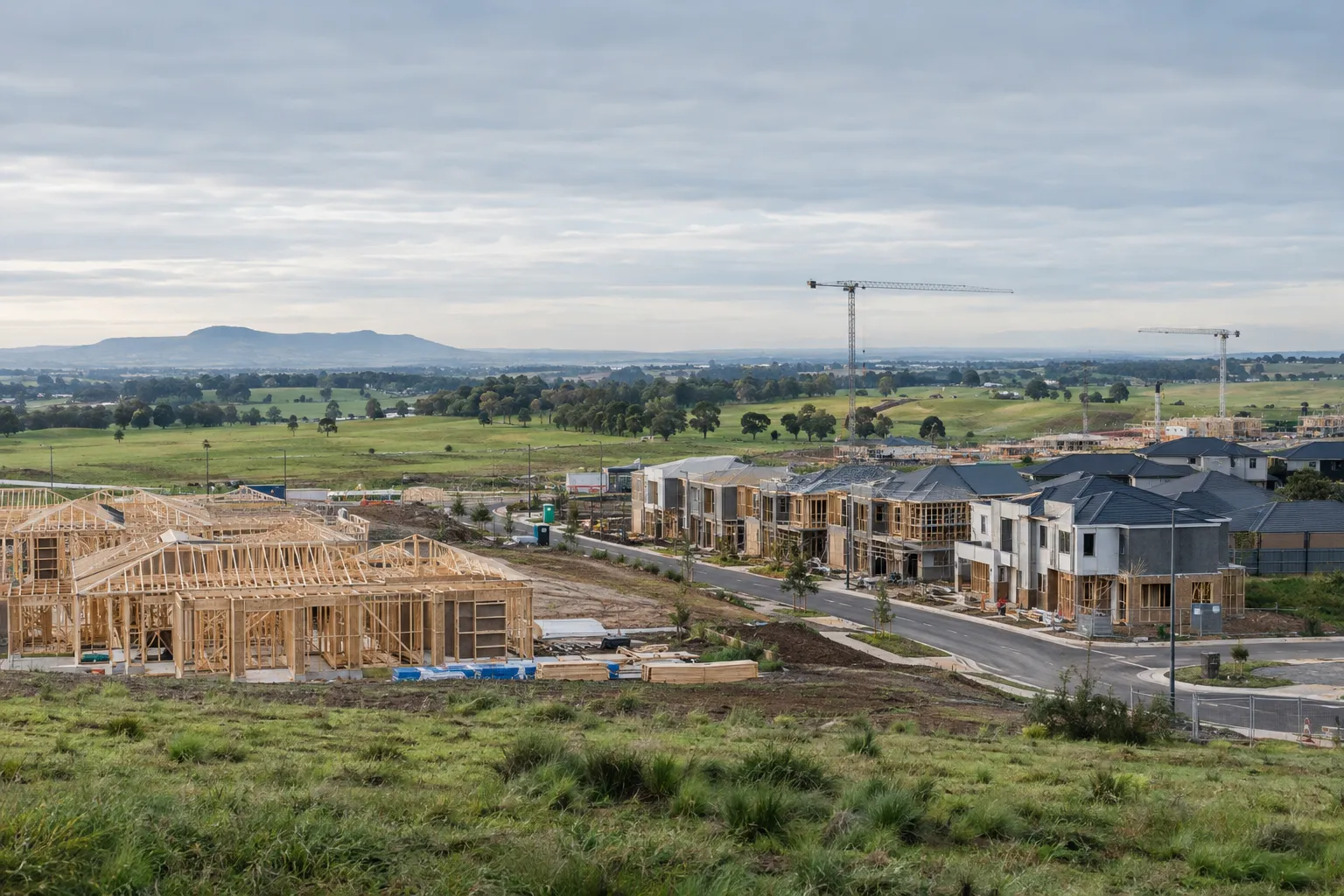
Victoria has agreed to a deal that sets aside 25,600 homes for first-home buyers inside a wider pipeline of more than 66,000 dwellings. The headline is big. The harder question is whether the numbers can be delivered, and what ring-fencing does to everyone else in the queue.
The package spans 20 sites, including Melbourne, Geelong, Ballarat and Bendigo, with houses and apartments, and first completions expected in 2027. Canberra is putting up $2.5 billion: $2 billion in concessional loans and $499 million in grants. Victoria adds at least $499 million. Victoria is the seventh jurisdiction to sign on to the national scheme tied to the 100,000-home first-home buyer pledge.
What the money actually buys
The funding is aimed at enabling infrastructure: roads, water, sewerage and power connections. That is the right target. Governments and developers have long said that stalled servicing, not land or demand, holds back many projects.
But infrastructure is only the first gate. A serviced lot still needs a builder, trades, materials and a lender willing to fund the project. Concessional loans help the developer’s cost of funds. They do not create more bricklayers or electricians.
Key numbers
- 25,600 homes reserved for first-home buyers
- More than 66,000 dwellings in the wider deal
- $2.5 billion federal funding ($2 billion loans, $499 million grants)
- At least $499 million from Victoria
- First completions expected in 2027
Is the delivery timeline realistic?
Here’s the catch. Governments announce dwelling numbers, but builders deliver them one site at a time. The deal covers a large number of homes across a short window, and it lands while the sector is still dealing with higher costs and tight rates settings, which industry groups themselves flagged.
Two questions matter most. First, how many of these homes are genuinely additional, rather than projects that would have started anyway with a bit of delay? Second, can the construction workforce absorb a state-sized pipeline alongside the other six jurisdictions’ deals, which together target roughly 180,000 homes? We do not have figures on trade capacity here, so treat the totals as a target, not a forecast.
For more on the cost and approvals side, see our guide to housing supply, approvals and building costs.
Ring-fencing and the investor pipeline
Setting homes aside for first-home buyers changes who the marginal buyer is. In a normal apartment project, investors often provide the presales that let a developer secure construction finance. If a large share of stock can only be sold to owner-occupiers, the developer needs a different set of buyers to hit its presale thresholds.
That cuts two ways. Owner-occupiers can be steadier buyers, and fewer investors in new stock may ease competition for first-home buyers. But first-home buyers are also more sensitive to borrowing capacity and rate moves. If lending conditions tighten, the presale pipeline can thin quickly, and a project that cannot show enough sales may not get funded at all.
There is a second-order effect for rentals. Investors are a major source of new rental supply. If fewer investor-owned dwellings come through this pipeline, the rental market gets less of the extra supply it would otherwise have received. Our look at the NSW rent cap bill and supply covers a similar tension in another state.
Houses, apartments and the regional split
The mix matters. Apartments are slower and more finance-sensitive than detached homes on new estates. Industry groups pointed to benefits for regional and outer-metropolitan growth areas, where land is cheaper and servicing gaps are often the main obstacle. That is where the program is most likely to produce homes on time.
Inner-Melbourne apartment stock is the riskier part of the pipeline. If the project economics do not stack up, that is where delays are most likely to show up first.
What buyers should do now
First-home buyers should treat 2027 as the earliest realistic date for the first completions, not a guarantee. Check how eligibility will work, whether price caps apply, and how the lender will assess you. Keep a buffer for rate moves, because settlement could be a long way from the day you commit.
If you want the weekly signal on policy and supply, subscribe to the Australian Property Review newsletter.
General info, not financial advice.