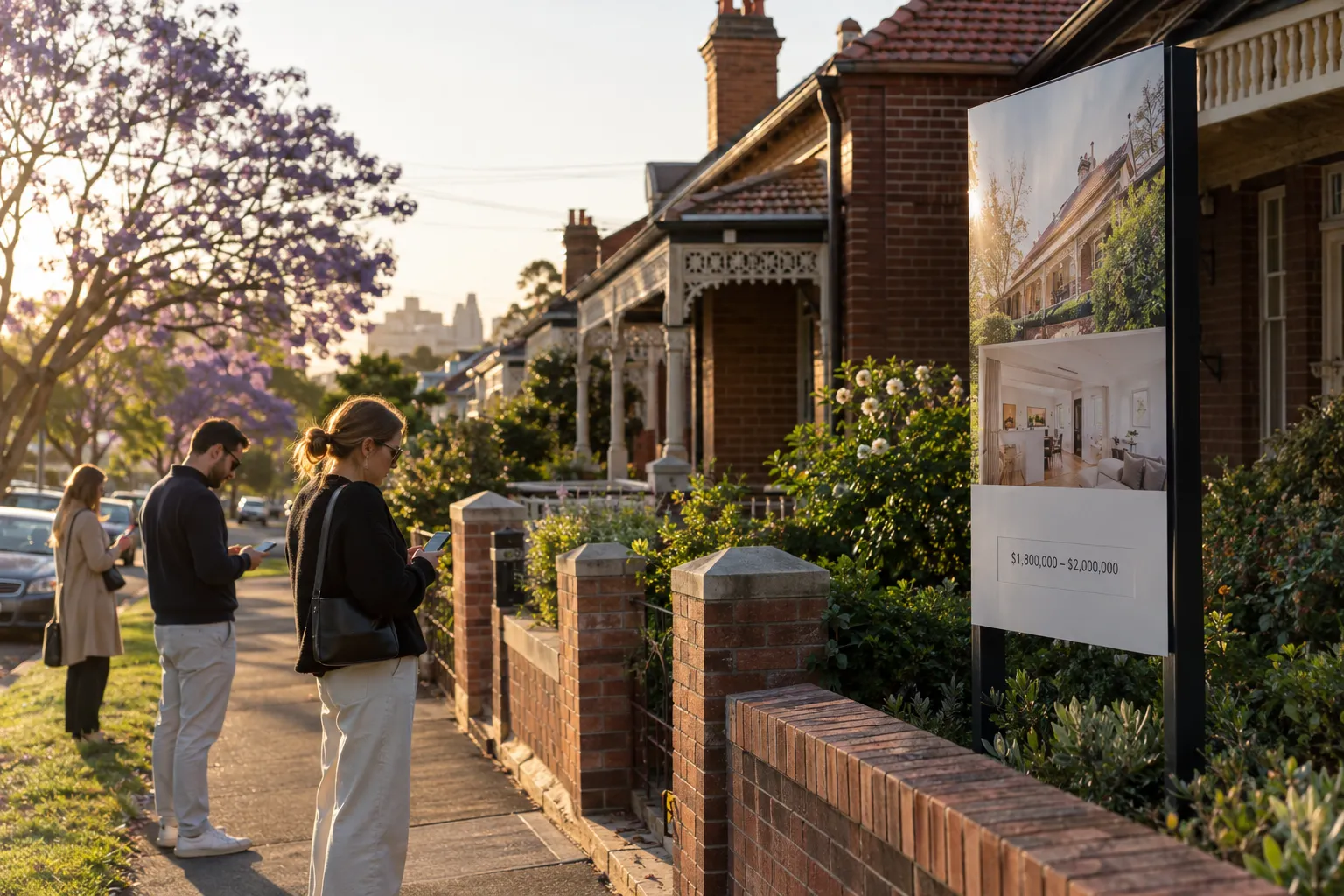
A seller who wants a crowd at the open home has long had a reason to name a low number. A seller who fears a weak crowd has had a reason to say nothing at all. From 17 November 2026, NSW takes both options away: every advertised home must carry a specific price or a price range. The harder question is whether forcing a number onto the page changes what buyers actually pay.
The economics of an advertised number
A property is a one-off asset. Each buyer has little to compare it with, and the seller’s agent knows far more about likely demand than anyone walking through the door. That gap in knowledge is the case for disclosure. A published figure gives buyers a reference point and lets them skip homes outside their budget.
There is demand for that. A 2026 listings survey found seven in ten Australian home seekers dislike unpriced listings, and four in five are more likely to scroll past them. Hidden prices cost buyers time, and agents lose enquiries because of it.
The pricing side is less tidy. A published range is also a signal that other buyers read, and signals can anchor expectations in both directions.
Anchoring cuts both ways
In a rising market, a low guide pulls in crowds and bids run well past it. That is the classic underquoting complaint, and it is what the new penalties target. In a falling market the effect can flip. Sydney’s median price is down 5% year on year, and in that setting a disclosed range may anchor buyers to the top of it, or even to the bottom, depending on how the campaign is read.
That creates a risk for vendors. A price on the page that looks optimistic can stall a campaign, and one that looks cheap invites an offer at the floor. Both outcomes are far more visible when everyone can see the number. Commentary has split along predictable lines: one camp argues transparency lifts confidence, the other argues it hardens expectations when the market is soft.
Where the quoting game could move
Rules change behaviour at the margin, and the margin is where agents are creative. If the advertised figure is tightly policed, three workarounds are plausible:
- Wide ranges. A range that spans a large gap satisfies the law while telling the buyer little.
- Off-market and early deals. Selling before a public campaign avoids the rule altogether.
- Guidance in conversation. Verbal steers at open homes are harder to police than a web listing.
None of that is proven for NSW. It is a prediction from how pricing rules usually behave. Victoria has run a comparable regime for some time, so over half of Australia’s population now sits under price-disclosure rules. That gives researchers real evidence to test, though this brief does not include outcome figures, so we cannot say how far Victoria’s results should carry over.
The enforcement bite
The penalty structure is meant to make quoting games costly. Breaches can lead to a court fine of up to $110,000, or three times the agent’s commission, whichever is greater. A standardised statement of information with comparable sales is due from early 2027, which should make it easier to check whether a guide was reasonable.
The main state industry body calls the reform political theatre and says agents have absorbed more than 500 legislative changes in 18 months. A buyer’s agent sees the opposite: clearer pricing saves shoppers time. Both views contain something real. Compliance load is a genuine cost, and so is the time wasted on homes that were never in range.
What it means for buyers and sellers
The context matters more than the headline. Sydney prices are softening alongside rate rises and changes to negative gearing and capital gains tax. Our guide to house prices, downturns and auctions explains how clearance rates behave when sentiment turns, which is the setting this law arrives in. For investors, the interaction with negative gearing changes is worth watching, because weaker investor demand changes how much room a vendor has to hold a high guide.
The catch
- Disclosure fixes an information gap, not a demand gap. In a soft market a published number cannot create buyers.
- A wide range meets the law and tells buyers almost nothing.
- The effect depends on enforcement and on the statement of information arriving in 2027.
For buyers, the practical move is to treat the published range as a starting point and check it against comparable sales rather than taking it at face value. For vendors, set the guide to what the evidence supports, because the number will now sit on the page for everyone to see.
Bottom line
Price disclosure should reduce one specific game, the deliberately low guide. Whether it lowers what buyers pay, or just changes how sales are run, will take a few quarters of data to show. The evidence is likely to come from Victoria first and from how Sydney clears through a softer market.
Subscribe to the Australian Property Review newsletter for the weekly read on how policy and prices are moving.
General info, not financial advice.