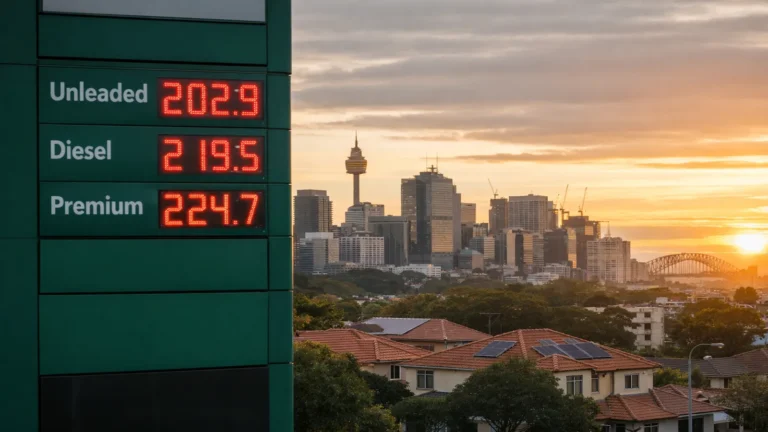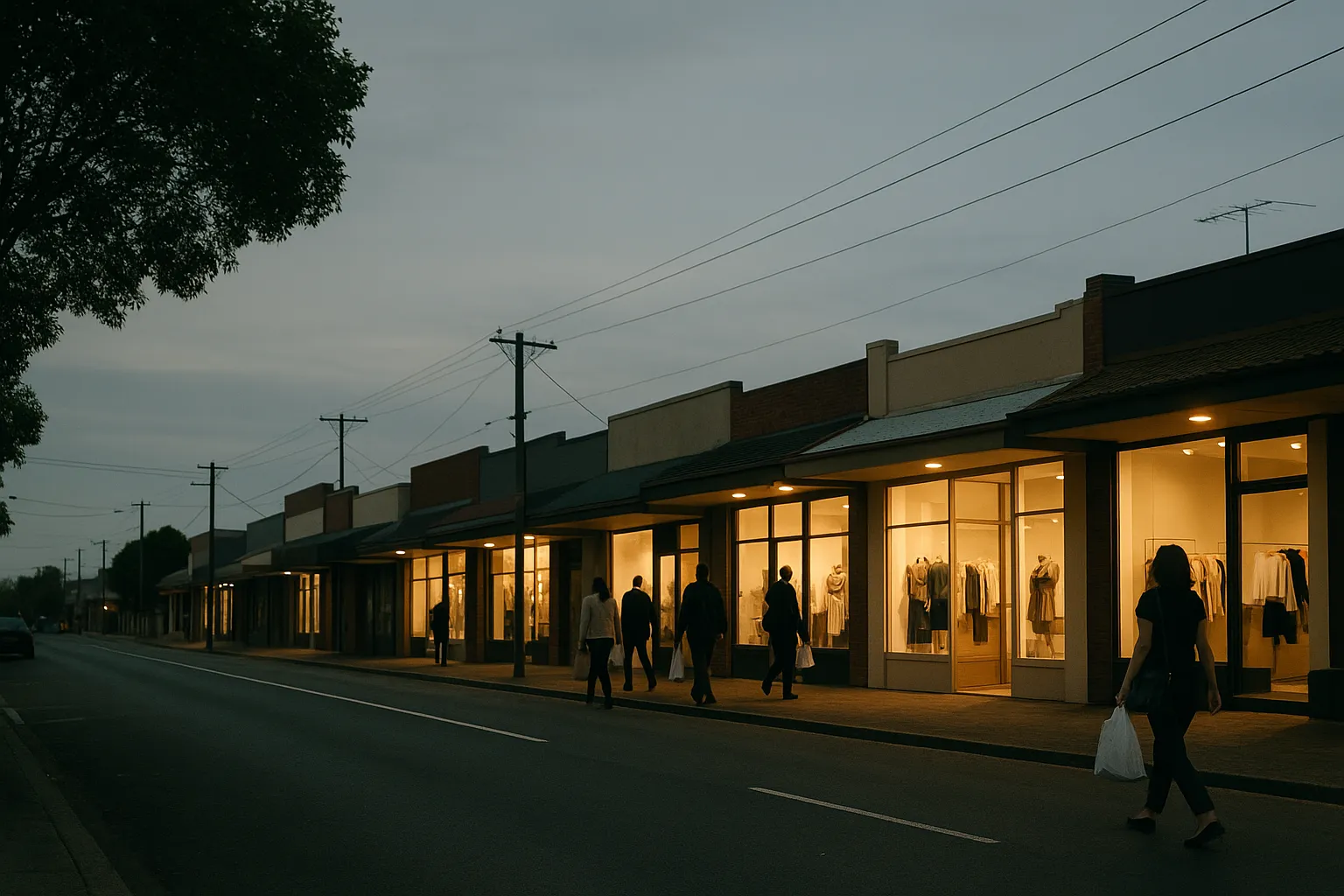
Australian households are behaving like two different people. One is anxious, worn down by three years of rate rises and cost-of-living pressure, rating their mood near the lowest point in half a century. The other is still spending, not freely, but enough to keep retail, services and the broader economy ticking over at levels that don’t match the pessimism.
That gap between what people feel and what they’re doing with their money is now the single biggest variable in the Reserve Bank’s decision tree. If it closes the wrong way, spending falling to meet sentiment rather than sentiment rising to meet spending, the slowdown will arrive faster and hit harder than current forecasts assume.
Why sentiment is so weak but spending isn’t
The Westpac-Melbourne Institute Consumer Sentiment Index sits at 83.9 as of July, in the bottom 10 per cent of readings since the survey began in the 1970s. That’s a modest lift from May but still deep in negative territory, where anything below 100 signals pessimists outnumber optimists.
Historically, sentiment this weak predicts a sharp pullback in discretionary spending. Households tighten up, delay purchases, build precautionary savings. But actual spending has been more stubborn this cycle. Retail turnover is flat to soft rather than collapsing, services activity is holding, and household consumption overall is running ahead of what the sentiment index alone would suggest.
The reason appears to be psychological rather than financial. The 2022 inflation shock, groceries, petrol, utilities all rising at once, was unusually hard for households to process compared with past cycles where rate rises alone did the work. People are spending because they have to cover essentials that cost more, not because they feel confident. That creates resilience in aggregate demand but brittleness underneath.
Key numbers
- Consumer sentiment index at 83.9, bottom 10% historically
- Mortgage rate expectations eased over the quarter but remain elevated
- House price expectations turned negative for the first time since March 2023
- Just 4.5% of consumers now see real estate as the wisest place for savings, an all-time low
- Risk aversion near record highs as of June
What changed in the property mindset
Home-buyer sentiment stayed weak overall through the June quarter, though renters and first-home buyers showed clearer improvement than existing owners. That split makes sense: renters are less exposed to rate risk, and some younger buyers are treating softening prices as a window.
But the broader shift is starker. House price expectations dropped sharply as capital city values eased, marking the first below-average reading since early 2023. At the same time, the share of households nominating property as the smartest savings allocation fell to 4.5 per cent, the lowest on record.
That’s a sentiment extreme, not a market prediction, property never competes with cash or equities when rates are high and uncertainty is elevated. But it signals how far the psychological pendulum has swung. After a decade where every other conversation assumed property only went up, households are now pricing in a range of outcomes that includes meaningful downside.
The timing risk the RBA is watching
The Reserve Bank left the cash rate at 4.35 per cent in August and repeated its line that it’s prepared to hike again if inflation doesn’t cooperate. That stance assumes the current economic configuration, weak sentiment, resilient spending, sticky services inflation, holds together long enough for disinflation to finish the job.
The risk is that spending eventually catches down to sentiment before inflation gets back to the 2–3 per cent band. If households suddenly stop spending above their confidence level, demand drops, unemployment rises, and the RBA is left easing in a weaker economy than it planned for.
Westpac’s base case is that the gap closes the other way: sentiment gradually recovers as inflation moderates over the next 12 to 18 months, and spending stays roughly where it is. That keeps the RBA on hold through the rest of 2026, with only a slow easing cycle starting mid-2027.
But base cases aren’t guarantees. The longer sentiment stays this low, the higher the chance something, another external shock, a string of weak job reports, a sharper property correction, tips spending into contraction.
Upside and downside from here
Base case: inflation continues to ease, wage growth stays positive but moderates, unemployment drifts up slightly but not enough to force the RBA’s hand. Sentiment lifts as mortgage holders stop expecting further rate rises, and the divergence between mood and spending narrows without a recession. RBA starts cutting mid-2027, property stabilises, and the cycle moves on.
Upside: inflation falls faster than expected, the RBA cuts sooner, sentiment rebounds sharply, and pent-up demand for housing and durables returns. Prices firm, confidence lifts, and the 2022–2024 period gets remembered as a bad patch rather than a structural break.
Downside: spending finally cracks, households exhaust their buffers, job losses accelerate, or another external shock (tariffs, geopolitical event, credit tightening) pushes demand over the edge. Sentiment was the early warning; spending is the confirmation. The RBA cuts in response but from a weaker starting point, and the property market reprices more aggressively than current price expectations suggest.
What to watch over the next four months
Retail and services data, especially discretionary categories. If spending starts to track sentiment, you’ll see it there first. Employment numbers, particularly hours worked and underemployment, households with less income certainty cut back faster. Mortgage arrears and hardship applications, which are still low but rising slowly. And the RBA’s tone in its November meeting minutes: if it drops the hiking bias entirely, that’s the signal it thinks the divergence is closing in the right direction.
If you’re weighing a property decision right now, the practical question is whether you’re buying into a market where sentiment is bottoming out (bullish) or where spending is about to catch down (bearish). The data doesn’t settle that yet, so any call requires a buffer for the downside scenario.
Subscribe to the newsletter for weekly updates on shifts in household behaviour, RBA positioning, and what the data is actually saying versus what the headlines claim.
General info, not financial advice.