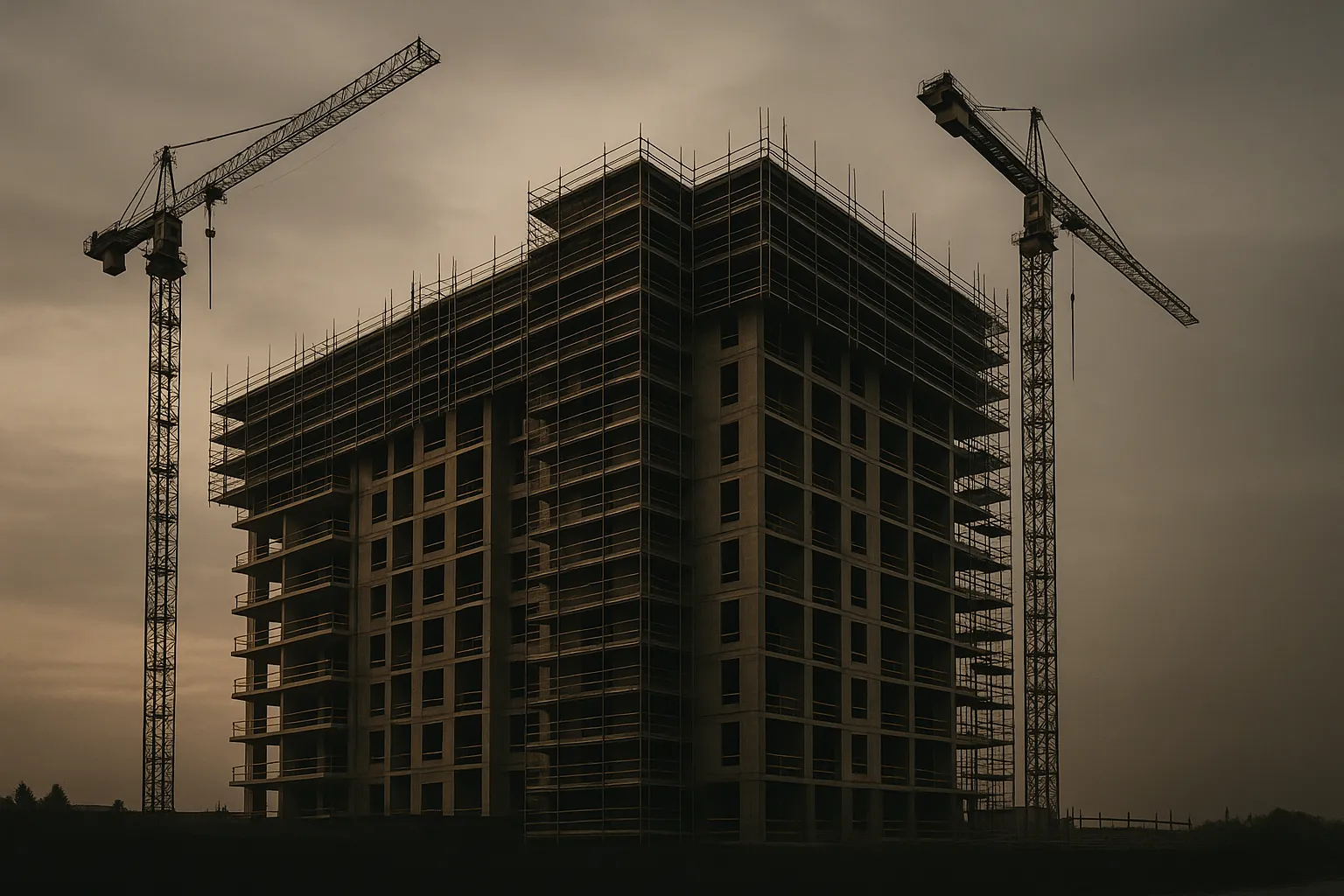
The NSW government has imposed fines and new licence conditions on a major developer over insurance lapses, adding regulatory pressure to a company already navigating project delays and buyer disputes. The enforcement targets Bathla, a name familiar to hundreds of off-the-plan purchasers across Western Sydney who have been waiting years for settlements that keep getting pushed back.
The move raises a question with real money attached: does forcing a struggling developer to comply with insurance requirements create a path for stranded buyers to recover deposits and costs, or does it just add another line item to a balance sheet that may not survive the next twelve months?
The enforcement mechanics
Developers in NSW are required to hold home warranty insurance for residential projects, a safeguard designed to protect buyers if construction fails or the builder goes insolvent. The state’s building regulator can issue fines and attach conditions to a developer’s licence when insurance lapses or coverage gaps are detected.
In this case, the regulatory action comes after months of complaints from purchasers who have been left in limbo on multiple projects. Fines can run to tens of thousands of dollars per breach, and licence conditions can restrict the ability to start new work until compliance is restored.
The catch: if the developer is already financially strained, the fine itself does not flow to buyers. It goes to the state. Insurance claims, when they do pay out, are capped and subject to strict eligibility tests that exclude many categories of loss.
The insurance gap
- Home warranty insurance typically caps payouts at around two million dollars per dwelling, and only covers structural defects or incomplete work if the builder becomes insolvent or disappears.
- Deposit protection is not automatic. Buyers who paid deposits into project accounts rather than trust accounts may have no access to insurance recovery at all.
- Non-completion claims require formal insolvency or abandonment. If the developer remains technically solvent but unable to finish, buyers can be locked out of both their deposits and the insurance safety net.
- Cost blowouts and delays alone do not trigger coverage. The policy is a last-resort mechanism, not compensation for time or opportunity cost.
Who this pattern hits next
The Bathla enforcement is one data point in a broader shift. Regulators across NSW, Victoria and Queensland have stepped up scrutiny of developer insurance compliance over the past eighteen months, as rising construction costs and thinner margins push more mid-tier builders toward insolvency.
The risk extends beyond individual projects. If buyers on stalled developments cannot recover deposits, they lose purchasing power in the resale market just as they re-enter it. That demand destruction compounds the oversupply problem in precincts where multiple projects are running late or frozen.
For investors who bought off-the-plan units as future rental stock, the delay can mean two to three years of holding costs with no income and no asset to leverage. For first-home buyers stretching to meet deposit requirements, a failed settlement can mean starting again from zero while prices and interest rates have both moved.
Second-order effects on supply
Enforcement creates a perverse dynamic. Developers who are close to the edge may prioritise regulatory compliance to avoid further penalties, diverting cash that could have gone to subcontractors or project completion. That can accelerate the very insolvency the insurance is meant to guard against.
At the same time, tighter enforcement raises the bar for new entrants. Smaller developers without deep balance sheets may struggle to meet bonding and insurance requirements, reducing competition and leaving more market share to the major players who can absorb the cost.
The state’s calculus: is it better to let a borderline-viable project limp to completion without perfect insurance coverage, or to force compliance and risk tipping the developer into administration? Neither outcome is clean.
The recovery path for stranded buyers
If you are holding a contract on a stalled project, the enforcement action against the developer does not automatically unlock your deposit or force completion. What it does signal is heightened regulatory attention, which can sometimes prompt a developer to prioritise problem projects to avoid further penalties.
Practical steps:
- Check your contract terms around sunset clauses and whether the developer has triggered any extension rights. If a sunset date has passed without mutual agreement to extend, you may have grounds to rescind and recover your deposit without waiting for insolvency.
- Confirm where your deposit is held. If it went into a project account rather than a solicitor’s trust account, recovery will depend entirely on the developer’s solvency or insurance eligibility.
- Contact the home warranty insurer directly to understand your coverage. Do not assume the developer’s account of what is covered is accurate.
- If the project has been delayed more than twelve months beyond the original completion date, seek independent legal advice on your options. The cost of waiting can exceed the cost of exiting, especially if you are paying rent or interest elsewhere while locked into the contract.
What to watch over the next six months
Regulatory enforcement is a lagging indicator. By the time fines and licence conditions are public, the financial stress has usually been building for quarters. The signal to track is not whether one developer gets penalised, but whether the pattern repeats across multiple mid-tier builders in the same geography.
If NSW Fair Trading or the building commission issues similar actions against two or three other developers in Western Sydney or the Central Coast over the next quarter, that points to systemic undercapitalisation in the sector, not isolated mismanagement.
For the state, the trade-off is political as much as financial. Letting projects fail protects the regulatory framework but leaves hundreds of buyers stranded. Easing enforcement might allow completions but sets a precedent that insurance compliance is negotiable.
The base case: more enforcement, more project delays, more buyers stuck in legal limbo while the market moves on. The upside case, where aggressive penalties force developers to fix insurance gaps and complete builds before insolvency, depends on those developers having enough liquidity to comply. The downside case is a wave of administrations that leave buyers with claims against policies that exclude most of their losses.
If you are considering an off-the-plan purchase in NSW right now, the Bathla enforcement is a reminder to pressure-test the developer’s track record and financial position, not just the location and the renders. Housing supply targets remain stuck, so the temptation to chase pre-construction pricing will persist, but the risk of delays and insolvency has shifted higher.
Subscribe to the newsletter for weekly updates on developer solvency, regulatory enforcement and what it means for off-the-plan risk.
General info, not financial advice.