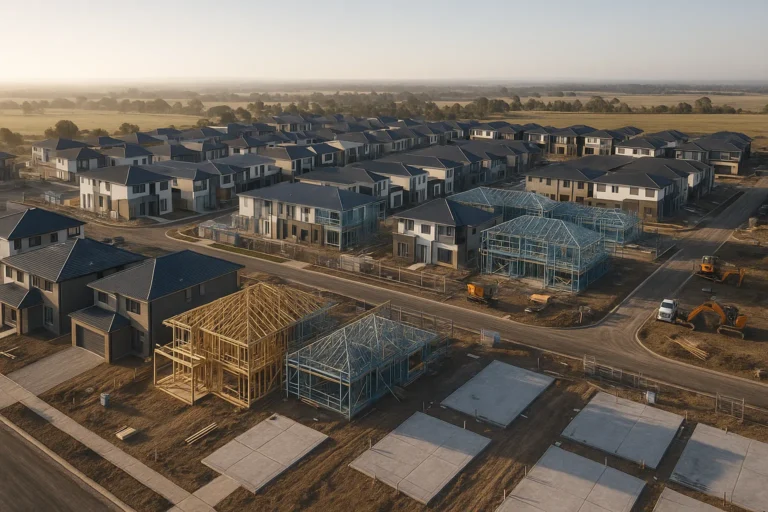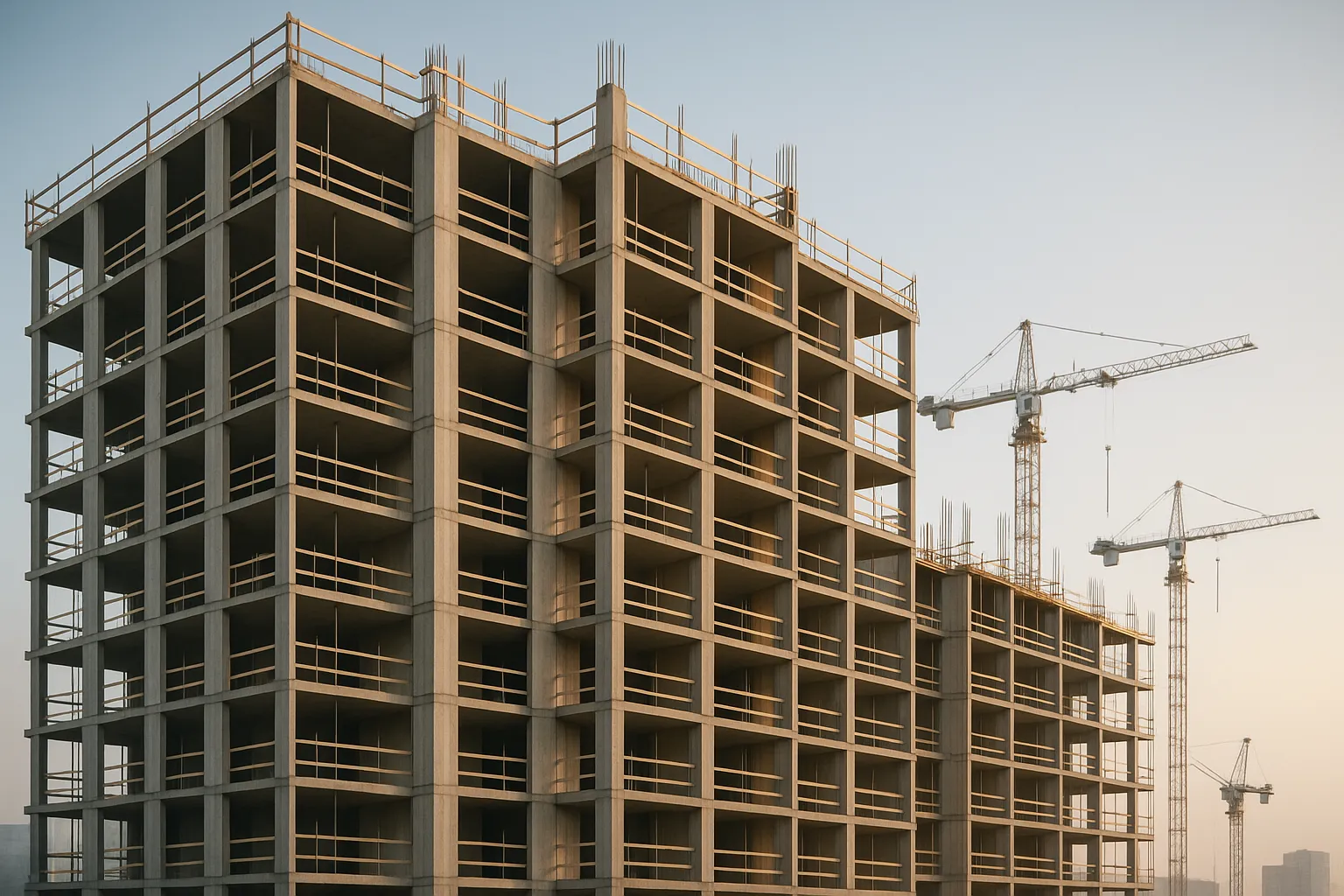
Housing Australia, the federal agency tasked with accelerating social and affordable housing, has a new chair with serious corporate restructuring credentials. The appointment signals that Canberra recognises the delivery machine is broken, not just underfunded. Whether boardroom turnaround skills translate to cracking public-sector construction bottlenecks is the open question.
The appointment follows eighteen months in which Housing Australia’s pipeline has underperformed against headline commitments. Projects approved on paper haven’t translated to shovels in the ground at anything close to the pace required to dent waitlists or take pressure off the rental market.
The mechanics of the stall
Housing Australia sits at the intersection of federal funding, state planning systems, and private or community-sector builders. The bottleneck isn’t one thing, it’s a compounding set of frictions.
First, finance. The Housing Australia Future Fund was designed to generate returns that fund construction grants. Market volatility since launch has meant lower-than-forecast disbursements, which narrows the number of projects that can proceed each funding round.
Second, approvals. Even when a project secures federal money, it still runs the state planning gauntlet. Rezoning delays, infrastructure contribution disputes, and local opposition stretch timelines by twelve to twenty-four months in metro markets. Regional projects move faster on approvals but face builder availability and material cost blowouts instead.
Third, the construction pipeline itself. Builders who can deliver at scale are already committed to private work or priced social housing as too risky post-2022. Fixed-price contracts signed before the inflation spike burned enough contractors that the sector now demands cost escalation clauses Housing Australia’s funding model wasn’t built to accommodate.
The catch
- Federal funding model assumes stable returns; actual disbursements have lagged forecast by ~15–20% since mid-2024
- State planning systems weren’t redesigned when the program launched, approvals still take eighteen months minimum in capital cities
- Builder risk appetite for social housing collapsed after材料 inflation caught fixed-price contracts; fewer credible tenders per project now
- Community housing providers can access fast-track Class 1 approvals but only for projects under 1,000 units and meeting tight design criteria
What a corporate lens might change
Corporate turnarounds typically start with process mapping, accountability clarity, and removing decision-layer friction. In a public agency, that means:
- Shortening the loop between funding approval and contract signature (currently six to nine months)
- Standardising construction specs so builders can template bids instead of custom-quoting every project
- Negotiating state-level planning carve-outs or dedicated fast-track streams for Housing Australia projects
- Shifting from fixed-price to cost-plus-fee models that share material risk between funder and builder
The risk: corporate efficiency tools assume you control the variables. Housing Australia doesn’t control state planning ministers, builder capacity, or RBA-driven construction cost swings. A restructure that works in shipping or tourism can stall when half the dependencies sit outside your organisation chart.
The political and fiscal constraints
Any acceleration strategy runs into two hard limits. Politically, expanding Housing Australia’s balance sheet or shifting it to direct construction (rather than grants to third parties) requires legislation the Senate may not pass. Fiscally, faster delivery means higher near-term outlays before the fund’s returns compound, treasury doesn’t love that optics during a budget repair phase.
That leaves process optimisation and stakeholder negotiation as the primary levers. Useful, but not enough to double the delivery rate without additional capital or regulatory reform.
Upside and downside scenarios
Base case: modest improvement. Approval timelines shorten by three to six months, builder engagement lifts because contract terms get less punitive, annual completions rise 15–25% by end of 2027. Waitlists still grow, but slower.
Upside: states agree to dedicated planning pathways, federal government tops up the fund or shifts to direct appropriations for a temporary construction blitz, builder confidence returns as inflation stabilises. Delivery rate doubles within thirty months.
Downside: corporate restructure stalls on public-sector inertia, states refuse planning concessions, another market shock (rates, materials, builder insolvencies) reduces the bidder pool further. Completions stay flat or decline, political pressure mounts, the model gets scrapped for something else by 2028.
Who this matters for and when
Social housing waitlists: if delivery doesn’t double soon, you’re looking at eight-to-twelve-year waits in capital cities by 2030.
Affordable rental supply: every unit Housing Australia doesn’t build is one more household competing in the private market, which keeps upward pressure on rents for the bottom quartile.
Developers and community providers: clearer pipelines and less contract risk make tendering viable again, but only if the reforms actually land.
First home buyers feeling rental pressure: stalled social housing delivery keeps renters trapped longer, which delays their deposit savings and pushes them toward schemes like super access for deposits that create long-term retirement risk.
Red flags for the next twelve months
Watch these as proof the turnaround is working, or isn’t:
- Number of projects moving from funding approval to contract signature within four months (current average is seven)
- State government announcements of dedicated Housing Australia planning streams or exemptions
- Builder tender participation rates per project (if still declining, the contract-risk problem isn’t solved)
- Quarterly disbursement figures from the fund, if they keep missing forecast, the money constraint binds regardless of process improvements
If none of those shift by mid-2027, the appointment was theatre, not reform.
What comes next
The new leadership’s first six months will clarify intent. If you see legislative amendments to expand Housing Australia’s mandate, state MOUs on planning, or public builder-engagement roadshows, the turnaround is serious. If you see another strategy document and no operational changes, it’s another cycle of talk.
For renters on waitlists or investors watching affordability policy, the signal is this: delivery bottlenecks in public housing are structural, not just a funding gap. Corporate skills might tighten the process, but they won’t override the political and fiscal constraints unless those shift too.
Start here: if you’re a community housing provider or builder, watch for tender-process changes in Q2 2027, that’s when contract-risk reforms would typically appear. If you’re tracking rental supply and affordability, assume no material delivery uplift before 2028 unless you see state planning reform in the next nine months.
Subscribe to the newsletter for monthly updates on Housing Australia’s pipeline, state planning shifts, and what it means for rental markets and social housing waitlists.
General info, not financial advice.