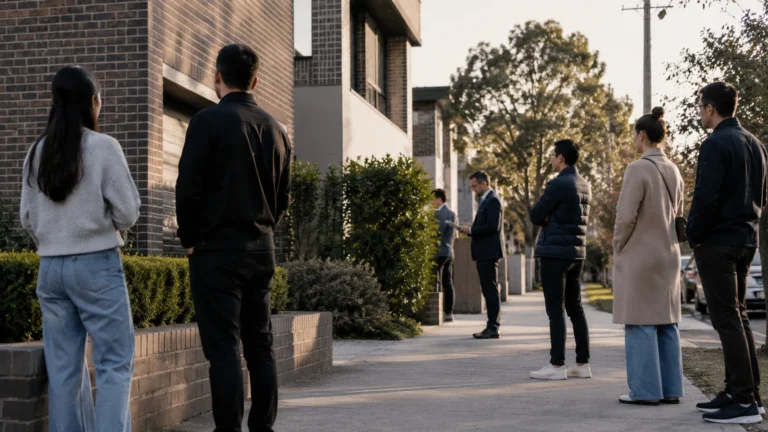
Melbourne’s preliminary auction clearance rate jumped to 62.6% on Saturday from 342 reported results, up from last week’s final 53.7%, according to data from a major property analytics provider. If the figure holds above 55.7% when all results are collected, it would mark the city’s strongest weekend since mid-March, when clearance reached 57.5%.
But agents and advocates are cautious about reading the number as proof of a broad market recovery. Properties in softer pockets are being diverted to private sale or expressions of interest before they reach auction, meaning the clearance rate captures only those listings where vendors felt confident enough to face a public crowd. The question now is whether this signals genuine buyer confidence returning or short-term opportunism from bargain hunters who think prices have bottomed.
What’s bringing buyers back
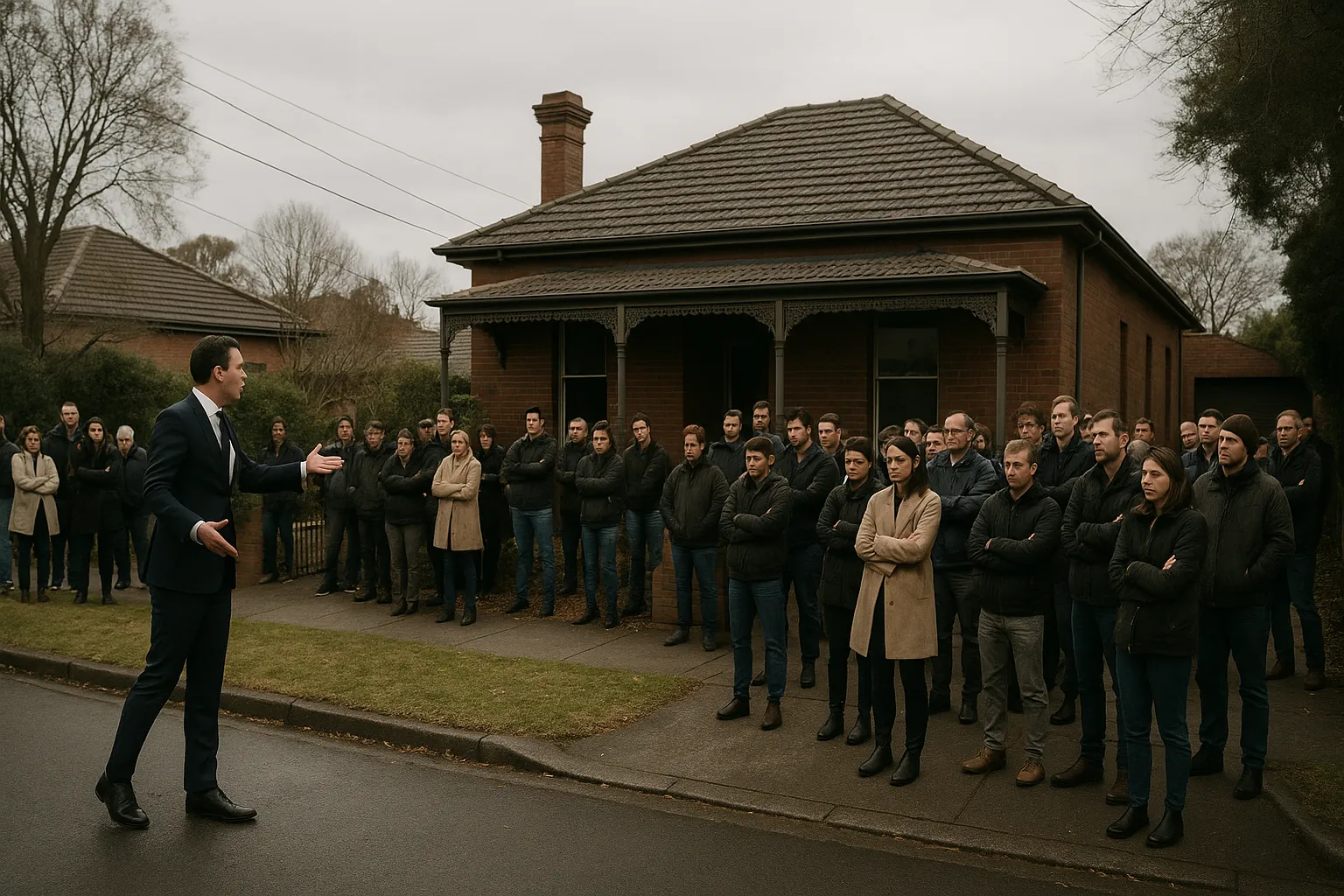
Auctioneers reported larger-than-expected crowds and bidding from buyers who had sat out recent weeks. One agent posted footage of a packed auction to social media with the caption “They said the market was dead,” capturing the shift in mood.
The lift appears uneven. Well-presented homes in high-demand locations with limited competing stock drew strong competition, while higher-priced properties still struggled to attract multiple bidders. One agent noted that big crowds can change buyer behaviour mid-auction, when 20 or 30 people turn up, individual buyers assume the property must be desirable and bid more aggressively to avoid missing out.
Another auctioneer said you can read the energy before the first bid is called: nervous tension in the air, people standing with arms folded, twitching, not standing still. Two emotionally committed buyers can be enough to push a result well above reserve.
The numbers that cut both ways
A clearance rate below 60% typically still favours buyers, and Melbourne’s 62.6% preliminary figure will likely fall as outstanding results are added. The rate also doesn’t account for homes pulled from auction and moved to private sale or EOI campaigns, a common tactic in softer conditions.
One buyers’ advocate warned against treating Saturday’s clearance rate as evidence the entire market has strengthened. Agents in weaker pockets are moving listings away from auction to avoid public failure, which inflates the clearance rate by removing probable non-sales from the denominator. Properties that do reach auction are a self-selected sample skewed toward those with vendor confidence or competitive positioning.
Despite that filter, agents reported high foot traffic through open homes and continued sales of quality stock. Reserve prices are sharper than they’ve been in months, reflecting vendor realism about what the market will pay.
The catch
- Clearance rates measure only properties that went to auction, homes diverted to EOI or private sale don’t appear in the data, so a rising clearance rate can reflect vendor selection as much as buyer demand.
- A preliminary 62.6% rate will fall as late results are added, and anything below 60% still leaves buyers with negotiating leverage.
- Big crowds don’t guarantee competition, one agent noted expensive homes can still struggle even with strong attendance if buyers are unwilling to stretch on price.
- Reserve pricing has tightened, meaning vendors are setting more realistic floors, which makes clearance easier to achieve but doesn’t necessarily mean prices are rising.
What could derail the momentum
Spring listings are expected to be lighter than normal as homeowners without urgent reasons to sell continue waiting for clearer price signals. If supply stays constrained and buyer numbers keep rising, clearance rates could push higher and shift negotiating power toward vendors.
But if rates stay elevated or economic uncertainty deepens, the buyers who returned in winter could pull back again, leaving the improved clearance rate as a short-lived bounce rather than the start of sustained recovery.
Upgraders face a trade-off: current conditions offer a rare opportunity to sell and buy in the same soft market, locking in gains on both sides of the transaction. Waiting for a stronger spring could mean facing competition from other upgraders and paying more on the buy side than the gain on the sell side justifies.
Scenarios over the next 12 weeks
Base case: clearance rates stabilise in the mid-to-high 50s, conditions remain balanced, buyers retain negotiating leverage on most properties but face genuine competition on well-positioned stock in high-demand pockets. Spring listings rise modestly but stay below historical averages, preventing a sharp swing toward either buyers or sellers.
Upside (for buyers): winter momentum fades as spring supply increases, clearance rates drift back toward 50%, vendors who held through winter start accepting sharper discounts, upgraders and first-home buyers lock in purchases before rates fall and competition returns.
Downside (for buyers): clearance rates push above 65% as supply stays constrained and offshore or investor buyers return, vendors regain pricing power, properties that would have sold with 5-10% discounts in winter now attract multiple bidders and sell at or above reserve.
What to watch next
Track the final clearance rate once all Saturday results are collected, if it holds above 58%, that’s a genuine shift. Monitor whether the lift persists through the next three weekends or fades as novelty wears off. Watch for a rise in properties being pulled from auction and moved to EOI or private sale, which would signal vendor confidence is still fragile despite the improved clearance rate.
If you’re upgrading, the current window offers the best chance in 18 months to sell and buy in the same soft market. If you’re a first-home buyer or downsizer, repeat property price collapses data can help identify suburbs where winter discounts are likely to stick versus those where prices snap back quickly.
For investors assessing suburbs with rising mortgage stress, loan default risk trends show where forced sales could keep supply elevated and cap price recovery through spring.
If you want the weekly signal, subscribe to Australian Property Review.
General info, not financial advice.