A fresh Middle East flare-up is enough to do one thing very quickly in Australia: get people asking whether now is the wrong time to buy property.
That reaction is understandable. When geopolitical tension pushes oil prices higher, Australians feel it almost immediately at the bowser. Businesses feel it in freight, logistics and input costs. Markets start repricing inflation risk. Borrowers start worrying that any hoped-for relief on interest rates could be pushed further out.
But here’s the catch: a jump in oil does not automatically translate into a housing downturn.
For property, the bigger question is not whether conflict exists. It is whether the oil shock is sharp and temporary, or persistent enough to keep inflation elevated, squeeze household budgets and drag confidence lower for long enough to matter.
That distinction matters because housing does not respond to headlines alone. It responds to cash flow, credit conditions, supply, sentiment and time.
What changed and what didn’t
The obvious change is energy risk.
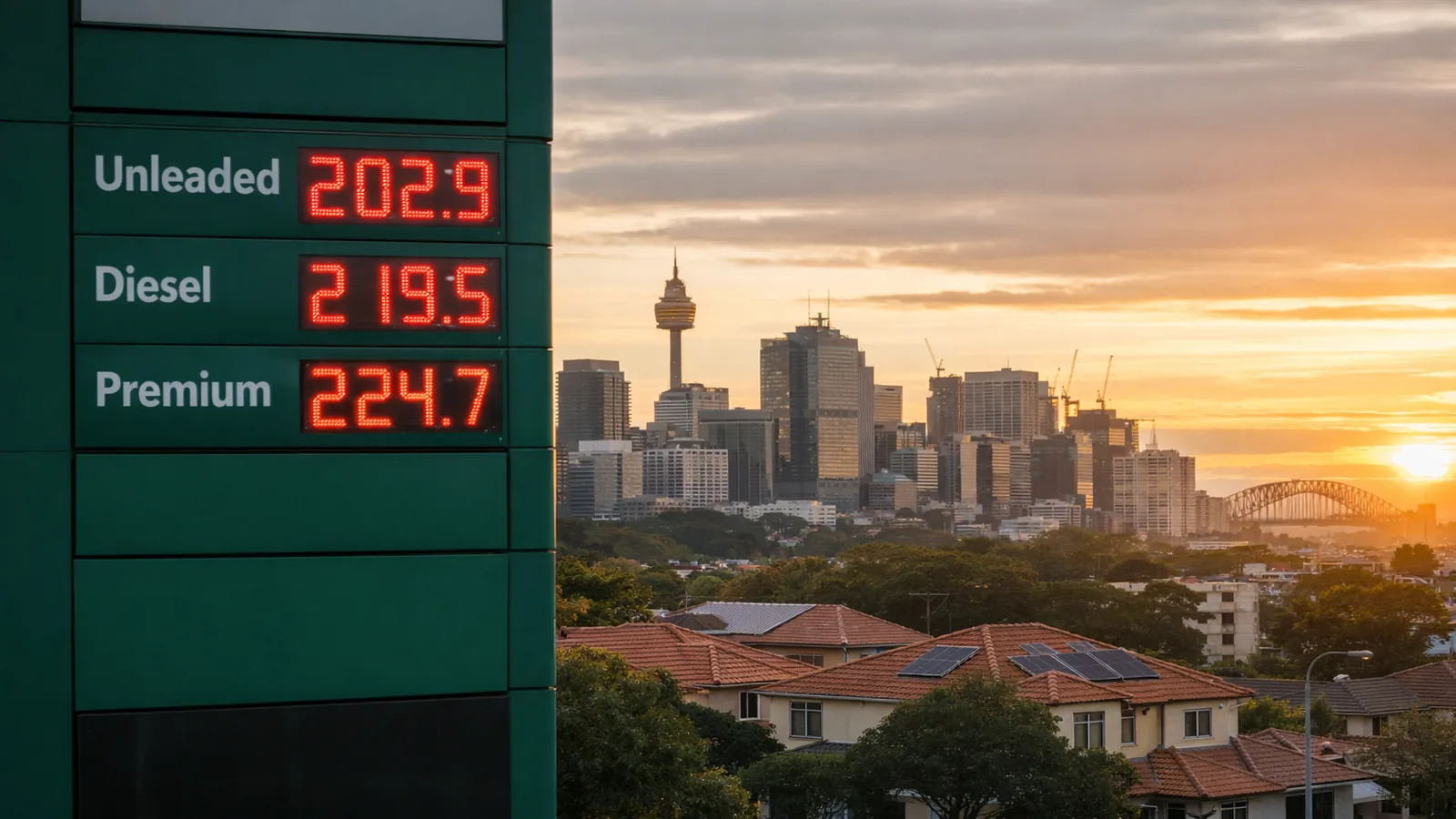
When oil rises, petrol tends to follow. That acts like a stealth tax on households. If a family is spending more each week filling the car, that is money not being spent elsewhere. The same logic applies across the economy. Cafes, trades, delivery businesses and retailers all face higher transport and operating costs. Some absorb that pressure in margins. Others pass it on.
That can feed into inflation, at least for a period. And when inflation risk lifts, the Reserve Bank has less room to cut rates quickly.
What has not changed is the structural backdrop of Australian housing.
The country still has a supply problem. New housing delivery has struggled to keep pace with demand in many parts of the market, and that imbalance matters. It means housing can remain firmer than people expect even when confidence wobbles.
So the property question is not simply, “Will war hurt prices?” It is, “Can a sustained oil-driven inflation pulse outweigh tight supply and keep borrowing conditions restrictive for longer?”
Why oil matters more than the headlines
Property does not care about geopolitics in the abstract. It cares about transmission mechanisms.
The first is household cash flow. Higher petrol prices leave less room in the weekly budget. For borrowers already stretched by repayments, that matters.
The second is business cost pressure. Transport-intensive industries, construction inputs and imported goods can all become more expensive. That can keep inflation stickier than central banks would like.
The third is interest-rate expectations. If markets think inflation will stay higher for longer, rate cuts can be delayed. Even if the cash rate does not move immediately, the expectation of tighter conditions for longer can affect buyer confidence.
The fourth is sentiment. Property is partly a numbers game and partly a confidence game. If households start to believe the outlook is getting shakier, they pause. Some investors do too.
So what does that mean in plain English?
A temporary oil spike can create noise, anxiety and short-term volatility without necessarily changing the housing trend. A prolonged energy shock is more dangerous because it can start hitting multiple channels at once: inflation, rates, spending and employment.
The historical comparison that matters more
A lot of people instinctively reach for the early 1990s when they hear “oil shock” or “Middle East conflict”. But that comparison has limits.
Australia in the early 1990s was dealing with a much harsher rate environment. The RBA’s historical cash-rate series shows how extreme policy settings were compared with modern standards.
That matters because housing can absorb external shocks very differently depending on where rates, leverage and supply are sitting at the time.
A more useful comparison is 2003.
During the Iraq war period, oil prices were pushed higher by fears of disruption. A World Bank commodity review from February 2003 said crude oil prices had risen 10 per cent in January, with expectations of supply disruption from war in Iraq contributing to the increase. The World Bank later used the Iraq war as the benchmark for a “medium disruption” oil shock in its commodity-market scenario work.
Yet Australia’s housing market did not collapse under that pressure. ABS data show established house prices across the eight capitals rose 18.9 per cent over the year to the December quarter of 2003, before slowing to 2.7 per cent over the year to the December quarter of 2004. Meanwhile, the RBA notes that the cash rate had been held at 4.75 per cent for 17 months before being lifted to 5.00 per cent in November 2003 and 5.25 per cent in December 2003.
That does not prove today will play out the same way. But it does show something important: an oil shock on its own is not enough to guarantee weaker home prices.
The real risk is duration
This is where a lot of commentary gets too simplistic.
A one-off jump in oil can lift inflation temporarily and spook markets, but property tends to be more resilient when the shock fades quickly. The more serious risk is a drawn-out period of elevated energy prices.
If oil stays high for six to twelve months, the effects compound.
Households keep losing spending power. Businesses keep facing margin pressure. Inflation becomes harder to bring down cleanly. Rate cuts can be delayed. Confidence weakens. The labour market can soften later, not immediately but gradually.
That is the scenario property investors should take seriously.
Not because a housing crash becomes inevitable, but because the balance of risks changes. A supply-constrained market can still resist large falls, but momentum can slow, buyer urgency can fade and weaker pockets of the market can come under more pressure.
In plain English
A brief oil spike is mostly a confidence shock.
A long oil spike can become a housing shock.
That is the dividing line.
What’s different this time
There are also a few reasons not to treat history as a photocopy.
Australia’s housing market is now more indebted, more rate-sensitive and more dependent on borrowing capacity than it was in earlier cycles. At the same time, the housing shortage is a more dominant force than many buyers appreciate.
That creates an unusual mix.
On one side, higher-for-longer inflation risk can hurt borrowing power and sentiment.
On the other, undersupply can stop prices from falling as much as the macro headlines might suggest.
This is why national forecasts can miss what happens on the ground. The broad market can look resilient while individual cities, investor stock, fringe growth corridors or heavily leveraged borrowers feel much weaker conditions.
The practical takeaway is that macro stress does not hit every segment equally.
What would change the outlook
There are three signals worth watching from here.
The first is oil itself. Not the first spike, but whether it stays elevated.
The second is inflation persistence. If higher fuel and transport costs start flowing through more broadly, rate relief becomes harder.
The third is labour-market resilience. Housing can cope with delayed rate cuts better than it can cope with a genuine rise in job insecurity.
If those three move the wrong way together, the risk profile for property becomes more defensive.
If they do not, then the market may simply experience another period of anxiety without a deep correction.
Bottom line
Middle East conflict matters to Australian property mostly through oil, inflation and interest-rate expectations, not through headlines alone.
That means the housing outlook depends less on the existence of conflict and more on whether higher energy prices prove temporary or stubborn.
History suggests that a short-lived oil shock does not automatically derail Australian home prices. But if elevated oil starts feeding a longer inflation problem, that is when property investors need to get more cautious.