Australia’s housing shortage has enough problems already. Now it may have another one: a conflict overseas pushing up the cost of actually building the homes the country says it needs.
A renewed oil shock tied to Middle East instability is starting to flow into the local construction chain, with suppliers lifting prices on oil-linked materials, freight and delivery. That matters because housing supply is not just a planning story or an interest rate story. It is also a cost story. And when enough cost lines move at once, projects that looked viable on paper start looking harder to justify in the real world.
That is the risk now hanging over the government’s 1.2 million homes target.
The pressure is moving from headlines into invoices
For a while, oil markets can feel like background noise to housing. Traders care. Economists care. Most home buyers and investors do not. But the connection becomes a lot more real when suppliers start adding surcharges and lifting prices on products builders use every day.
That is what appears to be happening.
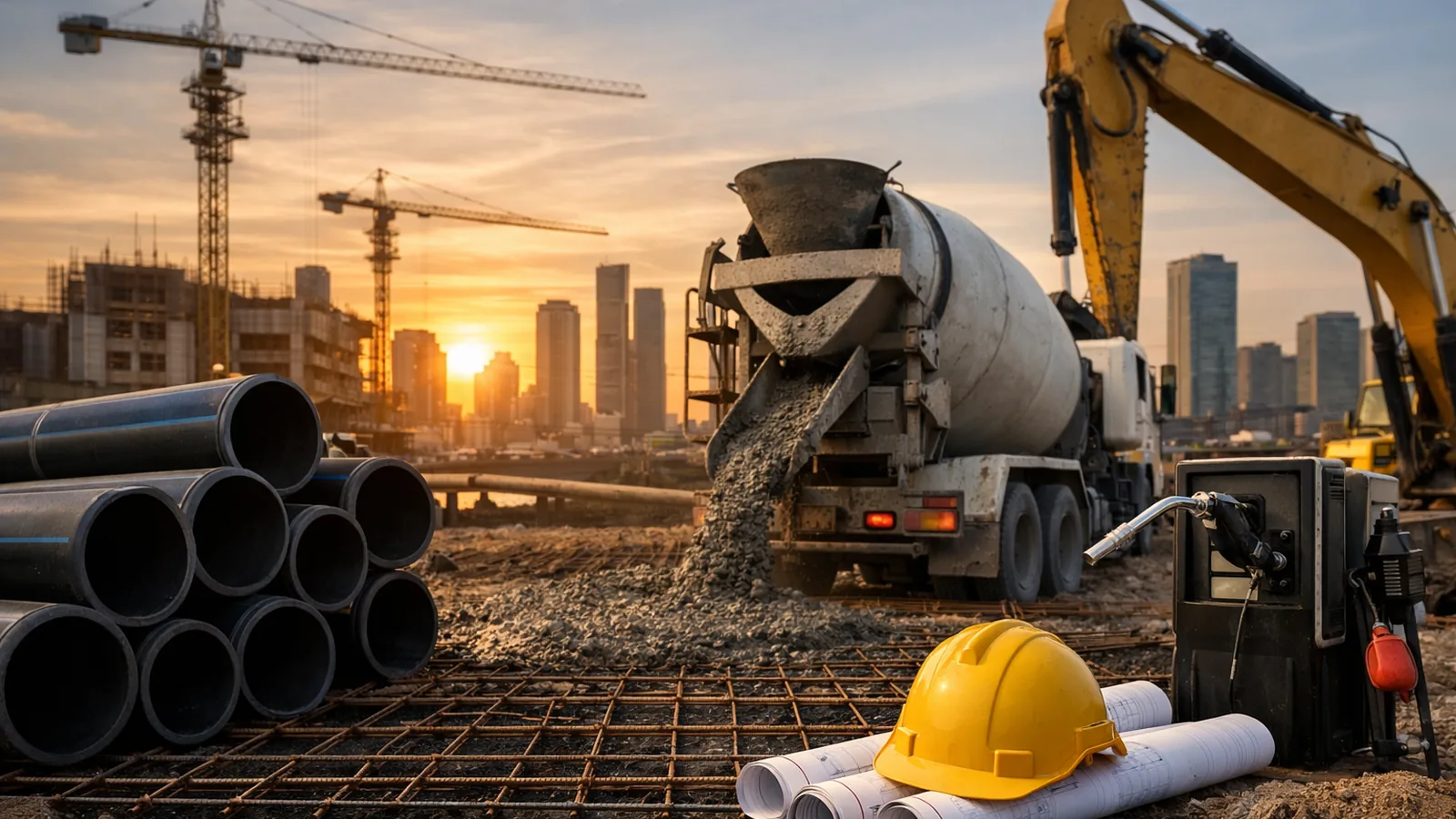
The first and most obvious link is petrochemicals. Products such as polyethylene and PVC piping are tied, directly or indirectly, to oil and gas inputs. When global energy prices spike and supply chains tighten, those materials become more expensive to make and more expensive to move.
The second link is freight. Construction is heavily exposed to diesel and transport costs. Concrete, steel, reinforcement, skip bins, excavation equipment, plumbing products and site deliveries all depend on trucks, machinery and distribution networks. When fuel costs rise, the increase does not stay neatly in the energy market. It spreads.
That is the part many housing debates miss. A home is not just land and labour. It is a long chain of energy-intensive inputs.
Why this matters more than one bad month
One-off price moves are annoying. Repeated or broad-based price shocks are different. They change behaviour.
Developers may delay projects. Builders may reprice future jobs. Suppliers may shorten quote validity periods. Margins get thinner. Risk allowances get bigger. And once that happens, supply slows before any official housing target is revised.
The pain is likely to be felt most in the parts of the market already operating with little room for error.
Apartment projects are one example. Many medium and high-density developments were already wrestling with elevated finance costs, softer presales conditions in some markets, rising wages, insurance pressure and lingering feasibility problems. Add another round of materials and transport cost escalation, and the numbers get tighter again.
House-and-land projects are another. Volume builders and subcontractors can cope with a normal amount of movement in costs. What hurts is sudden volatility across multiple inputs at once, especially where contracts were priced in a calmer market.
Now add fixed-price contracts to the mix and the pressure gets sharper.
The catch is not just cost. It is contract risk
Higher prices are one problem. Being unable to pass them on is another.
Builders working under fixed-price agreements can wear the hit if input costs rise after the contract is signed. In a healthy market with stable supply, that risk is manageable. In a market hit by repeated shocks, it becomes a balance-sheet problem.
That matters because several states have taken a harder line on escalation clauses and similar contract mechanisms. The policy intent may be understandable, but the commercial reality is less tidy. If builders cannot share at least some of the cost movement, they absorb it. And if they absorb enough of it, some will simply stop taking on risk at the old terms.
That does not just hurt builders. It can hurt buyers, subcontractors and the pipeline of future housing.
A bad moment for another policy fight
This is where the politics starts.
Industry groups are already using the latest cost surge to argue that now is the wrong time for any change to investor tax settings, especially around negative gearing and capital gains tax. Their position is simple: if new housing is getting more expensive to deliver, governments should not also make investment less attractive.
From a centre-right or market-led perspective, that argument has force.
Australia does not build more homes by making new supply less appealing to fund. A large share of new housing depends, directly or indirectly, on investor capital. If investor demand is weakened while construction costs are rising and financing remains expensive, the likely result is not a cleaner market. It is less building.
That does not mean every tax setting should be untouchable forever. But timing matters. Reform pitched as a fairness measure can still backfire if it lands in the middle of a fragile supply environment.
And right now the supply environment looks fragile.
What would change the outlook
This story gets less serious if the oil spike fades quickly, freight costs normalise and suppliers treat the latest surcharges as temporary. In that case, the housing market absorbs another shock and moves on.
But the downside case is not hard to see.
If energy markets stay elevated for longer, more suppliers could lift prices. Builders could reprice work more aggressively. Marginal projects could be deferred. Infrastructure linked to housing growth could also become more expensive to deliver. That would hit not just detached housing, but the broader supply system governments rely on to unlock new stock.
In plain English: even if buyer demand holds up, the country still has to be able to build.
What this really says about the housing target
The bigger issue here is not one surcharge on concrete or one jump in piping costs. It is what the episode reveals about Australia’s housing plan.
The 1.2 million homes target already depends on optimistic assumptions around labour availability, planning reform, infrastructure delivery, finance conditions and private sector appetite. It leaves little margin for external shocks.
This is what an external shock looks like.
A war overseas lifts oil prices. Oil prices lift freight and petrochemical costs. Those costs hit building inputs. Building inputs squeeze feasibility. Feasibility affects supply. And supply is what the housing target needs most.
That chain is not ideological. It is mechanical.
Bottom line
The latest cost increases are a warning that Australia’s housing challenge is still highly exposed to global events well outside Canberra’s control.
If the government is serious about lifting supply, it needs to treat construction viability as a live issue, not an afterthought. That means watching input costs closely, avoiding policy moves that could further dent investment appetite, and recognising that housing targets are only as credible as the economics underpinning them.
The headline is the war. The real story is how little slack Australia’s housing system has left.