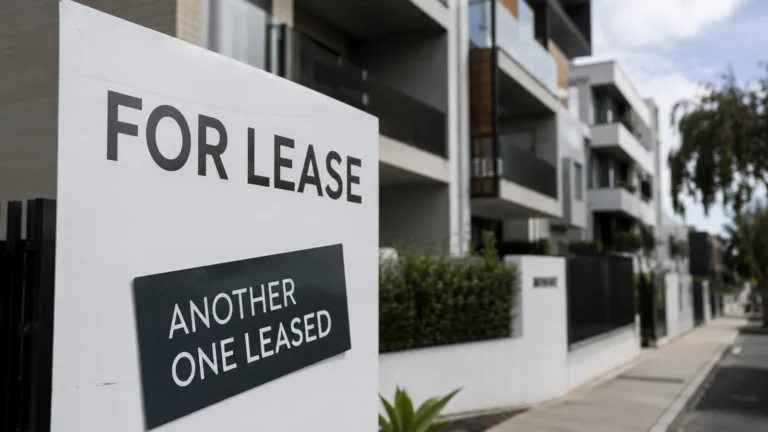
From July 2027, property investors who buy an existing home lose the ability to write off rental losses against their taxable income. Those who buy brand-new homes keep the deduction. That binary split has triggered modelling showing annual rent premiums ranging from $7,020 in Merrylands-Guildford to $24,700 in parts of the eastern suburbs, for similar-sized homes in the same city.
The question isn’t whether rents will rise. The question is why the policy produces a 350 per cent variance in rent impact across Sydney, and what that tells us about which investors are most responsive to tax settings versus raw cashflow.
The mechanics behind the rent premium
The new-build rent premium reflects two forces. First, construction costs: building a new apartment in the eastern suburbs costs substantially more per square metre than in outer suburbs, and that flows through to asking rents. Second, scarcity: established rental stock in the eastern suburbs is limited, so any shift toward new builds concentrates supply in a narrow, expensive segment.
Modelling by a construction analysis group examined 180,000 rental listings nationwide and found brand-new homes command an average of $65 extra per week compared to established homes, $3,380 annually. In Sydney, that premium jumps to $18,000–$24,700 in inner-city and eastern areas, where land and labour costs peak.
The policy creates a tax desert for established-home investors and a tax oasis for new-build buyers. From 2027, a new-build investor can claim an average first-year deduction of around $23,000 (depreciation, interest, costs). An established-home investor buying the same week gets zero.
Who exits and who stays
Investor activity has dropped sharply since the May budget announcement. Industry data shows buying volumes from established-property investors outside self-managed super funds have largely disappeared. That cohort, often single-property investors chasing capital growth and tax-sheltered losses, relied on negative gearing to offset holding costs while waiting for price appreciation.
Yield-focused investors, by contrast, care less about tax write-offs and more about net rent after costs. If an established property in Merrylands delivers a 5 per cent gross yield and manageable vacancy risk, the loss of negative gearing might not push them out. But in the eastern suburbs, where gross yields sit closer to 2.5–3 per cent and holding costs are high, tax-sensitive investors face a different calculation: without the deduction, the property bleeds cash every month.
The geographic variance in rent premiums maps directly to these investor profiles. Suburbs with lower land values, higher yields and less reliance on tax sheltering (Merrylands, Guildford, parts of western Sydney) show modest rent gaps. Suburbs with high land values, low yields and investor cohorts anchored to negative gearing (eastern suburbs, lower north shore) show rent gaps three to four times larger.
What this means for rental supply
The policy funnels investors toward new builds, but new-build completions are supply-constrained. Sydney’s residential construction pipeline has slowed due to labour shortages, rising material costs and planning delays. Funnelling demand into a narrow segment that can’t scale quickly pushes rents higher in that segment, while reducing investor appetite for the established stock that makes up most rental supply.
Rents have already moved. Data covering the two months after the budget announcement showed house rents rising in 57.6 per cent of Sydney suburbs, unit rents in 61 per cent. More than 100 Sydney suburbs now record median weekly rents above $1,000. The rent increases preceded the policy taking effect, suggesting investors are already pricing in the 2027 change by either exiting or raising rents to cover the lost deduction.
The catch
- Eastern suburbs new-build rent premium: $24,700/year vs established homes
- Merrylands-Guildford new-build premium: $7,020/year
- National average new-build premium: $3,380/year
- Investor first-year deduction (new builds): ~$23,000
- Investor first-year deduction (established homes, post-2027): $0
Scenarios worth pressure-testing
Base case: investors shift toward new builds where they can, vacancy rates rise in established stock (especially low-yield suburbs), rents for new builds climb faster than inflation, overall rental supply contracts modestly.
Upside (for renters): construction completions accelerate beyond current forecasts, enough new supply hits the market to absorb displaced demand, rent growth moderates. Requires planning reform, faster approvals, material cost relief, none currently legislated.
Downside: established-property investors exit en masse, new-build completions stay flat or fall, rental vacancy hits record lows, rent growth accelerates across all segments. Tenants get pushed into either unaffordable new builds or overcrowded established stock.
The policy assumes new-build supply can absorb the demand shift. If it can’t, the rent premiums mapped above become the new floor, not the exception.
Trade-offs the data reveals
The policy delivers a supply-side lever: more investor capital into new construction, which the government argues Australia needs. The trade-off is immediate pressure on renters in the established market, which still houses the majority of tenants.
High-yield suburbs (western Sydney, outer metro areas) show smaller rent gaps because investors in those areas are less tax-dependent. Low-yield, high-land-value suburbs show the largest gaps because their investor base relied heavily on negative gearing to make the numbers work. That cohort exits or raises rents to break even.
Another trade-off: the policy might lift new-build construction over time, but construction lags are 12–24 months. Renters feel the supply contraction immediately; any supply benefit arrives years later.
What to track over the next 12 months
Watch new residential building approvals (ABS releases monthly). If approvals don’t accelerate by mid-2025, the policy’s supply assumption is failing. Watch vacancy rates in low-yield suburbs (Domain, SQM Research publish quarterly). If vacancy rises in the eastern suburbs or lower north shore, it signals investors exiting faster than new tenants arrive. Watch rent growth in outer suburbs (CoreLogic, PropTrack). If outer-suburb rents spike, it means tenants are being pushed out of inner areas and competing for cheaper stock.
Also track state planning reform. The policy’s success depends on faster approvals, lower construction costs, more land release. None of that is federal policy. If states don’t move, the supply bottleneck persists.
Negative gearing inheritance loophole closed, but questions remain explored related tax-change mechanics earlier this year.
For weekly updates on policy changes and their market impact, subscribe to the newsletter.
General info, not financial advice.