The latest inflation read should have been a small relief. Instead, it has landed like a warning.
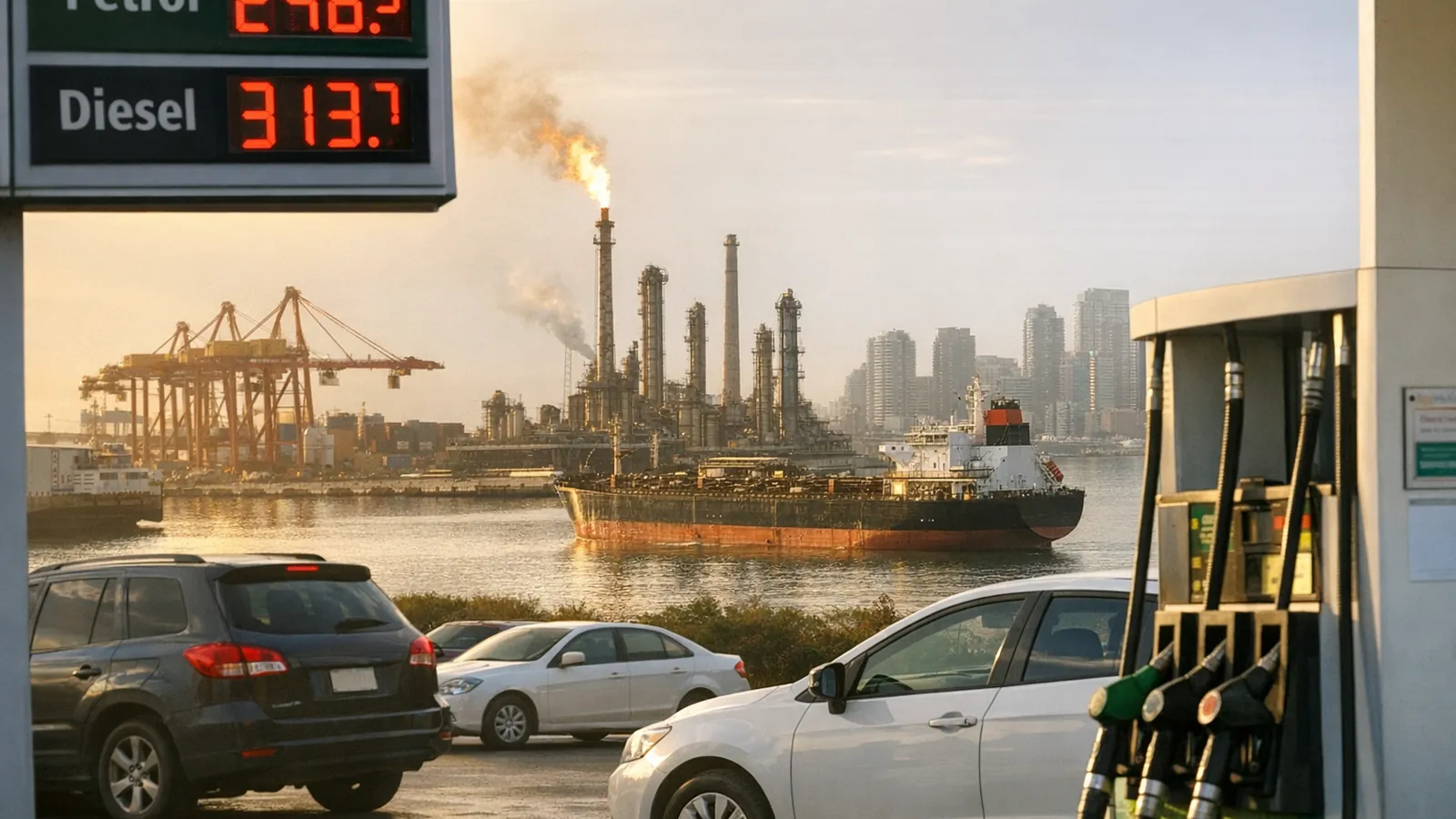
Yes, headline inflation eased slightly. But that softer number looks less reassuring once you strip out the one factor doing most of the work: earlier fuel prices that no longer reflect what households and businesses are paying now. Since then, oil has surged, petrol has jumped, diesel has moved even harder, and the pressure is spreading well beyond the bowser.
For property investors, that matters for one simple reason. When inflation risks rise again, the Reserve Bank does not get the luxury of declaring victory. And if the RBA cannot ease off, borrowing costs stay high, credit remains tight, and the property market has to keep operating with one hand tied behind its back.
What changed and what didn’t
What changed is the market’s confidence that inflation was gradually settling.
What did not change is the underlying problem: price pressures were already proving stubborn before the latest energy shock arrived. The new twist is that higher oil prices can flow through almost every corner of the economy. Transport costs rise. Freight gets dearer. Packaging becomes more expensive. Fertiliser costs lift. Construction inputs come under pressure. Businesses then try to recover those costs through higher prices.
That is why this matters more than a headline about global conflict. The issue for Australia is not only geopolitical drama. It is the local inflation pulse that can follow.
And for investors, the chain is clear enough. Sticky inflation raises the odds of tighter monetary policy. Tighter policy keeps mortgage rates elevated. Elevated mortgage rates squeeze serviceability, borrowing capacity and investor demand.
Why the property market should care
Property investors do not need oil to stay at extreme levels forever for damage to be done. They only need it to remain high for long enough to keep the RBA cautious.
That is the catch.
The market does not reprice housing only on today’s cash rate. It reprices on expectations about where rates are heading, how long they stay there, and whether borrowers can comfortably absorb them. If lenders, buyers and investors start to think the rate-cut story is being delayed again, that hits sentiment quickly.
You can already see how the transmission works.
Higher fuel and logistics costs put pressure on household budgets. That weakens discretionary spending and consumer confidence. At the same time, they lift costs for businesses and sectors tied to the property chain, including construction, materials, maintenance and transport. So the housing market gets squeezed from both sides: demand feels the hit through affordability, and supply feels it through costs.
For investors, neither side is trivial.
A higher-for-longer rate backdrop can reduce what buyers can pay. But a renewed cost shock can also keep replacement costs and development costs elevated, which further complicates new supply. That means existing housing may keep some support from constrained supply even while demand softens under financing pressure.
So this is not a clean bearish story or a clean bullish one. It is a messy one, and messy markets punish investors who rely on simple narratives.
Higher oil prices do not just make filling up the car more expensive.
They can lift the cost of moving goods, manufacturing materials, running equipment and building homes. If those higher costs feed into broader inflation, the RBA has less room to turn dovish. For property investors, that means mortgage pressure can last longer than hoped, even if parts of the economy are already slowing.
The real pressure point for investors
Most investors will instinctively look at rents and ask whether stronger rents can offset higher rates.
Sometimes they can. Often they cannot.
The first issue is that rate rises hit immediately, while rent growth tends to adjust more slowly and unevenly. The second is that not every market has the same pricing power. In tighter rental markets with low vacancy, landlords may recover some of the pressure over time. In softer local markets, they may not. The third is that insurance, maintenance, strata, council rates and management costs do not sit still while all this is happening.
Now add a fresh inflation shock to that picture and the margin for error narrows.
An investor who bought well, fixed debt early, kept a healthy cashflow buffer and holds in a supply-constrained area is in a very different position from an investor who stretched on variable debt and assumed rates had already peaked.
I have seen this play out before: the investors who struggle are usually not the ones with the worst property. They are the ones with the weakest buffer.
What’s different this time
This is not only a rates story. It is a rates-plus-costs story.
Earlier in the cycle, the focus was mostly on demand being too strong and central banks trying to cool it. Now there is a second layer. If inflation is being pushed up by an external supply shock, the RBA faces a much uglier trade-off. It can keep leaning against inflation even as growth slows, or it can acknowledge the growth hit and risk inflation expectations drifting higher.
Neither path is especially comfortable.
For property investors, that uncertainty is the point. Markets can handle bad news better than they can handle unstable expectations. When investors, owner-occupiers and lenders are unsure whether rates are near the top or still have another leg higher, activity slows. People wait. Deals take longer. Margins matter more. Due diligence gets tighter.
That is usually when weak balance sheets are exposed.
Who feels it first
The first hit lands on highly leveraged borrowers and recent buyers with thin buffers.
The next hit is likely to fall on households already struggling with living costs. That matters because weaker consumer confidence can ripple into the wider market mood. When households feel poorer, they borrow less confidently and transact less willingly.
After that, the second-order effects start to show up in the property system itself.
Developers face higher input and financing costs. Builders face margin pressure. Renovation budgets blow out. Investors face dearer debt and softer confidence at the same time. Even if listing volumes stay controlled, the market can lose momentum because the willingness to stretch disappears.
That does not guarantee falling prices everywhere. But it does mean the path higher gets harder, especially in rate-sensitive markets where borrowing power drives a large share of price action.
The practical take for property investors
So what should you do with this?
Start with your buffer, not your forecast.
A lot of investors waste time trying to predict the next RBA move to the month. The more useful exercise is stress-testing the portfolio against a tougher path than the one you hope for. Assume rates stay higher for longer. Assume holding costs stay elevated. Assume rent growth slows from here. Then see whether the asset still works.
If it does, you are in a stronger position than most.
If it does not, the answer is not panic. It is to get realistic early. Review debt structure. Check expiry dates on fixed loans. Understand refinancing options. Rework cashflow. Identify which asset is carrying its weight and which one only made sense under a cheaper-money story.
Property investing is rarely won by nailing the macro call perfectly. More often, it is won by surviving the periods when the macro call goes against you.
What could derail this view
There are still several unknowns.
If the energy shock proves brief and oil gives back much of its gain, some of this inflation pressure could fade faster than feared. If domestic demand cools more sharply, the RBA may decide the growth risks now outweigh the inflation threat. And if electricity or other household cost relief offsets part of the fuel hit, the consumer side may hold up better than expected.
That is why probabilities matter more than certainties.
The base case from here is not that every property investor gets caught out. It is that the easy narrative has broken. The idea that inflation was comfortably heading down and rate pressure was fading now looks less secure. Investors should respond to that with discipline, not drama.
The oil shock matters to property not because investors trade crude, but because inflation and rates still run through everything.
If higher energy costs keep inflation sticky, the RBA stays under pressure. If the RBA stays under pressure, mortgage costs and credit conditions stay restrictive. And when that happens, property investors need stronger cashflow discipline, better buffers and less reliance on optimistic rate-cut assumptions.