The Reserve Bank’s latest rate rise will be read the usual way: tougher borrowing conditions, more pressure on household budgets, and another hit to buyer confidence. That is all true. On 17 March 2026, the RBA lifted the cash rate by 25 basis points to 4.10 per cent. Inflation is still running above target, with annual CPI at 3.8 per cent in January.
But there is another side to this story, and it matters just as much for property.
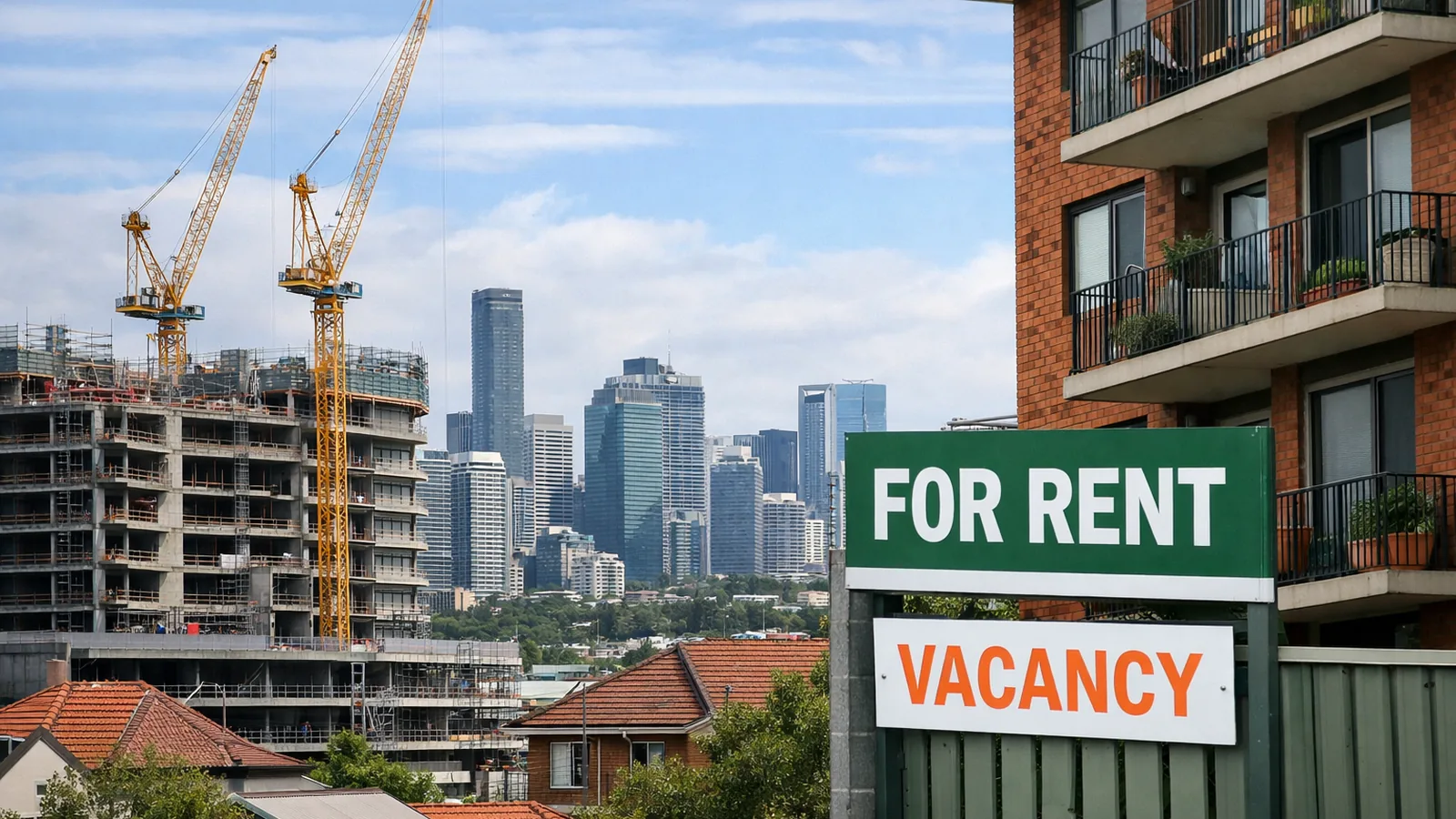
Higher rates do not just reduce what buyers can borrow. They also make new housing harder to finance, harder to deliver and, in some cases, easier to delay. That matters in a market where vacancy is already tight and rental pressure has not properly cleared. SQM Research says the national residential vacancy rate fell to 1.1 per cent in February 2026, while advertised rents were up 6.6 per cent over the year.
So yes, rate rises can slow parts of the market. But they can also make the housing shortage more stubborn.
The rate move that hits both demand and supply
Most commentary stops at borrowing power. Fair enough. When rates rise, serviceability gets tighter and buyers can no longer stretch as far as they could six months ago. That is the immediate effect.
The second-order effect is less discussed. Developers face higher finance costs. Builders still deal with expensive labour, insurance and inputs. Apartment projects that already looked marginal can become too hard to stack up. In January 2026, total dwelling approvals fell 7.2 per cent nationally, with private sector dwellings excluding houses down 24.5 per cent. That is not a supply story getting easier.
This is the catch: if rates reduce demand a bit, but reduce future supply as well, renters do not necessarily get relief. In some pockets, they get the opposite.
Why renters could wear more pain from here
Rents do not rise because landlords wake up and choose a number. They rise when the market is short of available homes.
That shortage is still real. Vacancy rates remain well below normal, and the pipeline of new stock is hardly convincing. If financing gets tougher again, the number of delayed or cancelled projects can rise with it. Fewer completions tomorrow means fewer rental options later.
In plain English
Higher rates can cool buyers today, but they can also choke off new housing tomorrow. In a market already short on stock, that can keep rents rising even while the economy slows.
That is why the simple line that “higher rates fix housing inflation” misses part of the picture. They may cool price growth in some segments. They do not automatically fix a supply shortage.
The labour market is not as comforting as the headline suggests
There is also a broader economic point here.
Australia’s seasonally adjusted unemployment rate rose to 4.3 per cent in February 2026, which is still low by historical standards. But underemployment remained 5.9 per cent, and that tells you the headline rate does not capture the whole picture for households trying to absorb higher repayments and higher rent at the same time.
That does not mean the labour market is weak in the way some commentators claim. It does mean plenty of households already feel softer than the top-line number suggests.
And that is the policy bind. The RBA is trying to contain inflation. Canberra still wants growth, jobs and housing delivery. But if rates stay higher for longer while supply remains constrained, the adjustment becomes uneven. Borrowers feel it. Renters feel it. Existing owners with no mortgage feel a lot less of it.
What happens to the affordable end of the market
This is where the property argument gets more interesting.
When borrowing power falls, buyers do not all vanish. Many simply slide down the price ladder. Someone who could chase a higher-priced asset last year may now look one bracket lower. Someone aiming at a premium suburb starts looking at a more affordable one. That reshuffles demand rather than removing it.
The practical effect is often strongest at the lower and middle price points, especially in markets with tighter yields, limited new supply and more value-sensitive buyers. That does not mean every cheap market booms. It does mean the affordable end can stay more resilient than the top end when credit tightens.
Recent market data points in that direction. PropTrack’s February 2026 Home Price Index showed national home prices rose 0.5 per cent over the month and were 9.1 per cent higher than a year earlier, even as rates moved higher again.
So the story is not simply “higher rates mean lower prices”. It is usually more selective than that.
The oil and construction problem is still lurking
The transcript’s broader point about energy and construction costs also deserves a cleaner framing.
Housing is not built in isolation from the rest of the economy. Fuel, freight, materials, subcontractor pricing and site costs all feed through. The ABS producer price data for late 2025 showed residential building construction costs were still rising, driven in part by labour and input pressures.
That matters because Australia does not just need demand to cool. It needs supply to come through at scale. If energy costs rise, finance stays expensive and builders remain cautious, the floor under replacement costs stays elevated. That does not guarantee house prices rise everywhere. But it does make a clean affordability reset harder to achieve.
The policy question that still has no easy answer
There is a temptation in housing debates to pick one villain and stick with it: rates, migration, taxes, planning rules, investors, government spending. Real markets are messier than that.
Government spending has helped keep activity firmer than it otherwise would have been. The RBA has also been clear that demand still needs to cool enough to bring inflation back to target. Both things can be true at once.
The harder truth is that Australia has tried to solve a structural housing shortage with cyclical tools. Monetary policy can lean on demand. It cannot build dwellings. And when higher rates slow the supply response as well, the outcome for renters can be especially rough.
What would change the story
There are a few things that could soften this view.
A clearer lift in approvals and commencements would help. So would a material easing in vacancy pressure. If inflation drops faster than expected and rates stop rising, some of the financing pressure on supply may ease too. And if labour market conditions weaken more sharply, demand could cool faster than the rental market expects.
But right now, the live data still points to a market short on rental stock, stretched on affordability and vulnerable to another round of delayed supply.
Bottom line
This rate rise is not just a borrowing story.
It is also a supply story, a rental story and a distribution story. The burden does not land evenly. Households carrying debt feel it first. Renters can feel it next if new supply slows further. Meanwhile, parts of the affordable market can stay under pressure because demand does not disappear, it just moves down the ladder.