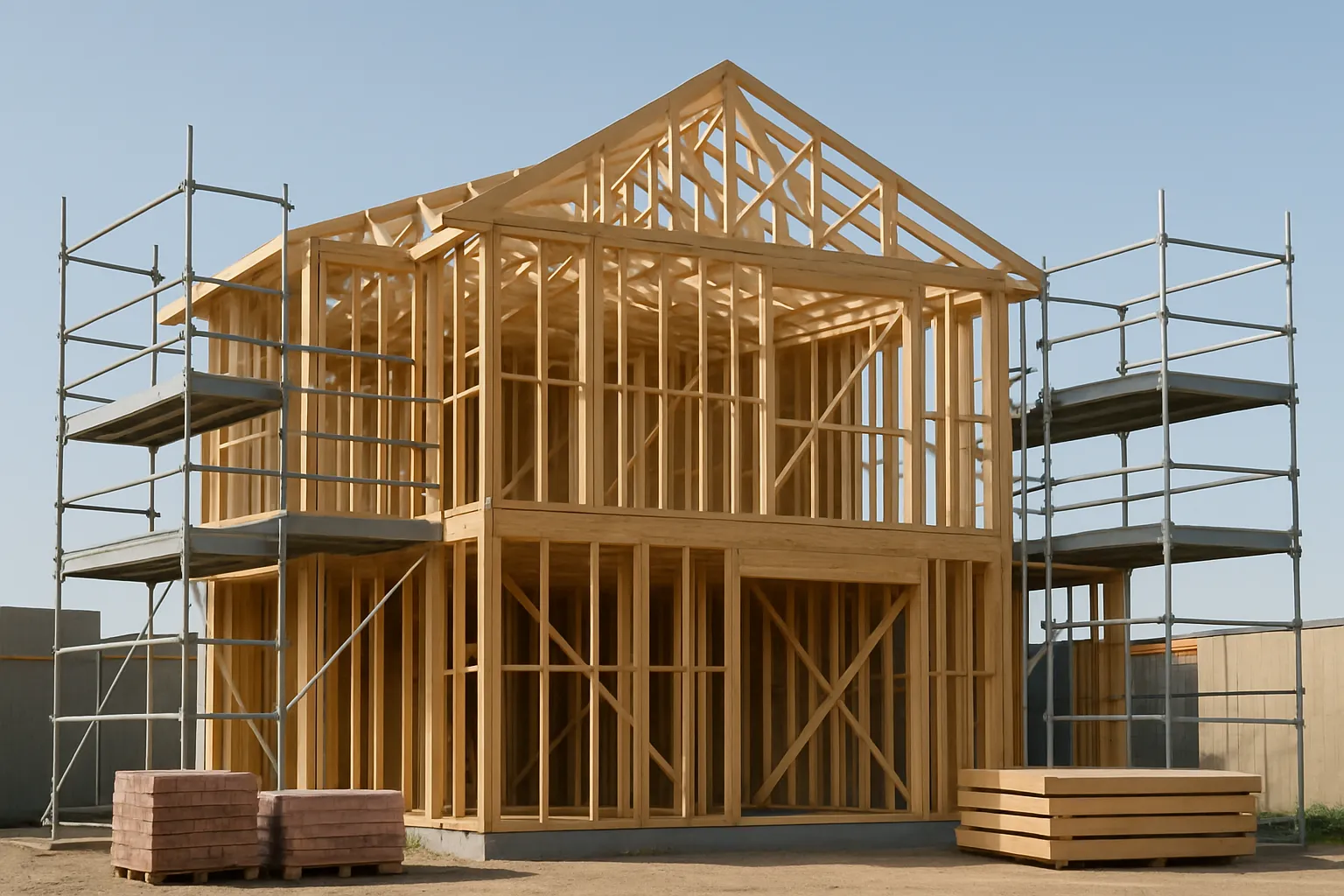
Australia is 85,000 homes behind the National Housing Accord’s 1.2 million dwelling target after just two years, and the workforce pipeline required to catch up remains severely undersized. Industry data puts the residential shortfall alone at 115,000 additional tradespeople, with another 300,000 needed across commercial and civil construction over the same horizon. Current skilled migration settings allocate roughly 18,500 building-qualified permanent migrants already onshore, yet cost and recognition barriers leave many unable to work at full capacity, while domestic apprentice completion rates sit below 50 per cent.
The constraint isn’t total visa numbers, it’s priority sequencing and processing speed within the skilled migration program. Building and construction trades occupy lower priority bands compared to other occupation groups, translating to slower approval timelines and higher rejection rates for employers attempting to sponsor offshore workers. Recognition of prior learning costs migrant tradies around fifteen thousand dollars per person, with additional upskilling required where foreign qualifications don’t align with Australian standards. That expense typically falls to the individual, creating a secondary barrier even after visa approval.
The economic multiplier per worker
Each skilled migrant entering the construction sector contributes an estimated 21 additional homes over a 30-year career and generates close to two million dollars in economic activity, according to employer association modelling. That figure accounts for direct building output plus indirect spend flowing through materials, services and related trades. The multiplier strengthens the case for faster visa pathways, but only if downstream constraints, land release, planning approvals, materials supply, don’t bottleneck output regardless of workforce size.
The 1.2 million home target was last achieved roughly two decades ago, when productivity per worker ran higher and total sector employment was larger. Meeting it again requires either a return to that productivity level or a step-change in workforce scale. Federal and state apprenticeship incentives lifted commencements during the pandemic, yet completion funding is scheduled to decline in 2027, creating a forward gap just as demand peaks. Group training organisations, which achieve higher completion rates than direct employment models, are flagged as underfunded relative to the task.
Callout: The numbers that matter
- 85,000 homes: cumulative shortfall against the Housing Accord target after two years
- 115,000 tradies: additional workers required for residential construction alone
- 18,500 migrants: building-qualified permanent visa holders already onshore
- Sub-50%: apprentice completion rate across construction trades
- $15,000: typical cost for recognition of prior learning per migrant tradesperson
- 21 homes: estimated output per skilled migrant over a 30-year career
Where federal and state levers differ
Federal control sits over visa priority rankings, processing capacity and national skills lists. State governments manage apprenticeship co-investment, group training funding and industry engagement on the ground. South Australia is cited as running a tighter coordination model, aligning state-level workforce programs with federal migration settings and consulting industry more frequently on pinch points. Other jurisdictions lag, leaving gaps between policy intent and on-site reality.
Raising migration numbers alone won’t close the gap if qualification recognition remains slow or costly, or if planning and land supply constraints cap build rates regardless of workforce availability. The system needs parallel fixes: faster skilled visa pathways for construction trades, subsidised prior learning recognition for migrants already onshore, reinstated apprentice completion funding post-2027, and expanded group training capacity. Each lever matters, but the binding constraint shifts depending on which bottleneck clears first.
Trade-offs nobody is naming
Accelerating skilled migration without lifting apprentice completion rates risks entrenching reliance on offshore labour rather than building domestic pipeline depth. Conversely, focusing only on apprenticeships defers workforce scale for three to four years, the duration of most trade qualifications, leaving near-term housing targets unreachable. The optimal mix is both, weighted toward migration in the short run and apprenticeships for long-run capacity, yet current policy settings under-invest in both simultaneously.
Another trade-off: automatic recognition of foreign qualifications speeds workforce entry but introduces quality variance across different sending countries’ training standards. Selective recognition with upskilling requirements maintains standards but creates cost and time friction. The middle path, targeted, fast-tracked recognition for countries with comparable frameworks, paired with subsidised gap training, exists in principle but remains underfunded and inconsistently applied.
Timing and what shifts next
The Federal Government’s skilled migration review is ongoing, with priority adjustments possible by early 2027. State budget cycles will determine whether apprentice funding holds or contracts after mid-2027. Queensland’s Olympic infrastructure program pulls workers from other states through 2032, tightening labour supply nationally even if total headcount grows. That means any policy response needs to arrive within the next twelve months to materially affect 2028-2029 build rates, the midpoint of the Housing Accord window.
If settings don’t shift, expect the 85,000-home shortfall to widen to 150,000-plus by year three, pushing the 1.2 million target out of reach without a corresponding extension of the timeframe or a sharp productivity lift that current data doesn’t support. The risk isn’t a sudden collapse, it’s a grinding underperformance that locks in higher prices, tighter rental markets and delayed first-home purchases for another half-decade.
If you’re making a call this year
Buyers banking on near-term price softening driven by supply increases should recalibrate: workforce constraints mean supply growth stays below the pace required to materially ease price pressure in metro markets through 2027-2028. Developers and builders factor longer lead times and higher labour costs into project feasibility, narrowing the margin on marginal sites and slowing approvals conversions. Investors weighing new construction versus established stock should note that delivery delays on new projects are more likely than not over the next 18 months, while established stock remains immediately available but at higher entry prices.
For those already holding property, workforce shortages support price stability in supply-constrained markets, but the same constraint limits renovation and extension capacity, lengthening wait times and raising quotes. That trade-off matters if your hold strategy depends on improving or subdividing existing assets to unlock value.
Explore how supply constraints are playing out across different market segments and where housing policy risks intersect with investor decisions. If this breakdown helped clarify the workforce gap behind the housing numbers, subscribe to Australian Property Review’s weekly newsletter for the next round of policy moves and what they mean for your next decision.
General info, not financial advice.