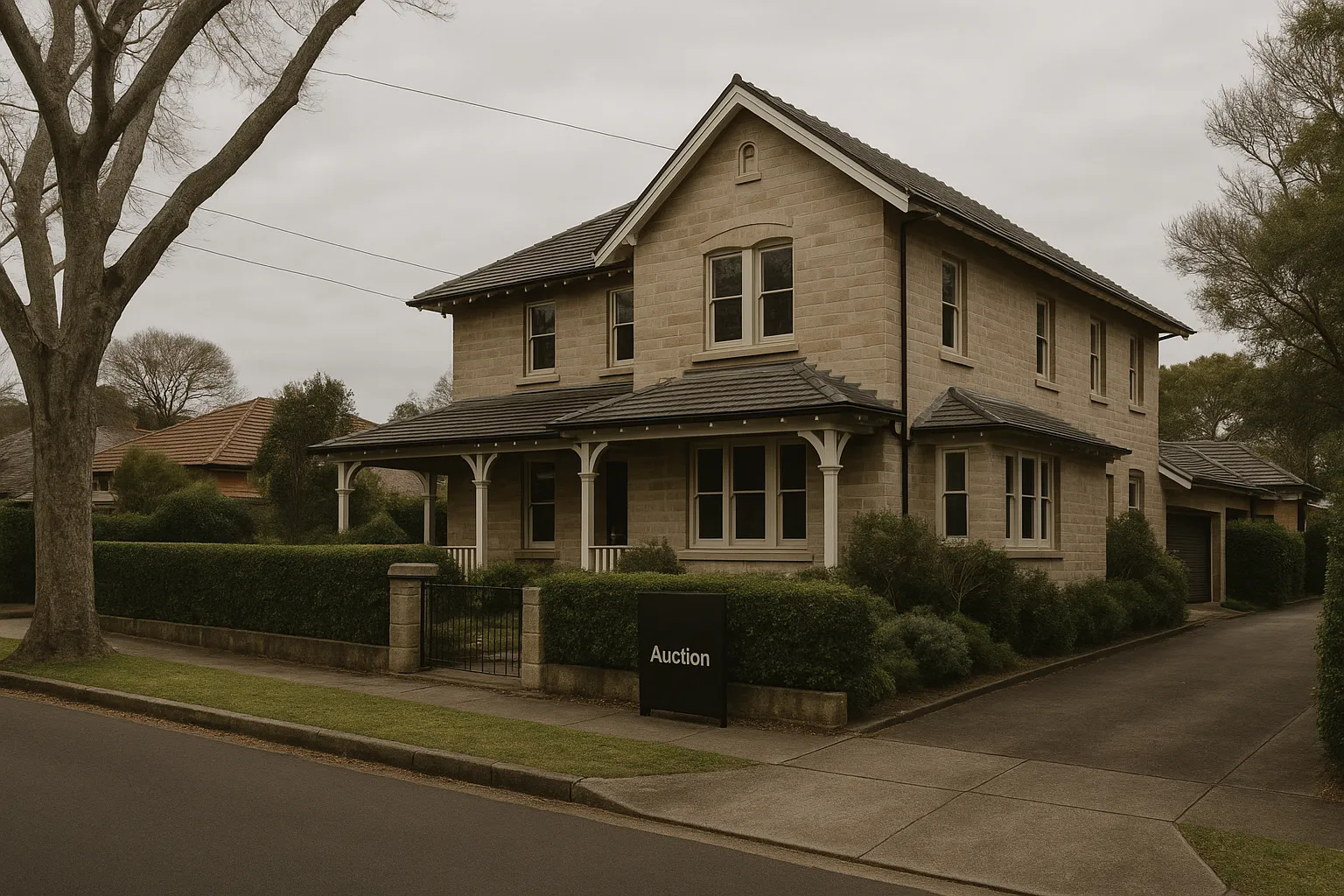
A prestige family home that traded for $4.7 million in early 2025 resold last weekend for $4.355 million, crystallising a $345,000 loss in twelve months. The sale coincided with a sharp drop in Sydney’s auction clearance rate, pointing to a shift from cautious holding patterns to genuine vendor pressure.
The loss represents a 7.3 per cent decline in a segment that typically holds value through credit cycles. Prestige property moves slowly in a downturn, owners can afford to wait, and most do. When a North Shore or Eastern Suburbs seller accepts that kind of haircut inside a year, it’s worth asking what changed.
Two explanations, different implications
The timing sits directly between two major forces. NSW’s property tax transition, announced in stages through 2025, gives high-value owners a narrow window to exit under the old stamp duty regime before annual holding costs reset the math. That creates a mechanical reason to sell now rather than hold through spring.
But rate pressure tells a different story. Mortgage holders who stretched to buy at the 2024 peak are now servicing debt at 6.5 to 7 per cent, with wages rising slower than expected and no rate relief in sight. A prestige buyer who borrowed $3.5 million is paying roughly $23,000 a month. If employment or business income wobbles, the carrying cost becomes untenable quickly.
The clearance rate drop suggests this isn’t an isolated distress sale. When multiple vendors accept discounts in the same weekend, it signals a repricing moment.
Callout: Key numbers
Sale price drop: $345,000 (7.3%) in 12 months
Typical prestige holding period: 8–12 years
Current Sydney clearance rate: down from 65–70% (Jan–Mar 2025) to sub-60% range
Mortgage serviceability floor: 3% buffer above actual rate (APRA standard)
Who else is feeling the squeeze
Prestige sellers fall into three buckets right now. First, tax-change movers who planned to downsize or relocate anyway and are bringing forward the sale to lock in stamp duty savings. Second, mortgaged buyers from 2023–24 who underestimated how long high rates would persist. Third, developers or investors who bought prestige stock as land-bank plays and now need liquidity.
The first group can negotiate but won’t panic. The second group is time-sensitive, if serviceability is tight, every month of holding costs matters. The third group depends on funding terms and project timelines, but land bank sales tend to move faster than owner-occupier stock when conditions shift.
For buyers, the question is how many vendors are in category two or three. If this weekend’s result was one distressed seller meeting one opportunistic buyer, the market hasn’t moved. If it’s the first of several similar outcomes, the spring campaign calculations just changed.
The clearance rate context
Sydney’s auction clearance rate has been sliding since late March 2025. The rate sits well below the 65–70 per cent band that defined the first quarter, and clearance rates under 60 per cent historically indicate buyer hesitation or vendor mispricing. Auction volumes remain elevated, meaning more stock is being tested and more is passing in or selling below reserve.
Clearance rates can drop for two reasons: vendors hold firm on price while buyers pull back, or buyers sense softness and lower their bids. The $345,000 loss suggests the latter. When a vendor accepts a meaningful discount rather than withdraw and wait, it signals that holding is no longer the best option.
Spring timing and the decision window
Vendors planning spring campaigns, typically launched in late August and running through October, now face a choice. List into a falling clearance rate and accept that buyers have the leverage, or hold and hope conditions stabilise by summer.
The risk in waiting is that if rates stay elevated and tax-change deadlines approach, spring 2026 could see even heavier supply. The risk in selling now is crystallising a loss when holding another 12–18 months might recover value if rates eventually fall.
There’s no perfect answer. The deciding factors are cashflow (can you carry the mortgage and holding costs without stress), time horizon (do you need to move or can you wait three years), and tax position (does the reform window matter for your situation).
What would change this trajectory
Two things could stop the slide. First, a rate cut, even a small one, would shift sentiment immediately. Prestige buyers are rate-sensitive, a 25 basis point move doesn’t change the monthly payment dramatically, but it changes the psychology. If the market believes cuts are coming, clearance rates stabilise.
Second, a pause in new listings. If spring campaigns are pulled or deferred, the supply pressure eases and the remaining stock finds firmer pricing. But that requires vendor coordination, which doesn’t happen in a distributed auction market.
The base case is that clearance rates stay soft through winter, spring campaigns proceed with cautious pricing, and we see more sub-peak settlements as vendors who stretched in 2024 meet the market.
Decision filter for prestige sellers
If you’re deciding whether to list now or wait, start with cashflow. If the mortgage is manageable and you’re not forced by tax or relocation timing, holding through the next 6–12 months is the lower-risk path. Prestige markets recover, but they recover slowly, and selling into a clearance rate trough locks in the discount.
If cashflow is tight or the tax reform deadline matters, price 5–8 per cent below recent comparables and be ready to negotiate. The $345,000 loss this weekend wasn’t because the home lost inherent value, it was because the vendor needed to sell and the buyer knew it.
For buyers, the opportunity is real but narrow. Prestige discounts appear when individual sellers face pressure, not when the whole market reprices at once. If you’re cashed up or pre-approved, this is the window. But don’t assume every prestige listing will trade at a loss, most owners can still afford to pass in and wait.
Subscribe to Australian Property Review for weekly clearance data and market signals that matter for your timing.
Related reading: Property tax reform hits prestige market as Sydney clearance rates slide and Housing market downturn deepens as Perth, Brisbane join decline.
General info, not financial advice.