NSW has released a 20-year framework projecting Sydney will need 800,000 additional homes and 950,000 jobs by the mid-2040s, delivered through a network of 30 centres anchored by three main business districts: the existing Sydney CBD, Parramatta, and a new hub called Bradfield in the north-west growth corridor. The plan divides work and housing geographically, Western Sydney is slated for a 59 per cent increase in employment, while the Eastern suburbs are expected to deliver just under half of the city’s new homes in the next five years and three-quarters over the full 20-year horizon.
The shift from a single-CBD model to a polycentric structure isn’t new in theory, Parramatta has been positioned as a second CBD for decades, but this framework formalises it with binding Local Government Area (LGA) targets linked to the National Housing Accord’s 2029 milestones. Each LGA is classified by the density type it should prioritise, and the state has committed to annual progress reports tracking both housing supply and job creation.
The delivery equation
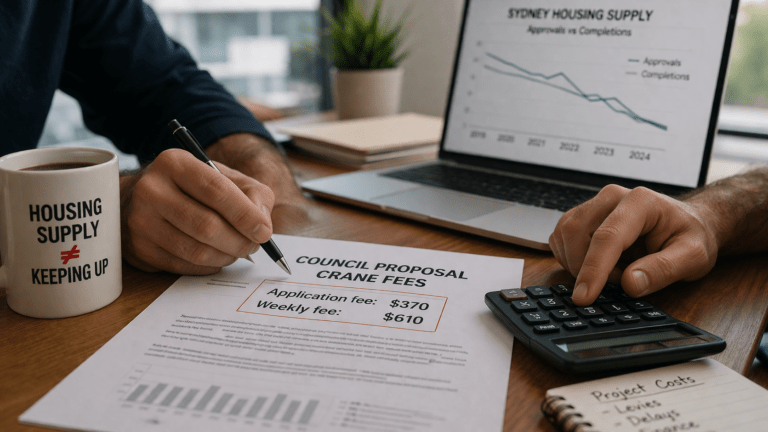
Eight hundred thousand homes over 20 years equals 40,000 per year on average. Sydney’s recent peak completions were around 35,000 annually (pre-pandemic), and current build rates sit closer to 25,000 to 28,000. Closing that gap requires three things moving in sync: planning approvals accelerating, developer capacity expanding, and infrastructure funding flowing to support new density.
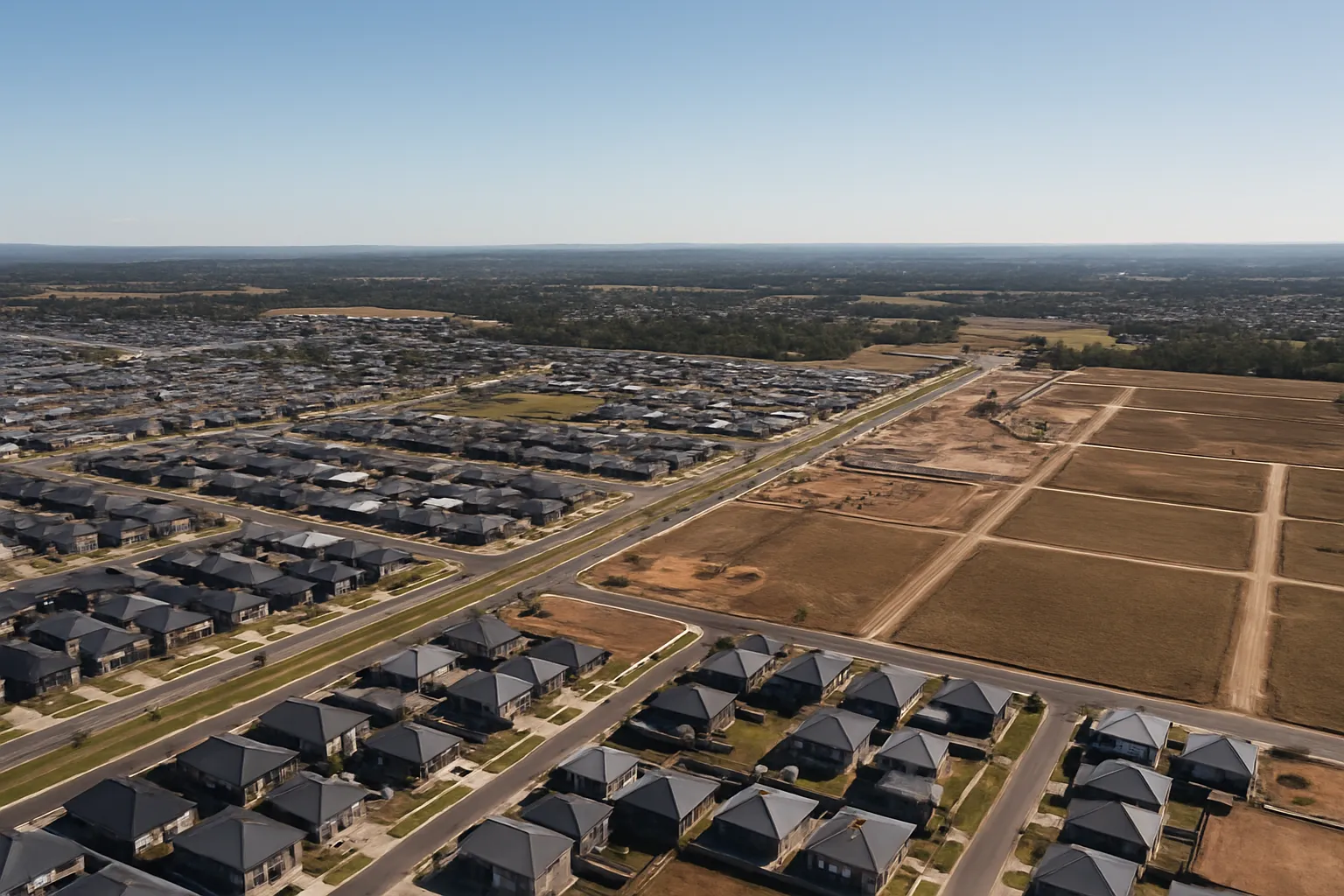
The plan front-loads Eastern suburbs supply because the infrastructure (transport, utilities, services) already exists, rezoning and infill can happen faster when you’re not waiting for new train lines or trunk sewerage. Western Sydney’s job-growth target depends on the inverse: employment precincts need roads, rail extensions, and commercial anchor tenants before residential follow-through makes sense. The Bradfield CBD, for example, is tied to the Metro Northwest and future Western Sydney Airport precinct, both of which are still ramping up.
The risk is a coordination failure. If approvals flow but infrastructure lags, you get housing without access to jobs or services. If infrastructure arrives but planning controls stay restrictive, you get underutilised capacity. The annual progress reports are the mechanism meant to catch that slippage early, but the framework doesn’t specify penalties or funding guarantees if an LGA or the state itself falls behind.
Where land values shift
A polycentric model redistributes capital. If Western Sydney genuinely adds 350,000 jobs over 20 years (59 per cent growth from current base), employment-linked land values in centres like Blacktown, Liverpool, Penrith and Campbelltown will compress the discount to Eastern suburbs commercial property. That’s a structural shift, not a cycle, it changes the risk-return profile for industrial-to-mixed-use rezoning plays and large-format retail conversions near future job nodes.
For residential, the Eastern suburbs承absorbing three-quarters of long-term supply means continued density increases in areas already well-serviced. That supports land values where zoning changes unlock additional yield (low-rise to mid-rise, detached to townhouse), but it also means more supply competing for the same tenant and buyer pool. Investors banking on scarcity in inner-ring postcodes need to price in that the scarcity is policy-controlled, and this plan explicitly aims to reduce it.
Western growth corridors face the opposite dynamic: large land parcels with infrastructure risk. If the jobs arrive and the Metro extensions proceed on schedule, early land banking pays off. If employment growth undershoots or infrastructure funding gets deferred (state budget pressure, federal co-funding delays), you’re holding land in a market where demand is still commute-dependent and the commute hasn’t improved.
Key numbers
- 800,000 homes targeted over 20 years (40,000 per year average; recent peak ~35,000)
- 950,000 new jobs projected; Western Sydney to add 59% employment growth by 2046
- Eastern suburbs: ~50% of new homes in next 5 years, 75% over 20 years
- 30 interconnected centres across three main CBDs (Sydney, Parramatta, Bradfield)
- 8,400 social and affordable homes committed under existing Building Homes package
Structural constraints
Planning approval timelines in NSW currently average 12 to 18 months for medium-density projects and longer for large master-planned estates requiring infrastructure contributions. The framework doesn’t reform that process, it sets targets within the existing approval structure. Developer capacity is already constrained by labour shortages, material costs, and financing conditions (construction debt is expensive and short-term). Scaling to 40,000 completions per year means adding roughly 15,000 homes annually to current run rates, which implies either a significant increase in large-scale builders’ activity or a wave of new entrants, both of which take time and carry execution risk.
Infrastructure funding is the binding constraint. The plan identifies where growth should happen but doesn’t commit state or federal capital to the trunk infrastructure (heavy rail, road corridors, water, schools, hospitals) required to support it. Annual progress tracking helps with transparency, but it doesn’t solve the funding gap. If budget pressures defer or dilute infrastructure spending, the employment and housing targets decouple, and the polycentric model stalls.
Who this affects and how
Investors in Western Sydney growth corridors: if you’re buying land or off-the-plan in Bradfield, Campbelltown, Penrith or Liverpool nodes, your return depends on infrastructure delivery matching the job-growth projection. That’s a 10 to 15-year horizon with multiple political and funding gates. Base case assumes some delays; upside case assumes Metro extensions and airport precinct proceed on schedule; downside case is infrastructure deferral and job growth undershoots, leaving you with longer hold periods and weaker rental demand than modelled.
Investors in Eastern suburbs infill: continued density increases support land values where you can unlock additional yield through rezoning or redevelopment, but supply growth also means more competition for tenants and buyers. Vacancy risk rises if completions outpace net household formation in specific postcodes. Check LGA-level targets against current pipeline, if your suburb is already at or above its five-year goal, further price growth depends on demand drivers (wage growth, migration, credit settings) not supply tailwinds.
Owner-occupiers in established inner-ring areas: more medium-density supply in your LGA can moderate price growth (more stock chasing similar demand) but also improves amenity if it’s delivered with infrastructure. The trade-off is neighbourhood character versus housing access, this plan leans toward access.
Developers and builders: targets create a clear pipeline, but financing and approval speed are still your constraints. The plan doesn’t ease DA timelines or reduce infrastructure contribution requirements, so volume growth depends on your ability to scale within existing cost structures.
Scenarios over the next five years
Base case: Eastern suburbs hit ~50 per cent of the five-year target (approvals flow, infill projects proceed), Western Sydney adds jobs but at a slower pace than projected due to infrastructure delays, state delivers 60–70 per cent of the 200,000 five-year housing goal. Land values in designated growth centres rise modestly; inner-ring price growth moderates as supply increases.
Upside case: Infrastructure spending accelerates (federal co-funding, state budget capacity improves), Metro extensions and airport precinct proceed on schedule, planning reforms (separate to this framework) cut approval times, housing completions approach 35,000–38,000 per year by year five. Western Sydney employment growth meets projections, land values in Bradfield and Liverpool nodes compress the discount to Parramatta.
Downside case: Budget pressures defer infrastructure, approval backlogs persist, developer insolvencies or financing constraints limit build capacity, five-year completions fall short at 25,000–28,000 per year (roughly current run rate). Job growth in Western Sydney undershoots, polycentric model doesn’t take hold, demand stays concentrated in established areas, Eastern suburbs supply still adds but without the offsetting jobs decentralisation, vacancy rates tick up in new infill stock.
What to watch in the next 12 months
First annual progress report (expected mid-2026): tracks LGA-level approvals and completions against targets, flags early slippage. State budget (June 2025 if early election, otherwise mid-2026): infrastructure capital commitments for Western Sydney transport and utilities. DA approval timeframes: any legislative changes to streamline planning would signal serious intent; absence of reform means targets rely on current slow process. Bradfield precinct updates: commercial anchor tenant announcements, Metro Northwest patronage data, rezoning progress, these are leading indicators for whether the third-CBD model is gaining traction or staying aspirational.
If you’re making a land or development decision in a growth corridor, model a two-year infrastructure delay and a 10–15 per cent job-growth shortfall as your risk case. If you’re investing in established infill areas, track your LGA’s progress against its five-year target, once it’s met, further density depends on state willingness to exceed the plan, which is politically harder.
For a deeper look at how demographic shifts are already reshaping housing demand in ways current policy hasn’t priced in, see Housing demand shifts baked in by 2050 that policy isn’t pricing. If you’re tracking NSW’s broader construction cost and approval reforms, NSW building laws target 20% cost cut, here’s the catch covers the mechanics and trade-offs.
Subscribe to the newsletter for the weekly signal on policy, supply and what’s changing in Australian property markets.
General info, not financial advice.