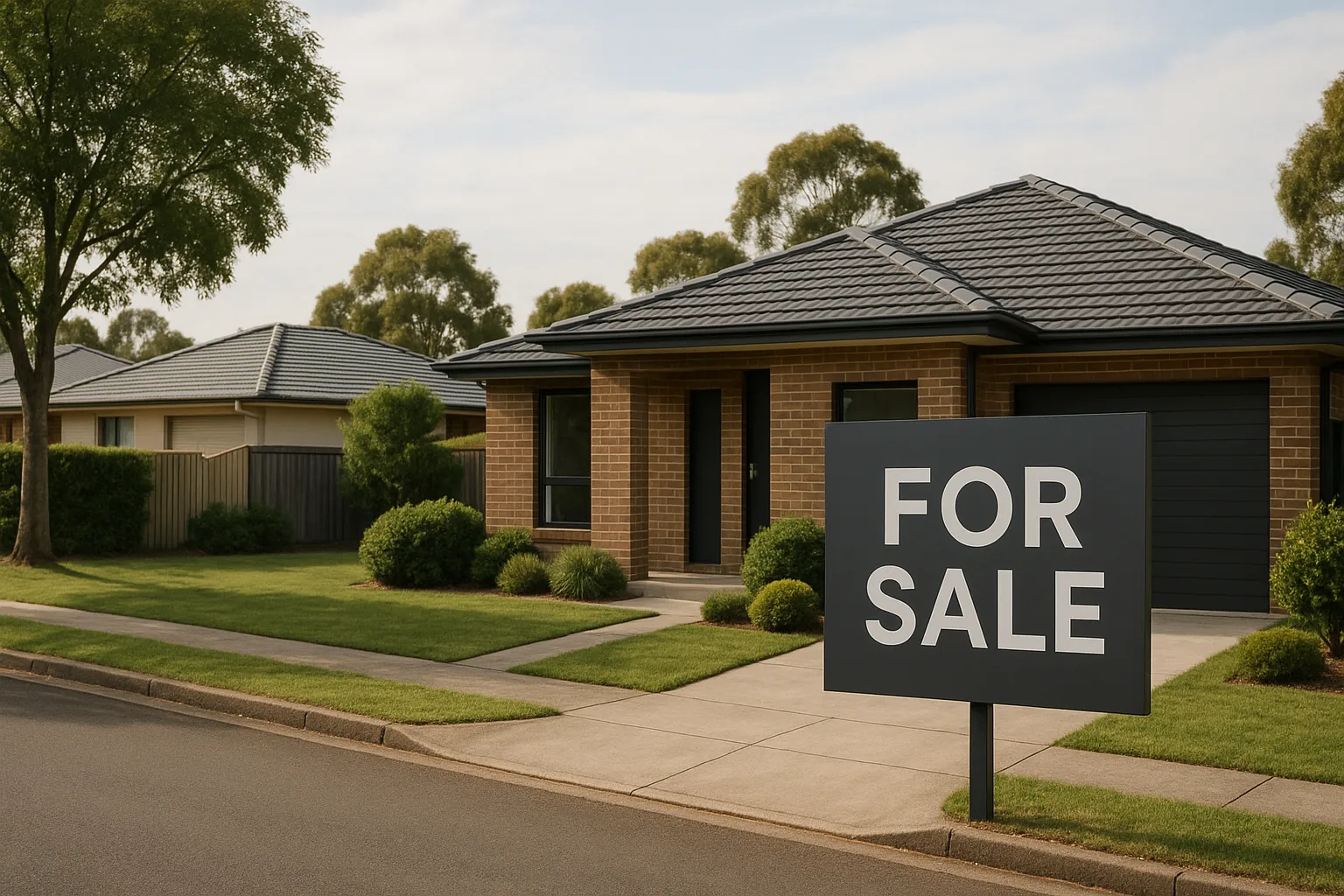
A $250,000 premium has emerged between some Sydney suburbs and their neighbours offering similar housing stock and amenities. The pattern is concentrated in eastern beaches, north shore enclaves, and scattered western pockets where multi-year outperformance has left prices detached from comparable alternatives within a few kilometres.
New data from SuburbData flags Collaroy, Avalon Beach, Palm Beach, North Manly and South Coogee as carrying premiums that recent buyer behaviour suggests are unsustainable. Out west, St Johns Park, Wakeley, Old Guildford and Ashcroft show similar disconnects. PropTrack reported house values fell in 91 per cent of Sydney suburbs during the July quarter, with 400 suburbs down more than $50,000 and 200 dropping over $100,000.
The mechanism: suburbs that outperformed for years eventually hit a ceiling where buyers redirect to cheaper comparable options. Rising supply and falling demand in the premium pocket accelerate the repricing.
The catch nobody talks about
Overvalued does not mean expensive in absolute terms. It means priced above what local fundamentals and buyer willingness currently support relative to substitutes. A $2 million Avalon Beach house is not overvalued because it costs $2 million; it is overvalued if a similar house 3km away trades at $1.75 million with the same school zones, beach access and commute times, and buyers are now choosing the cheaper option.
Undervalued works in reverse: prices sitting below what metrics suggest, often because an area lagged during the boom and has room to catch up. Oyster Bay, Caringbah, Caringbah South, Heathcote, The Ponds, Acacia Gardens, Woodcroft, Marayong and Schofields appear on that list. So do Newtown and Drummoyne in the inner west, where agents report upgraders re-entering after being priced out in 2021-22.
The risk for overvalued pockets: stagnant values or outright falls that wipe equity. The opportunity in undervalued areas: repricing upward if demand stabilises, though no guarantee exists that laggards catch up rather than stay cheap for structural reasons.
What drives the gap and what closes it
Price divergence between similar suburbs stems from momentum, scarcity perception, and buyer composition. Premium suburbs attract cohorts willing to pay for brand (postcode prestige, school reputation, lifestyle signalling). That cohort shrinks when rates rise, serviceability tightens, or tax policy uncertainty enters the picture. Supply matters: if listings rise in the premium suburb while the cheaper alternative stays tight, the gap compresses fast.
Undervalued suburbs often carry stigma (real or perceived), infrastructure deficits, or zoning constraints that cap density and therefore long-term price upside. The Ponds and Schofields benefit from metro rail but face competition from continuous new-build estates in the corridor. Oyster Bay and Heathcote offer Sutherland Shire amenity at a discount but lack the water frontage or retail density of higher-priced neighbours.
Gaps close through one of three paths: the expensive suburb falls, the cheap suburb rises, or both move toward each other. Right now, falling demand and rising rates favour the first path. If rates stabilise or cut in 2024-25, undervalued pockets with tight supply could see the second.
Pressure points worth watching
Interest rate direction is the primary variable. Another 25bp hike extends the correction; a hold or cut changes sentiment within weeks. Listing volumes in overvalued suburbs will show whether sellers panic or hold. If auction clearance rates in premium pockets drop below 50 per cent for three consecutive months, forced selling accelerates the repricing.
Negative gearing and capital gains tax changes add a second layer. Investors who bought in overvalued suburbs banking on continued capital growth now face higher holding costs and uncertain tax treatment. That cohort is more likely to exit than owner-occupiers, lifting supply in investment-heavy areas.
Undervalued suburbs face a different test: do they stay cheap because of structural issues (poor transport, crime perception, limited schools) or were they genuinely mispriced? Buyers need to separate value from value trap. A suburb undervalued because it is next to a quarry or flood zone will not reprice upward. A suburb undervalued because it lagged the boom while fundamentals stayed solid has better odds.
Three scenarios over the next 12 months
Base case: RBA holds rates, listings rise modestly, overvalued suburbs correct 8-12 per cent, undervalued suburbs stay flat to up 3 per cent. Gap narrows but does not close.
Upside: RBA cuts twice by mid-2025, demand rebounds, undervalued suburbs rise 6-10 per cent as buyers who sat out re-enter at perceived value. Overvalued suburbs stabilise but do not recover lost ground.
Downside: another rate hike or recession, forced selling in overvalued pockets, 15-20 per cent falls, undervalued suburbs also drop 5-8 per cent as liquidity dries up across the board. Gap stays wide but both sides fall.
None of these scenarios are certainties. They are probabilities shaped by policy, employment, and offshore capital flows.
Key numbers
- 91% of Sydney suburbs recorded house price falls in the July quarter (PropTrack)
- 400 suburbs dropped more than $50,000 in median value
- 200 suburbs fell over $100,000
- Price gaps between overvalued suburbs and comparable neighbours: up to $250,000
- Overvalued clusters: eastern beaches, north shore, northern beaches, select western areas (Fairfield, Liverpool)
- Undervalued clusters: Blacktown region, Sutherland, inner west (Newtown, Drummoyne)
Bottom line for buyers and holders
If you own in an overvalued suburb and plan to hold 5+ years, the correction may not matter if you are not forced to sell and the area eventually re-rates. If you need liquidity in 1-3 years, the equity risk is real. Selling now locks in a loss; holding bets on a rebound that may not arrive.
If you are buying in an undervalued suburb, pressure-test why it is cheap. Visit at different times, check crime stats, map future infrastructure, talk to locals. Undervalued because of temporary sentiment is opportunity. Undervalued because of permanent constraints is a trap.
Overvalued and undervalued are not static labels. They shift with rates, supply, and sentiment. A suburb overvalued today can become fairly valued in 18 months if it stops rising while peers catch up. A suburb undervalued today can stay that way indefinitely if structural issues persist.
The practical move: if you are considering a purchase in either category, model it at current rates plus 50bp, assume zero capital growth for two years, and check if the cashflow still works. If not, pass. If yes, the mispricing becomes less relevant.
Want the weekly data and scenarios that matter? Subscribe to the newsletter.
General info, not financial advice.