The Productivity Commission’s interim housing inquiry has put a specific idea in front of Australians: rezone most residential land in major cities to allow buildings up to three storeys, compared with the current two-storey cap in low-density areas. It’s not a recommendation yet, but it’s the centrepiece of a consultation process running through to the final report in March 2027.
The commission is explicit about why. Current state and territory upzoning efforts, which have been gradual and selective, aren’t moving fast enough to hit the 1.2 million homes target. Land use controls, particularly zoning limits, are identified as the single biggest handbrake on supply. The argument is that relaxing those controls would have the greatest effect on dwelling starts.
The mechanics: what blanket upzoning would allow
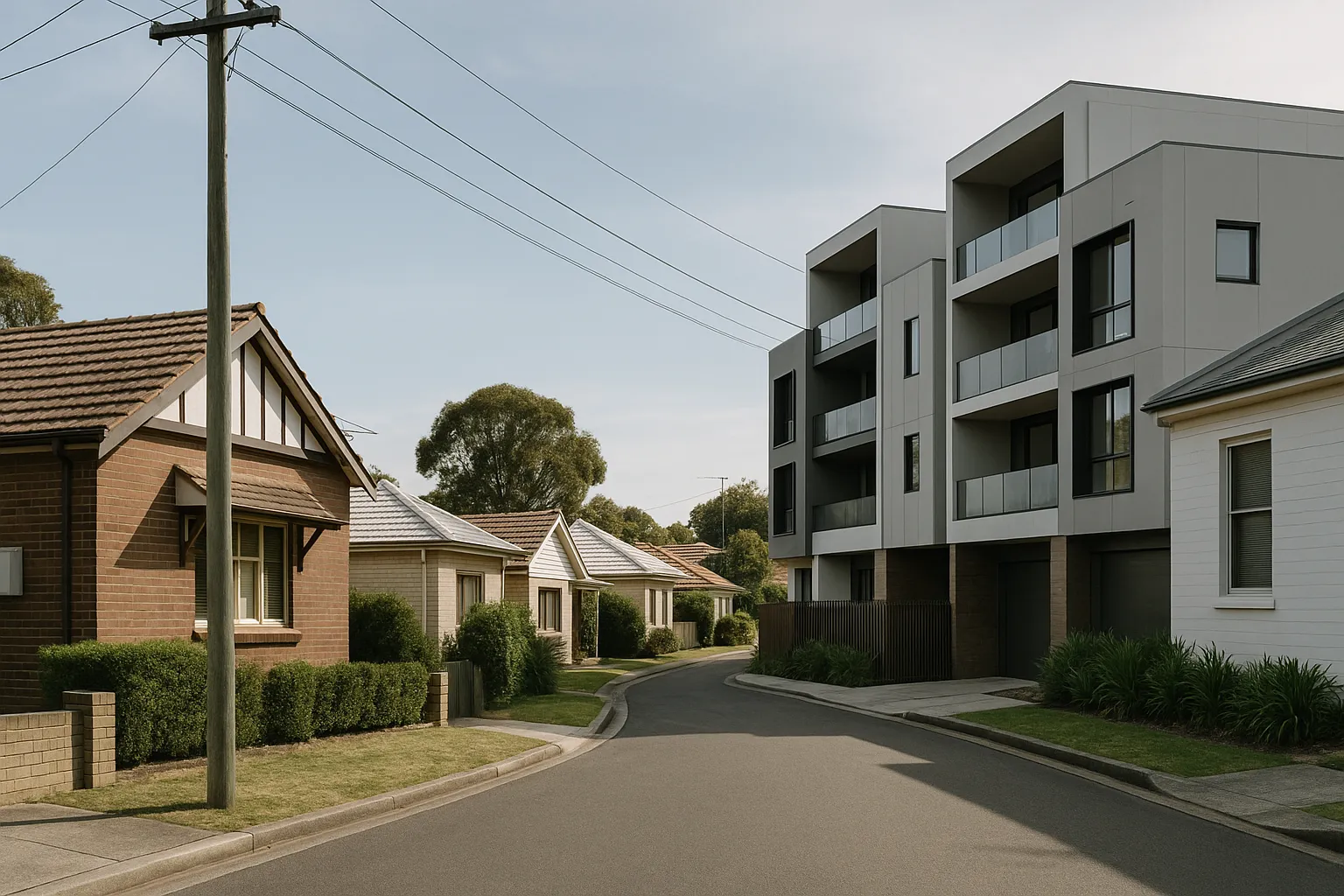
Under a three-storey rule, any residential lot in a major city could in principle accommodate townhouses, terraces, or small apartment blocks instead of just detached homes. The model being tested is similar to New Zealand’s 2020 National Policy Statement on Urban Development, which allowed three-storey buildings as of right across residential zones, plus six-storey development near transit hubs.
Research from a policy institute estimated that a comparable Australian reform could increase dwelling starts by around 67,000 homes annually over the next decade. That number is based on the assumption that developers would respond to newly permissible density, and that approvals processes wouldn’t introduce new delays.
The commission also floats reducing minimum lot sizes, expanding mixed-use zones, and permitting mid-rise and high-rise buildings in high-demand areas. Together, these changes aim to let people live closer to where jobs and services are concentrated, rather than pushing households to outer suburbs where land is cheaper but commutes are longer.
The economic case: productivity gains and who benefits
The commission argues that expensive inner-city housing forces workers into long commutes or mismatches between skills and available jobs. Analysis suggests that letting more people live near employment centres could boost national income by up to 1% of GDP by 2050, or roughly $25 billion a year in today’s dollars.
The mechanism is straightforward: when someone takes a job that fits their skills but requires a two-hour commute, productivity suffers. When they avoid the job altogether because housing nearby is unaffordable, the economy loses the output. Upzoning in theory closes that gap by increasing housing options in high-opportunity areas.
The other beneficiary, if supply does respond, is the household saving for a deposit. The average time to save a 20% deposit has stretched from eight years in 2005 to eleven years now. More supply in desirable locations would, over time, ease price pressure.
The infrastructure catch
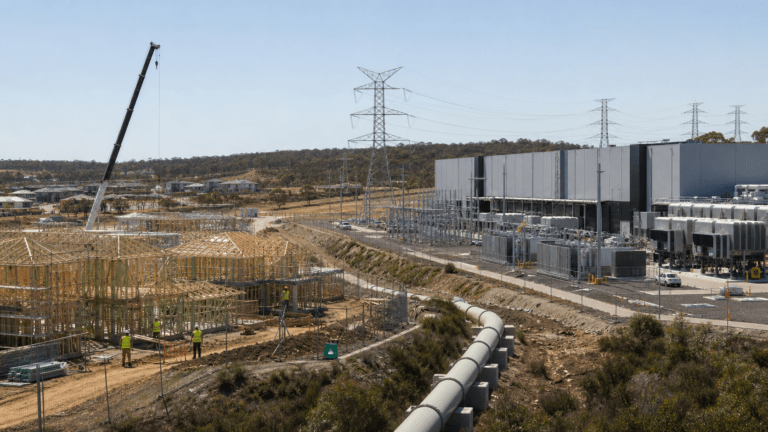
Blanket upzoning delivers new housing only if the necessary pipes, roads, schools, and public transport can handle the increased population. The interim report acknowledges infrastructure planning as a separate reform area, but doesn’t resolve the sequencing problem: who pays for upgrades, and when do they happen relative to new dwellings?
In practice, upzoning without coordinated infrastructure funding can create bottlenecks. A street that goes from single homes to three-storey townhouses might triple its resident count. If the local primary school is already near capacity, or the sewer system was designed for lower density, the new supply creates its own pressure points.
Developer contributions and council rates can fund some upgrades, but large projects (rail extensions, new hospitals) require state and federal budgets. The timing lag between upzoning and infrastructure delivery has been a recurring issue in areas that have already densified, particularly around transport corridors.
What the evidence from New Zealand shows
New Zealand’s upzoning reform is the closest real-world test case. Early data shows an increase in consents for higher-density housing, particularly townhouses, but the full supply response is still unfolding. Some councils have been quicker to process applications under the new rules, while others have introduced design standards that effectively slow approvals.
The lesson so far is that blanket zoning changes are necessary but not sufficient. Approvals processes, construction industry capacity, and infrastructure coordination all matter. If any of those three lag, the promised 67,000 extra homes a year becomes optimistic.
In plain English
Upzoning means changing the rules so more homes can be built on the same piece of land. A three-storey rule would let developers replace a single house with a row of townhouses or a small apartment block, which increases supply without needing new land. The catch is that more homes mean more residents, and that only works if roads, schools, and utilities can handle the extra demand.
The political and community friction
Rezoning has become one of the most contentious issues in Australian housing policy. Existing homeowners in low-density suburbs often oppose higher-density development, citing concerns about parking, traffic, overshadowing, and neighbourhood character. Those objections have real weight in local council decisions and state election campaigns.
The Productivity Commission’s framing, calling current efforts insufficient, is a signal that incremental, suburb-by-suburb rezoning won’t close the supply gap in time. But a blanket rule would remove local discretion, which is precisely what makes it politically difficult. The trade-off is speed versus community control.
Scenarios over the next five years
Base case: states adopt selective upzoning around transport corridors and employment centres, but resist blanket rules. Dwelling starts increase modestly, but affordability remains under pressure in inner and middle-ring suburbs.
Upside: federal government ties infrastructure funding to state adoption of density reforms, creating financial incentive for blanket upzoning. Construction industry scales up to meet demand, and approvals processes are streamlined. Supply increases by 50,000 to 70,000 homes a year by 2029.
Downside: political opposition stalls reforms, and state governments maintain status quo zoning. Housing supply grows only at the current rate, and the 1.2 million homes target is missed by a significant margin. Price growth resumes in 2028 as population growth outpaces new construction.
What this means if you’re deciding now
If you’re a buyer or investor in a low-density suburb close to jobs or transport, upzoning raises two questions. First, does the area have development potential that could see neighbouring properties redeveloped into higher-density housing? That could mean more local amenity over time, or it could mean construction noise and parking pressure in the short term.
Second, does the suburb’s infrastructure (schools, roads, public transport) look capable of handling more residents without serious strain? If not, upzoning might create livability issues that affect resale appeal.
For renters, the supply response matters most. If upzoning does deliver tens of thousands of extra homes annually, vacancy rates would rise and rent growth would slow. But that’s a multi-year outcome, not an immediate one.
The timeline and what happens next
The Productivity Commission is taking submissions on the interim report through early 2027. The final report, due in March 2027, will include formal recommendations. After that, it’s up to state and territory governments to decide whether to adopt any of the proposed reforms.
Given the political friction around rezoning, expect a long negotiation period. Even if blanket upzoning is adopted, implementation would be phased, and the first new homes under the rules wouldn’t be completed until 2028 at the earliest.
Bottom line
Blanket upzoning to three storeys is the most direct way to increase housing supply in established suburbs, but it only works if infrastructure planning and approvals processes keep pace. The New Zealand experience shows that zoning reform alone doesn’t guarantee a surge in construction. The next 12 months will reveal whether Australian governments are willing to trade local planning control for faster supply growth.
If this is relevant to a decision you’re making, start by checking whether your state has released any draft planning reforms in response to the Productivity Commission’s inquiry. Infrastructure funding announcements tied to density targets would be the clearest signal that upzoning is about to accelerate.
Subscribe to the newsletter for the weekly read on housing policy and what it means for your next move.
General info, not financial advice.