Australia talks a lot about housing affordability.
We talk about interest rates. We talk about tax. We talk about planning delays, construction costs, migration, supply targets and bank serviceability tests.
All of that matters.
But there is another part of the affordability story that gets less attention: the size of the homes we keep trying to buy.
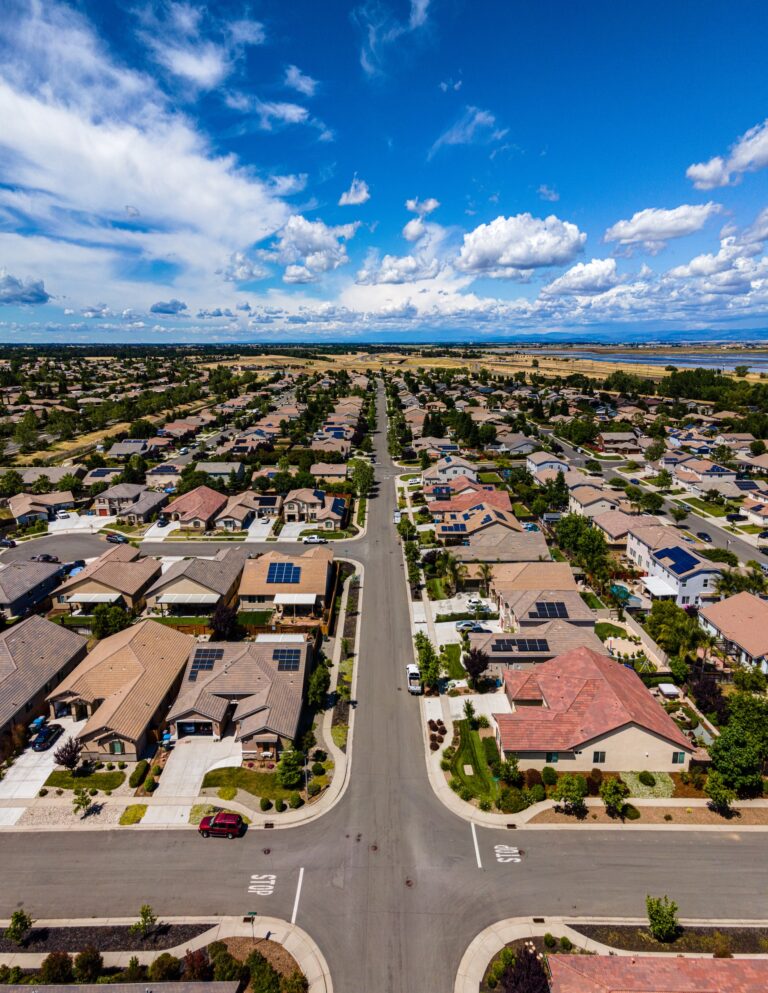
Australian houses have become very large by global standards. ABS data shows new houses in Australian capital cities averaged around 242 square metres in 2021, only slightly below the 2012 level of 245 square metres, even as approved site areas became much smaller.
That creates a strange housing trade-off.
The block gets smaller. The house stays big. The mortgage gets larger. The backyard disappears.
And somehow, the dream still gets sold as more space.
The hidden affordability problem is not just price
The common affordability question is: “Can I buy this home?”
The better question may be: “How much of this home am I actually going to use?”
A larger home does not just cost more upfront. It can also mean:
- a larger loan
- higher interest costs
- more furniture
- higher heating and cooling bills
- more maintenance
- more land consumed per household
- more pressure to move further from jobs, schools and transport
This matters because Australia is not only dealing with expensive housing. It is dealing with expensive expectations.
A spare bedroom sounds sensible. A home office sounds practical. A second living area sounds comfortable. A double garage sounds normal.
Individually, none of those choices are irrational.
Together, they can turn a household’s housing budget into a lifestyle storage bill.
In plain English:
If you buy rooms you rarely use, you are not just paying for extra space. You are paying interest, maintenance and running costs on that space for years.
Bigger homes can push buyers further out
Here’s the catch.
When buyers want a bigger home at a price they can still justify, they often compromise on location.
That usually means moving further from established suburbs into new estates where land looks more affordable. But that affordability can be partly an illusion.
The NSW Productivity and Equality Commission found that building in and close to Sydney CBD can save up to $75,000 in infrastructure costs per home because those areas are already better served by public infrastructure, jobs, schools and open space.
That does not mean every household should live near the CBD. It does mean fringe housing is not automatically the “cheap” option once the full cost of roads, water, sewerage, schools, parks and transport is counted.
Australian Property Review has covered this same supply problem from several angles, including why dwelling approvals can rise while supply risks remain and why construction cost pressure keeps complicating the housing pipeline.
The point is simple: bigger homes do not only affect individual buyers. They also affect the cost of building and servicing whole suburbs.
The one-room-per-job problem
Modern Australian homes often work on a “one room per function” model.
One room for sleeping.
One room for working.
One room for guests.
One room for kids.
One room for entertainment.
One garage for cars, storage, tools and the things no one wants to throw out.
That can be comfortable. It can also be expensive.
The shift to working from home has made this more complicated. A home office is no longer a luxury for many households. It is part of how they work. But it also moves some of the cost of workspace from the employer to the household.
The buyer pays for the room.
The buyer pays interest on the room.
The buyer heats, cools and furnishes the room.
For some households, that trade-off is worth it. For others, a flexible space, shared study nook or smaller home near a co-working option may make more sense.
The risk is buying a floor plan based on the most space-heavy version of your life, not the life you actually live most weeks.
The car space is not free either
Parking is another quiet cost.
A double garage can feel like a non-negotiable part of the Australian home. In apartments, car spaces can also add significant cost to the purchase price because basement parking is expensive to build.
This is where location matters.
A cheaper home with two car spaces may not be cheaper if it locks you into two cars, longer commutes and higher running costs. A smaller home near transport, shops and schools may reduce the need for that extra space.
That does not work for every household. A tradie, shift worker or family in a poorly serviced area may genuinely need car access.
But buyers should pressure-test the assumption.
Are you paying for parking because you need it, or because every comparable home includes it?
The backyard still has value, but it has a price
The backyard is emotional in Australia.
It stands for kids playing outside, weekend barbecues, a dog, a garden and a bit of breathing room.
No argument there. A good backyard can improve quality of life.
The issue is whether the household uses it enough to justify the cost.
If a detached house costs materially more than a townhouse or villa in the same broad market, part of that premium is the private land component. That can be worth paying for, especially for families who use the space daily.
But for households that rarely use the yard, the better trade-off may be a smaller private space near a park, beach, playground or shared garden.
This is not about telling people to live smaller for the sake of it. It is about being honest with the numbers.
A backyard you love is lifestyle value.
A backyard you barely use is expensive grass.
What changed and what didn’t
What changed is the way Australians use homes.
More people work from home. More buyers expect flexible spaces. More households want storage, privacy and comfort. After the pandemic, many people also became less willing to live in homes that feel cramped.
What did not change is the basic maths.
Bigger homes need more materials, more labour, more energy and more land. In a market already dealing with construction constraints, expensive finance and planning delays, size becomes part of the affordability problem.
This also links to first-home buyer pressure. When policy helps more buyers enter the market without enough extra supply, the lower-priced part of the market can heat up first, as Australian Property Review covered in its piece on first-home buyer scheme price pressure.
If the entry-level home keeps getting larger, the entry-level price can keep drifting further away.
The practical test before buying
Before paying for more space, buyers should run a simple test.
Walk through the floor plan and ask three questions:
- How often will this room be used?
Daily use is different from Christmas-only use. - Could one room do two jobs?
A guest room and study. A second living room and kids’ space. A garage and storage zone, if it still fits the car. - Could the neighbourhood replace part of the house?
A nearby park, gym, library, café, transport link or co-working space may reduce the need to internalise everything at home.
This is not a call to buy the smallest property possible. That can create its own problems, especially for families, multi-generational households or people working from home.
The better rule of thumb is this: buy enough space for the life you live most of the year, not the lifestyle brochure version of it.
Bottom line
Australia’s housing affordability debate usually focuses on prices, rates and supply.
It should also focus on size.
The bigger-home mindset has real costs. It affects mortgages, infrastructure, energy use, suburb design and the amount of land needed to house each household.
For buyers, the next step is not to reject space. It is to price it properly.
Start here: before your next inspection, list the rooms you will use every week, the rooms you will use occasionally, and the rooms you are buying mainly because the market tells you they are normal.
That list may tell you more than the floor plan.