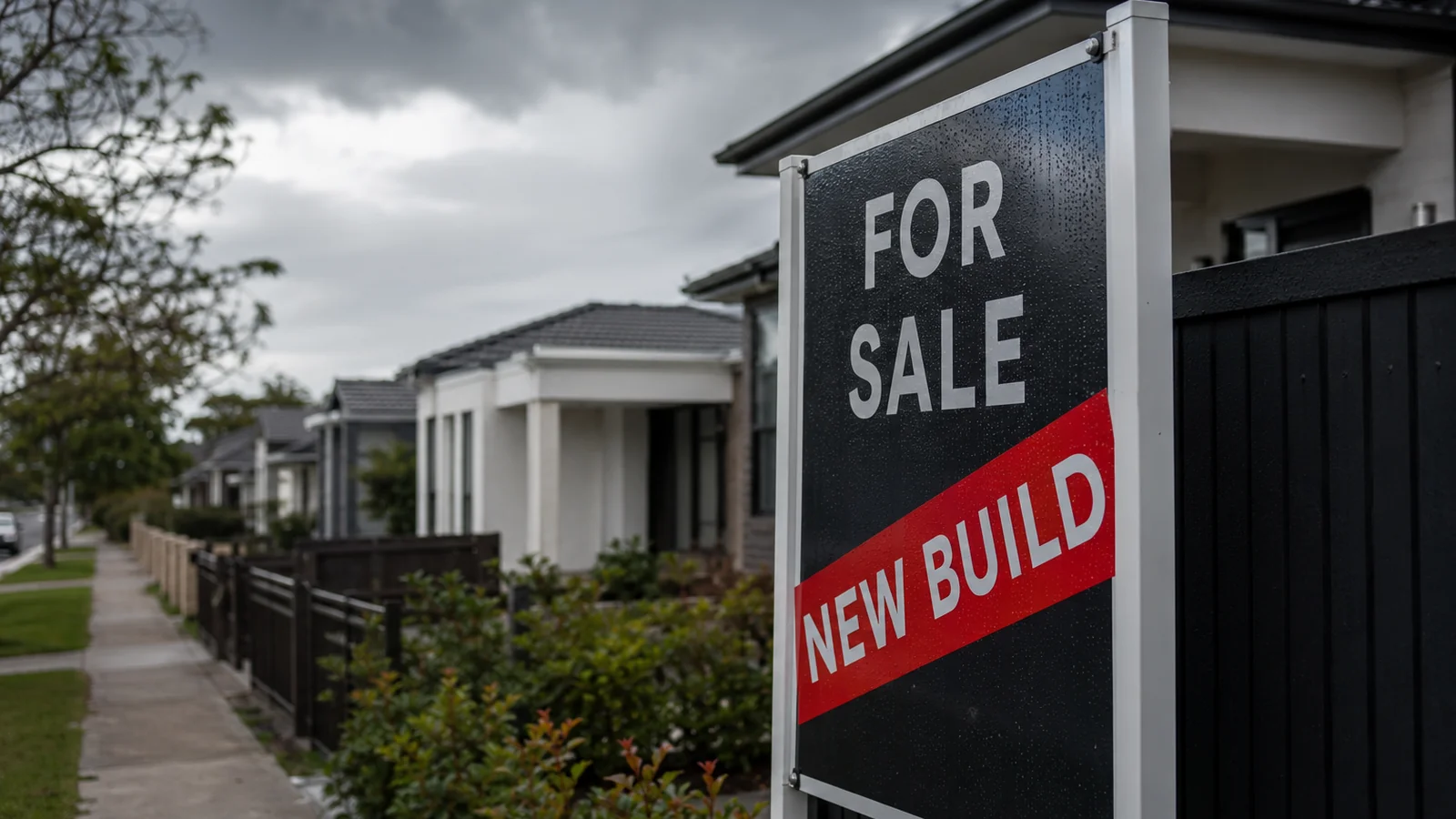
Labor’s housing tax changes are being sold as a fairness play.
The pitch is simple enough: reduce the tax advantage on established investment properties, steer more capital into new homes, and improve housing supply over time.
But there is a catch.
If investors are pushed into new builds too quickly, they may not move into a separate market. They may move straight into the same outer-suburban and lower-cost corridors where first-home buyers are already trying to get a foothold.
That is the uncomfortable risk in the latest negative gearing and capital gains tax debate.
The policy aim is clear. The market response may not be
The broad direction of the policy is to make existing investment properties less attractive while preserving stronger tax treatment for brand-new homes.
In plain English, the government wants investors to fund extra supply rather than compete for established homes already in the market.
That goal is not irrational. Australia needs more housing. Investors can help finance that pipeline. New dwellings add stock in a way that established purchases do not.
But housing does not respond like a sharemarket.
You cannot announce a tax change on Tuesday and have thousands of extra homes ready by Friday. Land has to be released. Planning has to clear. Builders need labour, materials, finance and buyers willing to wait.
That delay matters.
If investor demand shifts faster than new supply can arrive, the first impact may not be cheaper homes. It may be more competition for the same limited new stock.
Australian Property Review has already looked at this broader tension in Property Tax Changes Could Reshape Investors, where the key issue was not just whether investors sell, but how they change behaviour.
Why first-home buyer suburbs are exposed
First-home buyers often chase the same product the policy is trying to push investors towards: new houses, townhouses and apartments at the more affordable end of the market.
That usually means outer suburbs, growth corridors and lower-priced projects where grants, deposit schemes and price caps are most relevant.
Now add investors with a fresh tax incentive to buy new.
That does not automatically price out first-home buyers. But it does change the bidding environment.
Investors may be able to absorb a weaker short-term cashflow position because the tax settings, depreciation deductions and long-term capital growth expectations improve the overall equation. First-home buyers do not get the same tax treatment. They are buying shelter, not an income-producing asset.
That difference matters when two buyers are looking at the same townhouse off the plan.
One buyer is asking, “Can I afford the repayments and still live?”
The other is asking, “Does the after-tax return stack up over time?”
Those are very different calculations.
Quick take:
The policy may reduce investor appetite for established homes, but it could also concentrate investor demand in new-build markets where first-home buyers are already under pressure.
The supply problem has not disappeared
The strongest argument for the policy is that it may support construction.
If more investors buy new dwellings, developers have more pre-sales, projects become easier to finance, and more homes may be built over time.
That is the best-case version.
The risk is the transition period.
Australia’s housing shortage is not only about investor incentives. It is also about planning bottlenecks, infrastructure delays, construction costs, builder insolvency risk, labour shortages and interest rates.
If those constraints remain, tax incentives can lift demand before they lift supply.
That is when prices can rise, even under a policy designed to improve affordability.
This is similar to the problem Australian Property Review covered in First-home buyer scheme may be pushing prices higher. When more buyers are pushed into the same price bands, the benefit can leak into prices.
The same logic can apply here.
A tax incentive aimed at investors may still land in the first-home buyer market if the product overlap is large enough.
The established-home market may not behave neatly either
A simple version of the debate says investors will leave established homes, first-home buyers will move in, and affordability will improve.
That is possible in some markets.
But the outcome depends on what investors actually do.
Some may sell. Some may hold. Some may stop buying established homes. Some may shift into new builds. Others may move money into shares, commercial property, private credit or business assets.
The capital gains tax side is especially important because it affects the exit decision. If selling becomes less attractive after tax, some owners may simply sit on assets longer.
That could reduce turnover rather than release a flood of homes.
Australian Property Review explored that risk in CGT cut could backfire on housing supply and Budget tax hit could trap property investors longer.
The practical point is this: tax changes do not just affect demand. They affect timing.
And timing is everything in housing.
Investors still have reasons to be cautious
There is another side to this.
New builds are not always easy investments.
They can involve long settlement delays, construction risk, lower initial yields, body corporate uncertainty, land release risk and weaker resale demand in some estates. Off-the-plan buyers can also face valuation risk if the market softens before settlement.
So it is not guaranteed that investors rush into new homes.
Some will run the numbers and decide the tax advantage is not enough. Others may wait until the rules are clearer. Some may only buy in markets where rents, population growth and infrastructure support the case.
That is why the next few months matter.
The policy may lift interest in new builds, but whether that becomes actual demand depends on finance, rents, build costs and confidence.
What could change the outcome
The policy works best if three things happen together.
First, new supply has to respond quickly enough. That means approvals, infrastructure and construction capacity need to move with demand.
Second, first-home buyer support needs to avoid overheating the same price bands. If grants, deposit schemes and investor tax incentives all point to the same stock, the pressure builds.
Third, investors need enough certainty to fund new projects without turning the market into a short-term scramble.
The downside case is more awkward.
Investors avoid established homes, crowd into selected new-build corridors, first-home buyers face more competition, and supply still takes years to catch up.
That would not mean the policy failed completely. But it would mean the early winners are not necessarily the young buyers the government says it wants to help.
The practical take
For first-home buyers, the next step is not panic. It is sharper due diligence.
Before buying in a growth corridor or new estate, compare the project against nearby established homes, recent land releases, investor activity and likely settlement timing. A grant or tax-driven demand surge can make a suburb look hotter than its fundamentals.
For investors, the test is also simple: do not buy a new build just because the tax treatment looks better. Pressure-test the rent, vacancy risk, body corporate costs, depreciation assumptions and resale demand.
Tax can improve the maths. It cannot fix a weak asset.
Start here: before signing, model the purchase with and without the tax benefit. If the deal only works because of the concession, the risk may be higher than it looks.