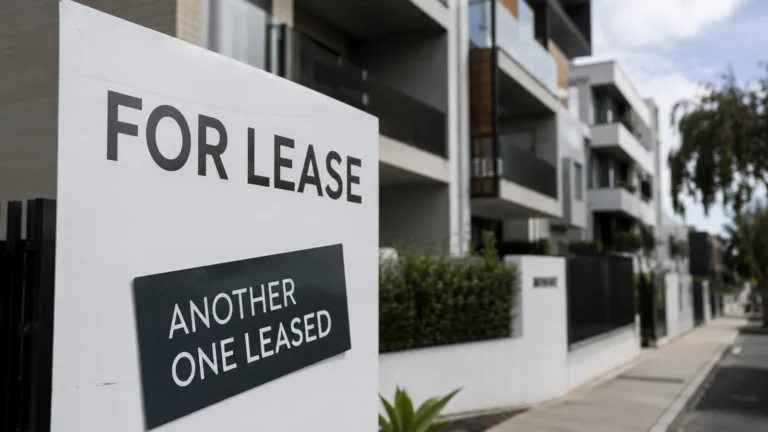
Treasury says changes to negative gearing and capital gains tax may add only a small amount to weekly rents.
The property industry is not buying it.
That gap matters because this is not just a tax argument between Canberra and investors. It is a housing supply argument. If fewer investors buy, hold or build rental properties, the effect may not show up neatly in a budget model. It may show up later in lease renewals, tighter vacancy rates and renters with fewer options.
Australian Property Review has already covered why negative gearing and CGT are not the same lever. Negative gearing affects the holding cost of a property. Capital gains tax affects the payoff when an investor sells. Changing both at once can shift behaviour in ways that are hard to forecast.
The rent forecast looks too neat
The budget case is simple enough.
If investor tax concessions are narrowed, fewer investors may compete for established homes. That could help some first-home buyers. The government also argues the rent impact will be small, with budget modelling pointing to only a modest weekly increase.
That is the calm version of the story.
The messier version is that rental markets do not move like spreadsheets. They move through vacancy rates, confidence, borrowing power, investor cashflow and construction delays.
When rental supply is already tight, even a small change in investor behaviour can matter.
A landlord who would have bought one more property may decide not to. A small investor with rising costs may sell. A first-time investor may wait for clarity. A developer may need more pre-sales before starting a project. None of that is dramatic on day one, but it can add up.
Quick take
A tax change can reduce investor competition for buyers, but that does not automatically help renters. The risk is that fewer rental properties hit the market at the same time demand stays firm.
Why investors are pushing back
The investor argument is not complicated.
If the cost of holding a rental property rises, the owner has three choices: absorb the hit, raise the rent where the market allows, or sell.
The first option depends on cashflow. The second depends on tenant demand and local vacancy. The third depends on whether selling still makes sense after transaction costs, tax and market conditions.
That is why broad national forecasts can be misleading. A $2-a-week average rent impact may sound harmless, but renters do not live in averages. They live in suburbs, lease cycles and price brackets.
Australian Property Review has previously warned that policy changes can freeze investor decisions before the actual rules even land. That is the part policymakers often underestimate. The market can react to uncertainty before legislation is final.
The first-home buyer trade-off
There is a genuine upside for some buyers.
If investors step back from established homes, first-home buyers may face less competition at auction. That could matter most in suburbs where investors have been active but yields are already stretched.
But here is the catch.
A buyer winning an established home does not create a new dwelling. It changes ownership. If that home was previously rented and becomes owner-occupied, the rental pool can shrink.
That does not mean the policy is automatically wrong. It means the trade-off needs to be stated clearly.
Helping one first-home buyer into ownership may still leave another household competing for a smaller rental pool. That is the second-order effect.
New builds are the pressure point
The policy design appears to favour new housing over established property. In theory, that makes sense. Australia needs more homes, not just more bidding for the homes that already exist.
But the practical question is whether investors can actually deliver that supply.
New builds are not cheap. Construction costs, planning delays, builder risk and finance conditions all matter. A tax incentive can help, but it does not magically create feasible projects.
Australian Property Review has covered this broader affordability problem in its piece on how bigger homes, supply limits and costs keep pushing housing dearer. The same logic applies here: housing policy only works if the mechanics line up with market reality.
If investors are nudged toward new builds but the supply pipeline cannot respond quickly, renters may face a squeeze before any extra homes arrive.
What could make the rent shock smaller
The industry warning may prove too severe if several things go right.
Rent rises could be contained if more new homes are completed, migration growth cools, household formation slows, or investors keep buying despite weaker tax treatment.
Some landlords may also lack the power to pass on costs. Rents are set by what tenants can pay and what alternatives exist, not just by what landlords want.
This is why the most honest answer is not “rents will definitely surge”. It is that the risk distribution has shifted.
The base case is more pressure in already tight rental markets. The downside case is sharper rent rises if investors pull back and new supply does not arrive fast enough. The upside case is that incentives toward new builds improve supply over time.
The part renters should watch
The most useful signal is not political commentary. It is vacancy.
If vacancy rates stay low and investor lending weakens, renters should expect tougher lease renewals. If listings rise and wage growth slows, landlords may have less room to push rents.
For investors, the key issue is holding power. Australian Property Review has explained why serviceability and cashflow buffers matter more when rates and policy settings move against investors.
For renters, the practical move is simpler: check your suburb, not just the national rent figure. Track comparable listings three months before your lease ends. If the same type of property is being advertised well above your current rent, start planning early.
Bottom line
The government wants to frame investor tax reform as a fairness measure.
That may be politically effective, but the housing market will test the mechanics. If the changes reduce investor demand without lifting new supply quickly enough, renters may wear part of the cost.