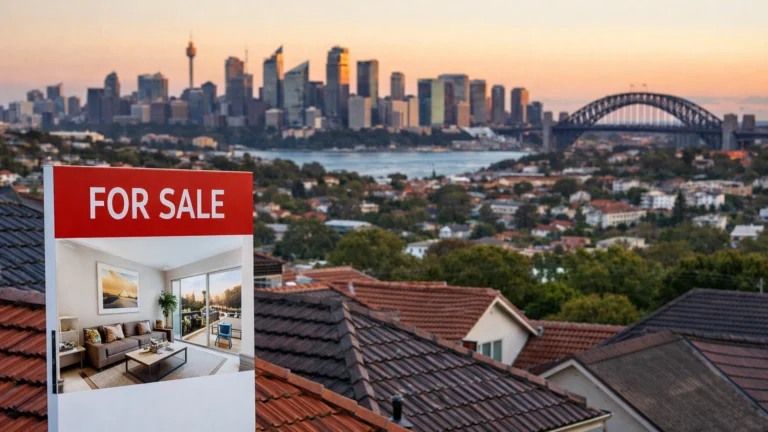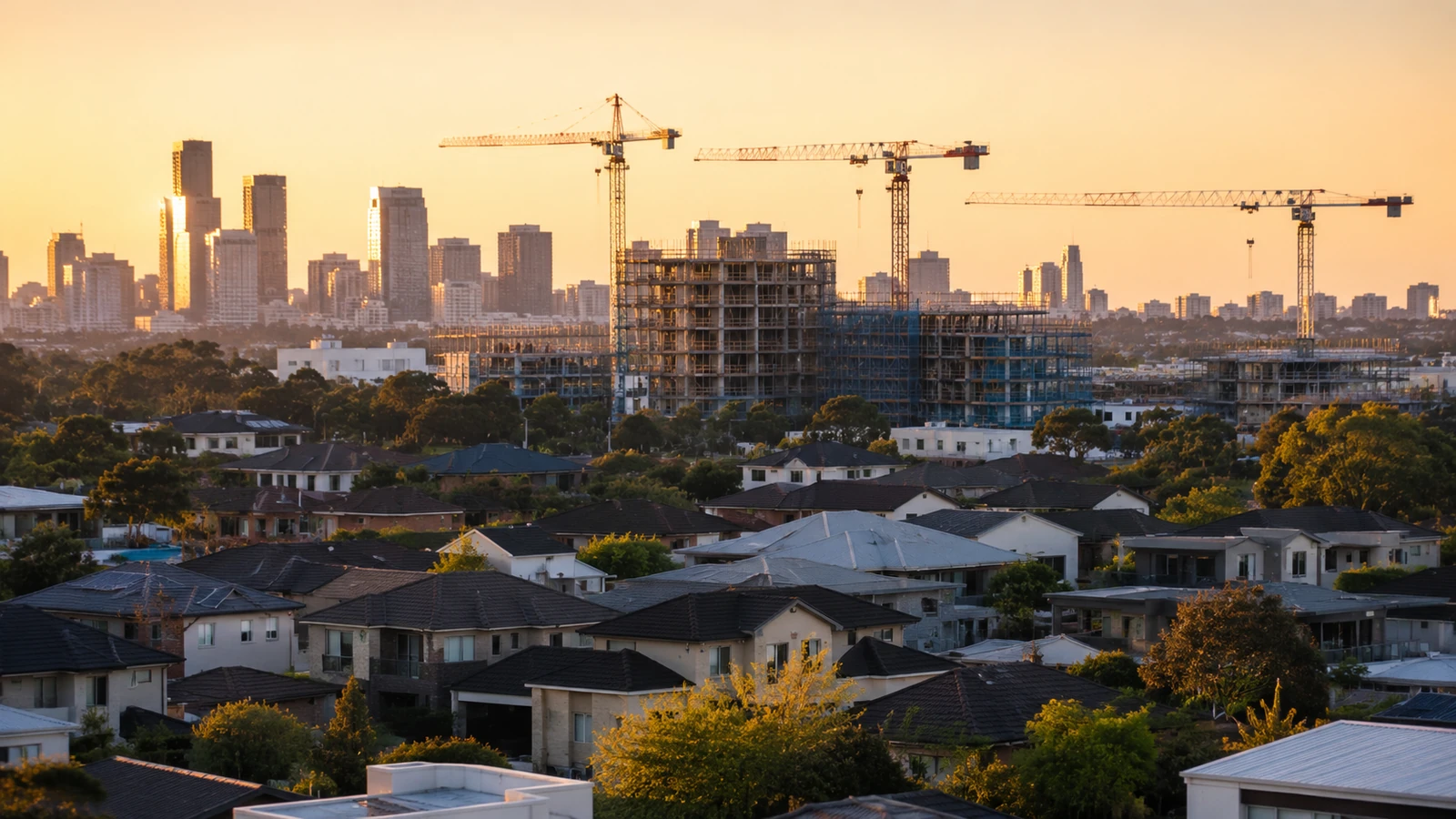
Australia’s housing shortage is no longer just a political promise falling behind schedule. It is a measurable gap, and it is landing in a market where governments are also helping more buyers bid for homes with smaller deposits.
The National Housing Supply and Affordability Council forecasts 938,000 new dwellings will be completed during the five-year Housing Accord period to 2028–29. The national target is 1.2 million. That is a projected shortfall of 262,000 homes before the target date arrives.
At first glance, the conclusion looks simple: not enough housing, more eligible buyers, higher prices.
Here’s the catch. Supply matters enormously, but it is not the only thing that sets prices. Buyers still need loans they can service. Interest rates still shape borrowing power. Employment still determines whether stressed owners can hold on. And national numbers can hide very different conditions from suburb to suburb.
The housing shortage may support values in constrained markets. It does not make every purchase sensible, or every forecast reliable.
The supply gap is real, but it is not evenly spread
The Housing Accord was built around an ambitious national goal: 1.2 million new, well-located homes over five years from July 2024. That works out to about 240,000 completions a year.
NHSAC’s latest baseline forecast is closer to 188,000 a year on average. After expected demolitions are counted, net new supply is projected at 825,000 dwellings, compared with 904,000 in new underlying demand over the same period.
So what does that mean in plain English? Even before Australia begins clearing its existing backlog of housing need, the country is forecast to add fewer usable homes than newly formed households will require.
The shortage is also uneven. NHSAC forecasts New South Wales will achieve about 65 per cent of its population-implied share of the national target. South Australia is forecast at 71 per cent, Queensland at 79 per cent and Western Australia at 81 per cent. Victoria is much closer at 98 per cent.
Tasmania and the Northern Territory show even larger proportional gaps, at 51 per cent and 31 per cent respectively. But those smaller-market numbers need care. NHSAC also says their projected demand is more muted because of lower expected population growth.
That is why a shortfall percentage is not, by itself, an investment thesis. A city can build too few homes and still underperform if jobs weaken, population growth slows or borrowing power is squeezed.
Key numbers
1.2 million: National Housing Accord target to 2028–29
938,000: Gross new homes forecast by NHSAC under baseline conditions
262,000: Projected gap against the target
825,000: Expected net new supply after demolitions
904,000: Forecast new underlying housing demand over the same period
Source: National Housing Supply and Affordability Council, State of the Housing System 2025. Based on NHSAC data.
A policy designed to help buyers can also lift competition
Supply is only one side of the equation. The other is who can bid, and how quickly.
From 1 October 2025, the Australian Government 5% Deposit Scheme expanded access for eligible first-home buyers. Housing Australia says the scheme now offers unlimited places, removes income caps and increases property price caps, while allowing eligible buyers to purchase with a deposit as low as 5 per cent without paying lenders mortgage insurance.
That change solves a real problem for some households: saving a deposit while rents and home prices move ahead of them.
But it does not create another dwelling.
Lateral Economics, in modelling commissioned by the Insurance Council of Australia, estimated the expanded scheme could add 3.5 to 6.6 per cent to prices across the broader property market in its first year under its scenarios. In the segment where first-home buyers are most likely to compete, it modelled a larger 5.3 to 9.9 per cent effect.
Those figures matter, but they need to be handled properly. They are modelled estimates from a commissioned report, not a guarantee of actual price rises. The result depends on how many purchases are brought forward, how much extra buyers can bid and whether supply responds.
Still, the mechanism is credible: when policy increases purchasing capacity in a market with limited lower-priced stock, part of the benefit can be captured by sellers through higher prices.
Australian Property Review has already examined that pressure in The 5% Deposit Trap Pushing First-Home Prices Even Higher. The point is not that first-home buyers are causing the crisis. It is that a deposit policy cannot fix a dwelling shortage on its own.
Why a shortage does not guarantee a boom
A housing supply gap places a floor under demand pressure. It does not remove the ceiling created by borrowing capacity.
The Reserve Bank’s March 2026 Financial Stability Review said loan arrears remained low and that the share of mortgagors in severe financial stress had declined since mid-2024. That is important. A market is less likely to suffer widespread forced selling when most borrowers remain able to meet repayments.
But the same RBA assessment does not say households are bulletproof. Some borrowers remain under budget pressure. A buyer entering with a small deposit is particularly exposed if repayments rise, the valuation comes in short, income is disrupted or a sale is needed earlier than planned.
Now, the part most people miss: house prices can remain supported nationally while individual borrowers still make poor decisions. A shortage can protect the market from a broad fall without protecting an overextended buyer from cashflow stress.
That distinction matters in expensive cities. Australian Property Review has reported on the way rate sensitivity can weigh on larger financed markets in Sydney and Melbourne Housing Downturn Warning. When lenders assess borrowing capacity at higher serviceability levels, a willing buyer may simply be unable to bid as much.
Supply can tighten. Demand can be assisted. Yet prices can still slow when credit becomes the binding constraint.
The million-dollar suburb claim needs perspective
PropTrack analysis reported in 2025 found 77 suburbs that had median values below $500,000 a decade earlier had moved above $1 million.
That is a striking measure of how affordability has shifted. It does not prove another 77, 140 or 210 suburbs will repeat the result over the next decade.
Past price growth reflects a combination of starting value, interest rates, income growth, infrastructure, lifestyle demand, migration, investor appetite and local supply. Some of those conditions may repeat. Others may not.
For investors, the lesson is not to chase a suburb because it is cheap today. A low price is not the same as undervaluation.
A more useful rule of thumb is this: a growth case needs at least three supports that can be checked independently, such as sustained household formation, constrained but deliverable supply, diverse employment, usable transport or infrastructure and a rental market that supports the holding cost. It also needs a clear reason the market has not already priced those features in.
Three outcomes buyers should plan for
The most likely path is not one national boom or one national crash. It is a more divided market.
Base case: The housing shortfall keeps pressure on rents and prices in supply-constrained markets, while rates and affordability limit how quickly values rise. Price growth becomes patchy, favouring locations with employment and genuine dwelling shortages.
Upside case for values: Rates ease, employment remains firm and the expanded buyer scheme drives stronger competition for entry-level stock before new supply arrives. Affordable segments in selected cities could outperform.
Downside case: Inflation or another shock keeps rates restrictive, unemployment rises or lenders tighten. In that case, limited supply may not prevent softer prices in highly leveraged or rate-sensitive areas.
This is where confident forecasts become dangerous. A national shortage makes housing scarcity more likely. It does not tell a buyer what they can afford, what a lender will approve, or whether one suburb stacks up after tax, insurance, maintenance, vacancy and interest costs.
What buyers and investors should do with this now
For owner-occupiers, the useful question is not whether the market is about to “take off”. It is whether you can comfortably hold the loan if repayments remain demanding for another 12 to 24 months. A deposit scheme may move the purchase date forward, but it does not make the monthly repayment smaller.
For investors, start with the cashflow buffer before the growth story. Pressure-test rates, vacancy, strata or maintenance costs, land tax where relevant and the ability to refinance. Then examine supply at a local level: approvals, completions, competing developments and rental vacancy matter more than a state-wide headline alone.
And for both groups, avoid confusing a supply shortage with permission to overpay. Scarcity supports competition. It does not erase downside risk.
Australia is highly likely to remain short of the homes it needs over the remainder of the Housing Accord period. That is a serious structural force in the market. But the next four years will still be shaped by credit, employment, rates and where new supply actually lands.
Start here: before buying, test the property against repayments, local supply and rental demand rather than relying on a national price prediction.
Read more from Australian Property Review
- The 5% Deposit Trap Pushing First-Home Prices Even Higher
- Sydney and Melbourne Housing Downturn Warning
- Australia’s Housing Squeeze Worsens as Rate Fears Return
Get the weekly signal
Housing headlines are loud. The useful detail is usually buried underneath.
Subscribe free to the Australian Property Review newsletter: newsletter.apreview.com.au