Five-bedroom homes used to sit at the luxury end of the market, a feature for families who’d already upgraded twice. Now they’re turning up in buyer briefs for different reasons: adult children staying longer, ageing parents moving in, or investors chasing higher rents from larger households.
The shift is broad enough that it’s worth checking what multigenerational living actually does to dwelling demand, design priorities and rental economics.
Why households are getting bigger again
Three forces are converging. First, housing affordability has pushed the age of first-home purchase later, so children in their twenties and early thirties are staying in the family home or returning after a rental stint. Second, the cost of aged care and a preference to avoid it mean more retirees are moving in with their children rather than downsizing alone. Third, migration has brought household structures where three generations under one roof is the default, not the exception.
None of this is temporary. Wage growth relative to dwelling prices hasn’t improved enough to reverse the first trend, aged-care reform isn’t making institutional care cheaper or more appealing, and migration settings suggest cultural diversity in household composition will keep rising.
What it means for design and location
A multigenerational household doesn’t just want more bedrooms. It wants separation: a second living area, an extra bathroom, ideally a bedroom and ensuite on the ground floor for older occupants who can’t manage stairs. Flexibility matters more than footprint.
That tends to favour detached houses over apartments, and it favours suburban over inner-city stock because land size allows for layout variety. Three-bedroom apartments in the inner ring don’t convert easily to multigenerational use, even if the household would prefer the location.
The design gap creates two pressure points. New estates on the fringe can deliver the layout, but they trade off commute time and established infrastructure. Older suburban homes near services can work if they’re renovated or extended, but that adds cost and time, and it assumes the household has equity or savings to fund it.
The rental angle: higher yields or higher risk?
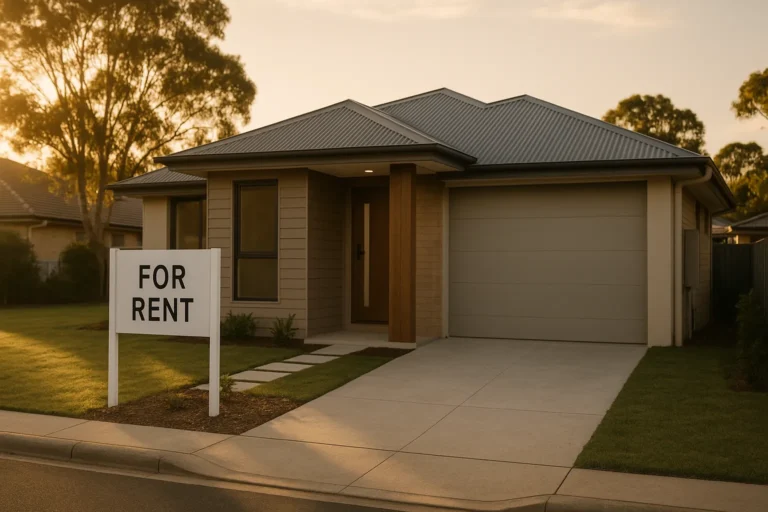
Investors are noticing that a five-bedroom house can command materially higher rent than a three-bedroom in the same suburb, sometimes 20 to 30 per cent more. The logic is straightforward: a larger household can split the cost across more incomes, so affordability per person improves even when total rent rises.
The catch is tenant turnover and maintenance. Larger households generate more wear, and when they move, the pool of replacement tenants is smaller because fewer households need five bedrooms. Vacancy risk is higher, and the time to re-let is longer. That matters more in softer rental markets or if interest rates stay elevated and cashflow buffers are thin.
Yields look better on paper, but the assumptions, stable occupancy, low maintenance, consistent demand, need pressure-testing against the actual rental market in that suburb and price band.
Suburbs versus inner-city: the trade-off sharpens
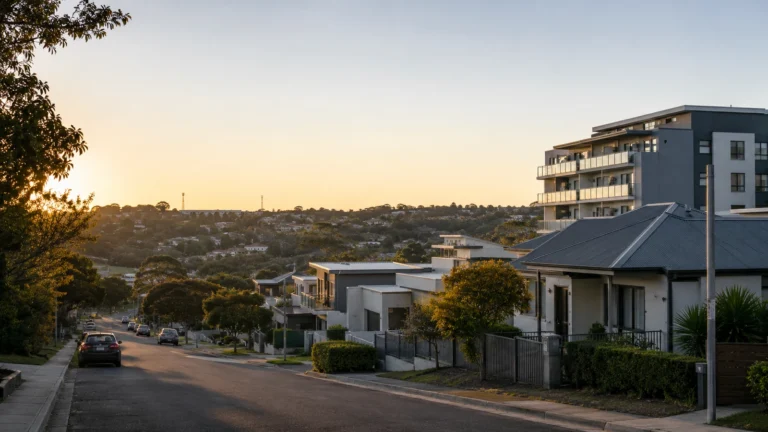
Multigenerational living doesn’t favour all locations equally. Suburbs with larger block sizes, established schooling, healthcare services and cultural communities that normalise extended families are seeing stronger inquiry for four- and five-bedroom stock. Inner-city areas with high apartment density and smaller median dwelling sizes are seeing the opposite.
That doesn’t mean inner-city property is losing value broadly, but it does mean the household types driving demand there, singles, couples, young families planning to upgrade, are different from the cohort now seeking space for three generations. The gap between suburban detached and inner-city apartment performance could widen if multigenerational living becomes the norm rather than the edge case.
For buyers deciding between a three-bedroom townhouse close in and a five-bedroom house further out, the question is whether the location premium justifies a layout that won’t accommodate future household changes. Melbourne school-zone property savings offer one angle on that trade-off, but the multigenerational scenario adds a separate dimension: it’s not just about schooling years, it’s about whether the dwelling works for a household that might grow vertically across generations rather than horizontally by adding children.
Supply and planning: the mismatch
Planning rules and developer models are still optimised for the nuclear family: three bedrooms, two bathrooms, a single living area. Upzoning discussions focus on density and height but rarely on layout diversity within that density.
If multigenerational living is a structural trend, the housing supply pipeline needs to deliver more four- and five-bedroom dwellings in accessible, serviced locations, not just on the urban fringe. That requires either larger allotments in medium-density zones or apartment designs that genuinely accommodate extended families, which most current medium-density products don’t.
The mismatch creates a decision point for buyers now: accept a dwelling that doesn’t fit the likely household structure in five years, or pay a premium for something that does and hope the market catches up.
Risk check: what could reverse this
Multigenerational living becomes less necessary if housing affordability improves enough that younger adults can buy earlier, or if aged-care policy shifts to make institutional care more attractive and affordable. Migration settings could change, though that would take years to alter household composition materially.
The more immediate risk is economic. If unemployment rises or wage growth stalls, larger households might still form out of necessity, but their ability to pay higher rent or service bigger mortgages weakens. The yield advantage for investors depends on income stability across multiple household members, and that’s more volatile than a two-income professional couple.
The catch
A five-bedroom house attracts higher rent and appeals to a real demographic shift, but it also narrows your tenant and buyer pool. The upside is genuine, the liquidity trade-off is real.
The practical take
If you’re buying for yourself and multigenerational living is likely in the next decade, whether ageing parents or adult children, prioritise layout flexibility and ground-floor accessibility over postcode prestige. A four-bedroom house with two living areas in a serviced suburb will hold its utility better than a three-bedroom apartment in a tighter location, even if the apartment feels like the better investment today.
If you’re investing, a five-bedroom house can deliver higher yields, but model the vacancy risk and maintenance cost realistically. The tenant pool is smaller, and if the market softens, you’ll wait longer between leases. Construction costs set a floor under house prices in many suburbs, which gives some downside protection, but liquidity is a separate question.
And if you’re a developer or planning authority, the gap between what the market is starting to want, flexible, multi-generational layouts in accessible locations, and what the supply pipeline is optimised to deliver is widening. That gap is an opportunity for someone, and a frustration for buyers stuck in the middle.
Subscribe to Australian Property Review’s free weekly newsletter for housing trends and data that cut through the noise.
General info, not financial advice.