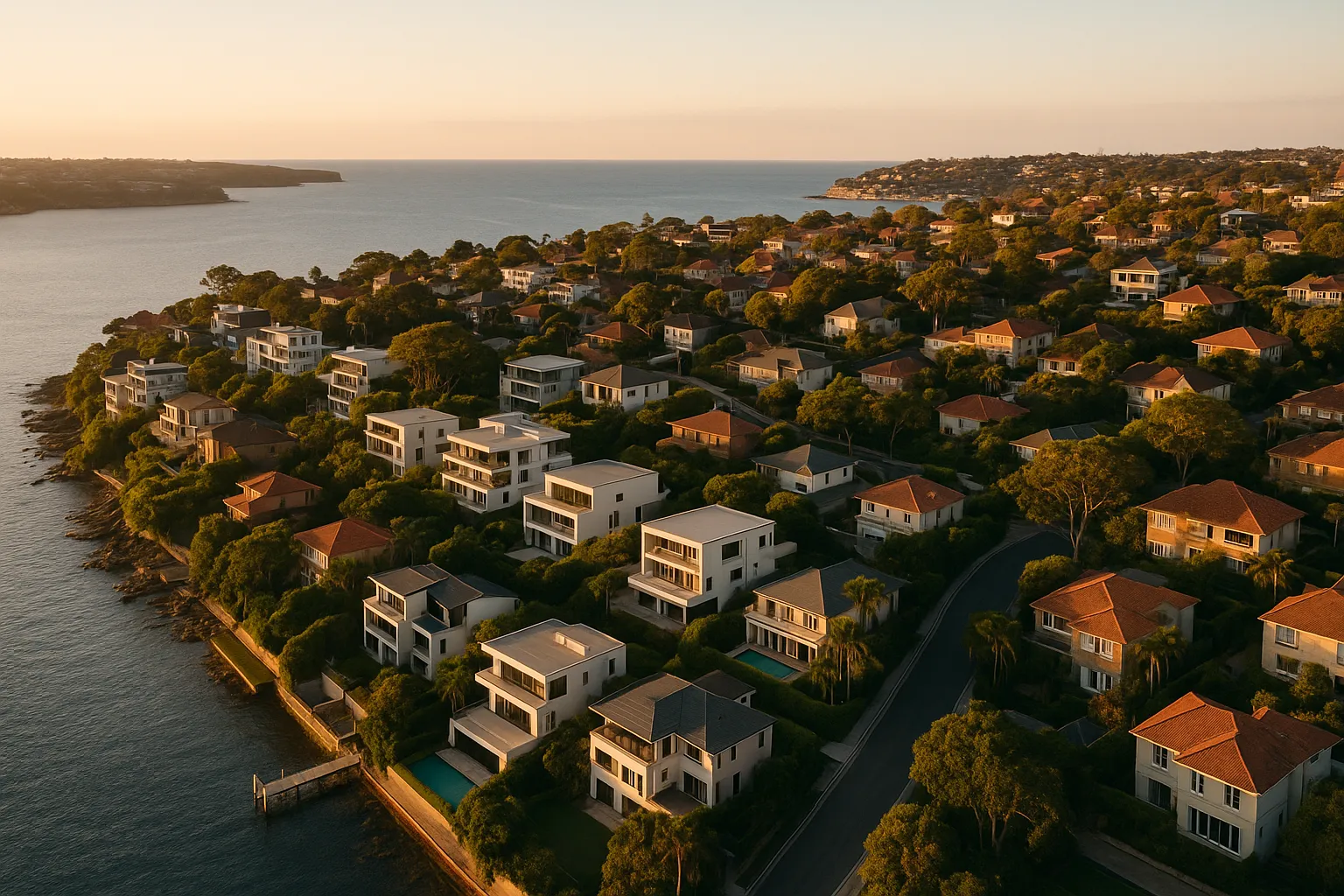
Coastal Sydney submarkets that set records eighteen months ago are now trading 15-20% below peak, according to transaction data across premium postcodes. The question for anyone watching these falls isn’t whether they’re real, it’s whether they represent genuine opportunity or the first stage of a deeper unwind.
Which pockets are falling hardest
Prestige coastal suburbs, the kind that attracted lifestyle upgraders and sea-change buyers during the pandemic spike, are leading the correction. Typical dwelling values in some of these areas have dropped close to 20% from their 2024 highs.
The pattern is uneven. Inner-harbour and tightly-held enclaves with limited stock are holding better. Outer coastal zones with higher volumes and more investor ownership are seeing steeper falls. The gap tells you something about who’s selling and why.
Why these areas are cracking first
Three mechanics are in play.
First, investor exit. Policy changes around negative gearing and capital gains treatment have pushed some landlords to crystallise gains while they still can. Coastal investment properties, often higher-value, lower-yield, are more sensitive to tax settings than workhorse inner-city units.
Second, lifestyle-buyer retreat. The sea-change cohort that drove prestige demand in 2023-24 has thinned. Geopolitical uncertainty, particularly around Middle East tensions affecting travel and discretionary spending, has dampened confidence among cashed-up upgraders. When that buyer segment steps back, these markets lose their marginal price-setter.
Third, construction-cost floors. In areas where land value dominates, prices can fall further. In pockets where replacement cost (land plus build) sits close to current market price, sellers resist dropping below that threshold. Coastal prestige often sits in the former camp, land-heavy, so more room to fall before hitting a floor.
The risk no one’s pricing in
Most analysis assumes employment holds and rates stabilise. If either assumption breaks, these falls extend.
Coastal suburbs skew toward self-employed, commission-based, or discretionary-sector income. A recession scenario, still low probability but not zero, would hit these postcodes harder than wage-employment-heavy areas. The 15-20% correction so far assumes the economy muddles through. Price it differently if unemployment ticks materially higher.
The other risk: liquidity. Prestige markets are thin. A 20% fall on low volumes can reverse quickly if one cashed-up buyer enters, or extend further if sellers panic and list simultaneously. You can’t rely on recent transaction prices to tell you where the market clears six months from now.
Key numbers
- Coastal prestige suburbs down 15-20% from 2024 peak in some pockets
- Investor-owned coastal properties more sensitive to tax-setting changes
- Construction cost often 70-80% land value in top coastal zones, creating downside room
- Unemployment assumption: if it rises 1%+ from current levels, expect deeper falls
- Liquidity risk: prestige transactions can be 10-15 per month in a postcode, not 100+
Scenarios over the next six months
Base case: falls slow as investor selling exhausts and rates stabilise. Coastal prestige down another 3-5%, then sideways through late 2026. Lifestyle buyers return selectively if Middle East tensions ease.
Upside: rate cuts arrive sooner than expected, cashed-up upgraders re-enter, floors hold. Some pockets recover half the loss by year-end.
Downside: employment weakens, credit tightens further, forced sales increase. Falls extend to 25-30% in the most exposed postcodes, liquidity dries up, bargain-hunters wait for a true bottom that takes another twelve months to form.
None of these is certain. The range tells you how wide the error bars are.
One clear next step
If you’re considering a coastal prestige buy at current prices, pressure-test it against the downside scenario. Can you hold if values fall another 10% and stay there for two years? Do you have a cashflow buffer if rates don’t fall as fast as the market expects? If the answer to either is no, wait.
If you’re holding in one of these postcodes and wondering whether to sell now or ride it out, ask whether you need the capital in the next 24 months. Selling into a falling market locks in the loss. Holding through a deeper fall only matters if you’re forced to sell at the wrong time. Run your own numbers, don’t extrapolate the last six months in either direction.
For a weekly read on where credit, policy and price action are headed, subscribe to the Australian Property Review newsletter.
Related: Australian housing market correction deepens as bank revises outlook and House price falls Australia: can policy thread the needle or are risks understated?
General info, not financial advice.