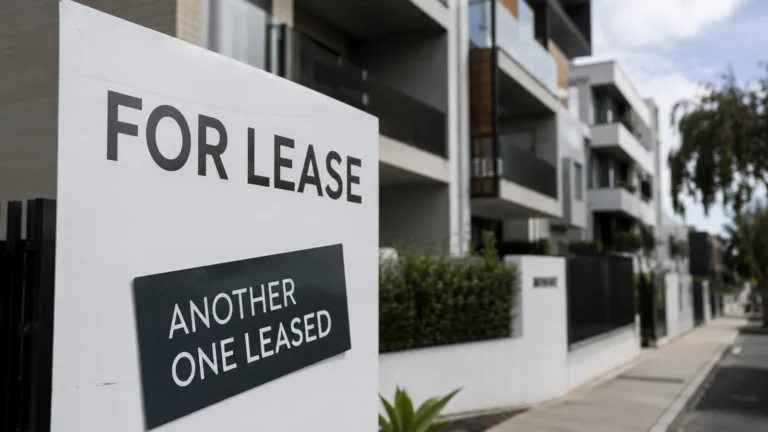
Rent caps Australia is no longer a fringe idea. A new poll commissioned by a progressive think tank found roughly 80 per cent of respondents favour freezing or capping rents, and the support runs across party lines and age groups. That is a big number. It is also a poll, and popularity is not the same as a policy that works.
The backdrop explains the mood. The national median rent has hit a record $675 a week, leaving the typical tenant $1,820 worse off than a year earlier. When rent takes that much of a household budget, a promise of a ceiling sounds like relief.
What the poll actually found
The headline figure is the 80 per cent. Beneath it:
- 61 per cent want government to do more for tenants, rising to six in seven among renters themselves
- Only 8 per cent think authorities should do less
- About one in seven reject any ceiling on increases
- Gen Z (roughly 15 to 30) is the most supportive age group at 76 per cent, followed by the over-80s at 72 per cent, while every other bracket sits below 60 per cent
That last point matters. The coalition is real, but it is not even. Middle-aged Australians, who are more likely to own an investment property, are the least keen.
Key numbers
- 80% of respondents back a freeze or cap on rents
- $675 a week: record national median rent
- $1,820: extra annual cost for the typical tenant versus a year earlier
- 93% of the oldest cohort back higher public housing spending
Why support is high and the evidence is messier
A poll measures what people want. It does not measure what happens next. The usual economic objection to caps is about supply: if returns on a rental are limited, some owners sell, some stop buying, and fewer new rentals are built. Fewer homes available means tougher competition for the ones that remain.
The pattern to watch is not the existing tenant, who is protected for the term of the cap. It is the person looking for a place next year. Where caps apply only to rent rises on an existing lease, rents on new leases can jump to catch up, which pushes the cost onto people moving house, often younger and newer to a city.
This is a trade-off, not a verdict. A well-designed limit can slow the sharpest increases without choking investment. A blunt one can shrink the pool of rentals. The detail, not the slogan, decides which you get.
What advocates want instead of, or alongside, caps
The think tank researcher in the report blames decades of market-first policy, pointing to tens of billions of dollars in developer tax breaks while public housing stock was neglected. A housing advocate wants nationally consistent caps negotiated with the states and territories, plus much more public and community housing construction. The argument is that rent growth feeds inflation, homelessness and workforce displacement.
Note what that package contains. Caps address the price. Construction addresses the shortage. Only the second fixes the underlying problem, and it takes years. A cap without new supply risks being a holding pattern.
The landlord side of the ledger
Investors respond to returns and to risk. When holding costs rise and rules tighten at the same time, some will sell or look elsewhere. The size of that response varies by market, by how a cap is written and by what else is happening to interest rates and tenancy law. You can test the idea against local data in our guide to rents, vacancy and tenants, which shows how tight vacancy and rent growth tend to move together.
There is also a sentiment angle. Confidence among property participants has already weakened as borrowing costs bite, as covered in our look at the property sentiment index turning negative. Add tougher rental rules and the decision to stay in or leave the market gets harder for the marginal investor.
What a sensible reading looks like
Three questions are worth asking of any cap proposal:
- Does it apply to the property or to the tenancy? Limits that reset when a tenant leaves behave very differently from limits that follow the home.
- Is it paired with supply measures? Caps alone treat the symptom.
- How long does it run? A short freeze buys time. A permanent one reshapes investor behaviour.
The poll tells us politicians have a strong mandate to act on rents. It does not tell us that a cap is the best tool. The data on what caps do to supply, investor exits and rents for new tenants is mixed, and it depends heavily on design.
If you want the weekly signal on rents, rates and policy, subscribe to the Australian Property Review newsletter.
General info, not financial advice.