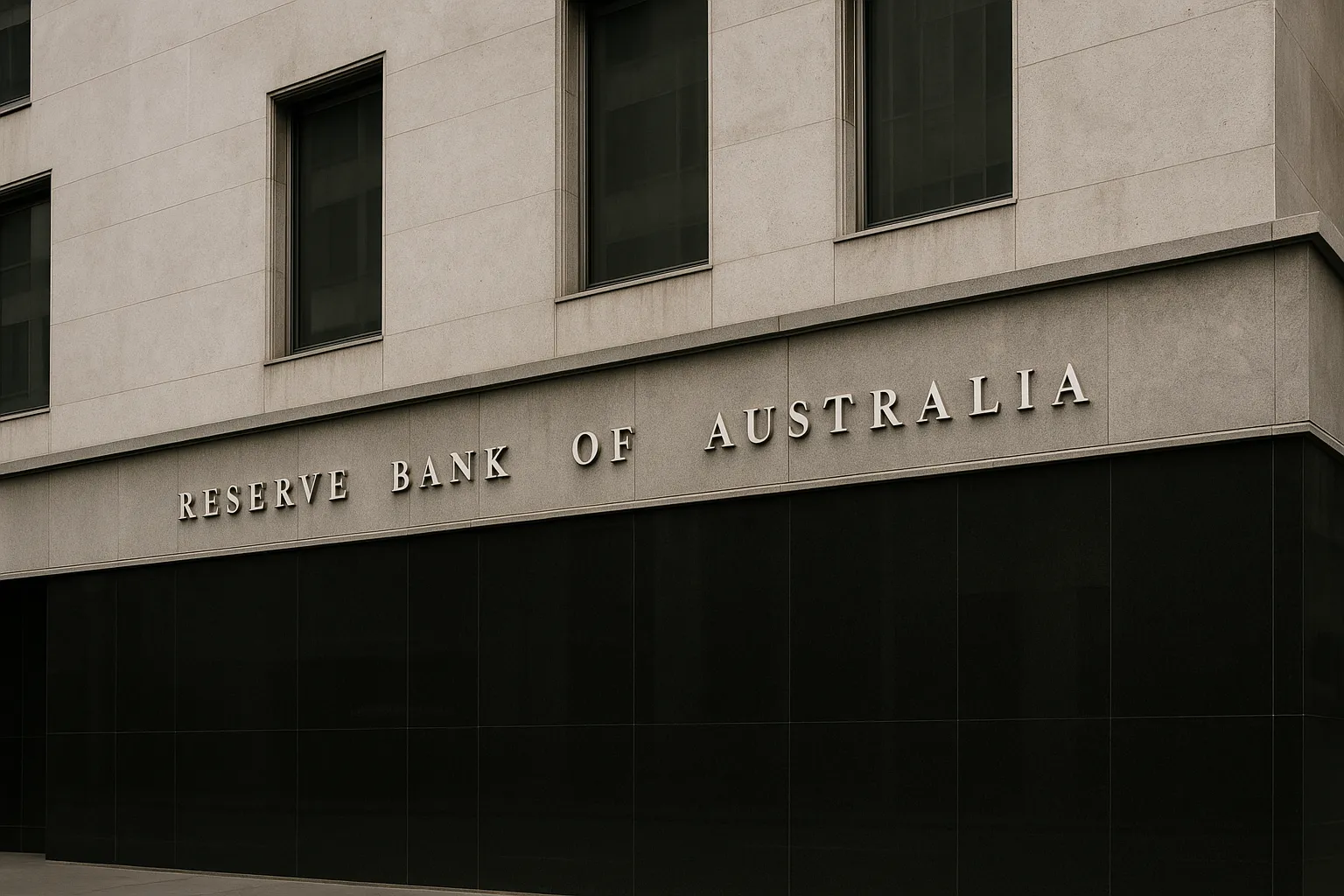
The Reserve Bank revised its inflation timeline this week, bringing the expected return to the 2–3% target band forward by six months to late 2027. The cash rate stayed at 4.35% for the sixth consecutive meeting, but the gap between the central bank’s cautious stance and market pricing for cuts has widened.
For borrowers planning property decisions around the spring selling season, that divergence matters. Markets are pricing in cuts starting mid-2026, while the RBA’s governor told reporters the board debated a further increase this month and cannot rule out more tightening if inflation data disappoints.
The revised forecast and what changed
June quarter inflation came in at 3.6%, below the 4.2% peak recorded in April and well under the RBA’s earlier expectation of around 5%. That surprise prompted the bank to shift its forecast for inflation returning to target from mid-2028 to late 2027.
The revision reflects two things: fuel excise relief and lower international travel costs drove the headline number down faster than expected, but underlying domestic inflation, wages, services, rents, remains sticky. The bank’s statement this week flagged “historically weak productivity growth” as a constraint, which limits how much wage pressure can be absorbed without feeding inflation.
One independent economist noted the board increasingly feels its tightening cycle may be complete, but emphasised another rate rise in 2026 cannot be fully ruled out if supply shocks or domestic demand prove stronger than forecast.
Rate-cut timing and the spring decision window
The earliest the market expects a cut is August 2026, with some analysts penciling in September. The RBA’s forward guidance offers no such precision, the governor said the board needs more data to confirm cooling inflation is a trend, not a temporary dip.
That leaves property buyers and sellers in a holding pattern through the critical spring listing period. Clearance rates have improved recently, but auction volumes remain below last year’s levels across every capital city. Sydney property market downturn: what free cars reveal about vendor panic shows how some sellers are already resorting to incentives to clear stock before spring inventory peaks.
For investors, the outlook is tighter still. Bank profit margins expand as investor loans collapse 28% highlights the credit squeeze already underway for non-owner-occupiers, compounded by negative gearing changes and new super fund investment restrictions.
Key numbers
- Cash rate held at 4.35% for the sixth straight meeting
- Inflation forecast to return to 2–3% band by late 2027, six months earlier than May projection
- June quarter inflation 3.6%, down from April peak of 4.2%
- Home prices fell for the fourth consecutive month in July
- Market pricing implies first cut mid-2026; RBA guidance offers no timeline
Upside and downside risks
The RBA modeled a 20% decline in property values to test financial stability. The conclusion: only around 5% of households would fall into negative equity, and negative equity only matters for distressed sellers. The central bank says it sees no systemic risk to the financial system from current property price softness.
That assessment assumes the labour market continues to loosen gradually without a sharp rise in unemployment. If Middle East supply disruptions worsen, peace talks collapsed in recent weeks despite a June ceasefire agreement, inflation could spike again, forcing the board’s hand.
Conversely, if household spending weakens faster than expected and the labour market softens beyond the RBA’s base case, downside risks open the door to earlier cuts. The next monthly inflation read and retail spending data ahead of the September 29 meeting will clarify which scenario is playing out.
What this means for spring transactions
Buyers counting on rate relief before year-end are pricing in an outcome the RBA has not endorsed. The central bank’s own forecast puts the return to target in late 2027, with no commitment on when cuts begin. Sellers hoping spring demand will lift clearance rates face the same uncertainty, listings are rising, but buyer confidence remains fragile while rates stay elevated.
The practical implication: anyone making a property decision in the next three to six months should assume the current cash rate holds. Budget for serviceability at 4.35% or higher, and treat any earlier cuts as upside, not the base case.
The next RBA meeting is September 29. July inflation data and household spending figures in the lead-up will determine whether the board’s confidence in the forecast firms up or whether another rate rise moves back onto the table.
Subscribe to the newsletter for the weekly signal on rates, credit and what it means for your next move.
General info, not financial advice.