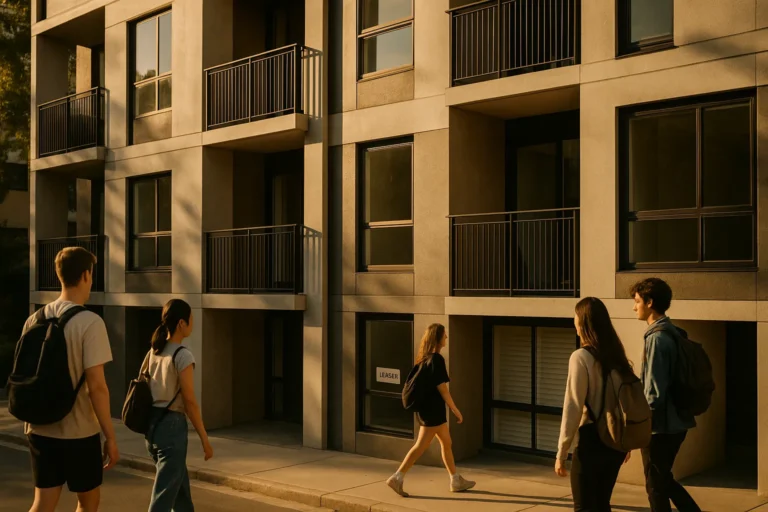
Investor-heavy suburbs are taking steeper losses in the current downturn than owner-occupier-dominant areas. The pattern is showing up in CoreLogic quartile data, clearance rates and mortgage stress indicators across capital cities. Most landlords didn’t see it coming.
The divergence isn’t new, owner-occupier suburbs have historically held up better in corrections, but the gap is widening faster this cycle. Vacancy is rising in traditional investor postcodes, yields are compressing, and capital growth has stalled or reversed. Meanwhile, suburbs where most homes are lived in by their owners are posting smaller declines or flat prices.
Why investor zones are under more pressure
Investor-heavy suburbs typically sit further from employment centres, have higher unit concentrations, and rely on rental demand from cost-sensitive tenants. When wages stall and cost-of-living bites, renters consolidate. Vacancy creeps up, landlords compete on price, and yields fall.
Owner-occupiers, by contrast, don’t exit a falling market unless forced. They ride through corrections because selling means moving, disrupting schools, jobs, and social ties. That creates a floor on price declines that investor-dominated postcodes don’t have.
The current cycle adds three compounding factors: rental demand growth has slowed as migration moderates, building approvals for units are still elevated in some investor precincts (supply overhang), and higher rates have pushed break-even cashflow beyond reach for overleveraged landlords.
The data that matters
Suburbs where investors hold more than 40 per cent of stock are recording median price falls two to three percentage points steeper than owner-occupier-heavy areas over the past six months, according to recent CoreLogic city-level breakdowns. Vacancy rates in investor postcodes are tracking 0.5 to 1.2 percentage points above the metro average.
Yields in these suburbs have compressed as rents flatten but prices fall more slowly than expected, a lag effect that traps late buyers. Owner-occupier suburbs, especially those within 15 kilometres of CBDs with good schools and transport, are showing smaller declines or sideways movement.
Key numbers
- Investor-heavy suburbs: median price falls 2-3 percentage points steeper than owner-occupier areas (six-month comparison)
- Vacancy rates in investor postcodes: 0.5-1.2 percentage points above metro averages
- Owner-occupier suburbs within 15km of CBDs: flat to modest declines, holding yield support
- Break-even cashflow threshold: now beyond reach for landlords who bought in the past 18 months at sub-6% yields
The portfolio implication
If you own in an investor-heavy suburb, the base case is further downside over the next 12 months. Vacancy will stay elevated, rents will plateau or drift lower, and forced sales will set new price floors. Some landlords will cut losses; others will hold and hope, eating negative cashflow.
If you’re buying, owner-occupier suburbs offer better downside protection but lower yield. The trade-off: you’re betting on capital preservation and eventual recovery, not immediate cashflow. That works if you can service the gap and hold through the cycle.
The catch is that not all owner-occupier suburbs are equal. Avoid outer fringe areas where first-home buyers stretched on low deposits, those pockets will see forced sales as fixed-rate cliffs hit. Target established suburbs with strong employment links, low turnover, and minimal unit supply.
Scenarios for the next twelve months
Base case: Investor suburbs continue underperforming by 1-2 percentage points per quarter. Vacancy stays elevated, rents drift sideways, and landlords with thin equity exit. Owner-occupier suburbs hold or post small declines.
Upside: Migration surprises higher, rental demand rebounds, and investor suburbs stabilise faster than expected. Yields recover as prices find a floor.
Downside: A recession forces job losses in outer suburbs, mortgage stress spikes, and both investor and owner-occupier markets fall together, but investor zones fall harder and faster.
What could reverse this
A sharp cut in interest rates or a return to strong net migration would narrow the gap. If renters compete for scarce stock again, investor suburbs regain pricing power. But that scenario requires the RBA to move before mid-2025 and immigration policy to shift, neither is the current trajectory.
The other variable is supply. If unit completions slow faster than expected in investor precincts, vacancy could tighten and stabilise rents. CoreLogic pipeline data suggests that won’t happen until late 2025 at the earliest.
Red flags to watch
Vacancy trends in your suburb (Domain and SQM Research publish monthly). If vacancy rises above 3.5 per cent and holds there for two quarters, expect further price weakness. Auction clearance rates below 50 per cent in your postcode for three consecutive months signal vendor capitulation is starting.
Watch mortgage arrears data from APRA, if arrears in investor loans tick above 1.2 per cent nationally, forced sales will accelerate. The RBA’s next move matters: if they hold rates into Q2 2025, the investor-suburb underperformance extends.
What this means for your next move
If you’re holding in an investor suburb, pressure-test your cashflow against another 5-10 per cent price fall and vacancy rising to 4 per cent. If the numbers don’t work, consider exiting before the spring selling season floods supply.
If you’re buying, prioritise owner-occupier-dominant suburbs with strong fundamentals over yield-chasing in investor zones. The immediate cashflow looks worse, but the downside protection is real. Your cash buffer is quietly losing value again, so if you’re waiting on the sideline, keep liquidity working in an offset while you track the data.
For more weekly market signals and decision frameworks, subscribe to the newsletter.
General info, not financial advice.