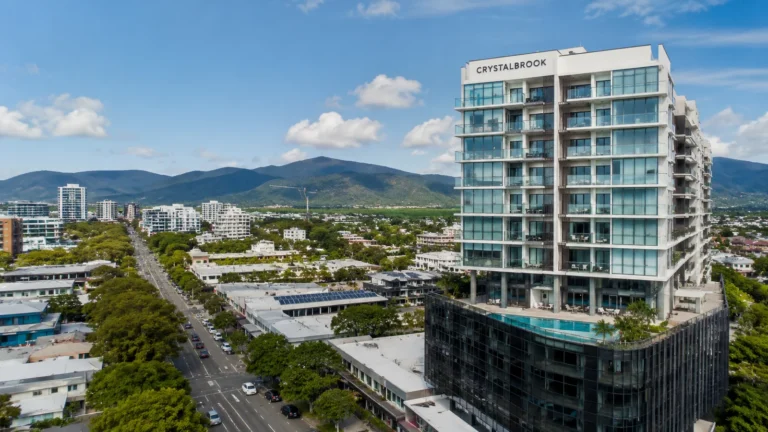
An Adelaide apartment leased at $800 a week just sold within days of listing, purchased by an investor who ran the numbers and realised she could pocket almost $200 weekly after loan repayments. The deal suggests some buyers are adjusting strategy ahead of negative gearing changes, targeting properties where rent covers most or all of the mortgage instead of banking on tax deductions.
The three-bedroom unit near Adelaide University was priced between $495,000 and $515,000. At the top of that range with a typical 80% loan at 5.86%, weekly repayments sit around $610 against $800 in rent. That is an 8% gross rental yield, well above the capital city apartment average of 4.2% to 4.8% depending on the market.
A similar apartment in the same building took five months to sell earlier this year, going for $420,000 in February. The faster turnaround now points to either tighter apartment supply in that precinct or a shift in what investors are willing to pay for yield.
What changed in the calculus
The federal government announced in May that negative gearing will end for existing properties purchased after May 12, 2025. Only new builds and grandfathered holdings will allow rental losses to offset taxable income. For anyone buying an established apartment from here, the old playbook of using tax deductions to subsidise a negatively geared holding no longer applies.
That removes one layer of return and makes cashflow the primary filter. If the property does not generate enough rent to cover or nearly cover the loan, the investor wears the full shortfall without a tax rebate to soften it. High-yield precincts near universities, hospitals or employment hubs suddenly look more attractive because the rent does most of the work.
The Adelaide deal fits that pattern. The apartment sits opposite the university and a short walk from Rundle Mall, so tenant demand skews toward tertiary students, particularly international enrolments. Those cohorts typically pay market rent and turn over predictably, which keeps vacancy low and gives landlords confidence they can re-lease quickly.
The yield versus capital growth trade-off
An 8% gross yield sounds strong until you account for the fact that high-yield markets often deliver slower capital growth. Adelaide’s median apartment price rose 6.1% in the year to March 2025 according to CoreLogic, compared to 9.3% for houses in the same city. Apartments in inner precincts with high student density can sit flat or even drift lower in value if oversupply hits or if international student numbers fall.
The investor who bought this unit is trading capital upside for income certainty. If the apartment appreciates 2% to 3% a year but delivers $10,000 in net cashflow annually, the total return over five years might match or beat a negatively geared Sydney unit that grows 5% a year but costs $8,000 a year to hold. The difference is liquidity: the Adelaide buyer has cash in hand each year, the Sydney buyer has paper equity they cannot spend without selling or refinancing.
That trade-off becomes sharper if interest rates stay elevated or if serviceability tightens further. Investors who stretched to buy in low-yield, high-growth markets two years ago are now facing higher repayments with no tax offset coming. Some will hold and wait, others will sell into a softer market. The yield-first buyers are positioning for a scenario where holding costs matter more than headline price growth.
Risks to watch in high-yield apartment precincts
High rental yields in student precincts depend on sustained enrolment and limited new supply. International student visa settings have tightened over the past 18 months, and if federal policy shifts again to cap numbers or tighten work rights, demand in these buildings could weaken quickly. A 10% drop in occupancy turns an 8% yield into a 7.2% yield with higher vacancy periods, and if multiple landlords compete for the same shrinking pool of tenants, rents soften.
Supply is the other pressure point. Adelaide’s apartment approvals have picked up in inner precincts, and if several hundred new units come online in the next 12 to 18 months near the university corridor, the rental premium that justified this purchase could erode. Oversupply traps are already visible in parts of Brisbane and Melbourne, where high-rise precincts that looked undersupplied two years ago now have vacancy creeping up and rents flattening.
Body corporate costs in older apartment buildings also eat into net yield. A $5,000 annual strata levy on a $515,000 apartment reduces the net yield by about 1%, and special levies for building repairs can spike unpredictably. The investor in this deal will need to factor those ongoing costs and keep a buffer for periods when the unit sits empty between tenants.
Where this strategy works and where it does not
Yield-focused buying makes sense in precincts with structural tenant demand, where location drives occupancy regardless of broader market conditions. University precincts, hospital quarters and CBD fringe areas with high employment density tend to hold up because the tenant pool renews each year. Regional centres with one major employer or one education campus carry more concentration risk: if that anchor weakens, the rental market can turn fast.
The strategy breaks down in markets where yield is high because prices have already fallen. A 9% yield in a mining town apartment might reflect a price drop from $400,000 to $250,000, and further declines are likely if the resource sector contracts. That is a value trap, not a yield play. The difference is demand trajectory: is yield high because rent is strong relative to a stable price, or because price has collapsed and rent is holding only because there is nowhere else for workers to live?
In Adelaide’s case, the yield reflects relatively low apartment prices compared to eastern capitals and stable student demand. That makes it a genuine income play rather than a distressed asset gamble. But sustainability depends on those two factors staying in balance.
Callout: Key numbers
- Purchase price range: $495,000 to $515,000
- Weekly rent: $800 (leased until end of 2025)
- Gross rental yield: ~8% at $515,000 purchase price
- Weekly loan repayment (80% LVR, 5.86%): ~$610
- Net weekly cashflow after loan: ~$190
- Capital city apartment yield average: 4.2% to 4.8% (CoreLogic, Q1 2025)
What to do if you are looking at yield plays
Run the numbers with no tax benefit assumed. Calculate gross yield, subtract body corporate, rates, insurance, management fees and a 4-week vacancy buffer per year. What is left is your net yield. If it is below 4%, you are effectively paying to hold the property and banking entirely on capital growth, which is riskier in a high-rate environment.
Check new supply in the precinct. Ask the local council for apartment approvals in a 2km radius over the next 24 months. If 500-plus units are coming and the current rental stock is under 2,000, that is a 25% supply increase and rents will likely soften.
Stress-test the tenant base. If 70% of tenants in the building are international students or short-term visa holders, you are exposed to policy risk. If the mix includes local students, young professionals and hospital workers, demand is more diversified.
Compare total return scenarios over five years: a 7% yield with 2% annual growth versus a 4% yield with 6% annual growth. Factor in your cashflow needs, tax position and how long you plan to hold. Interest-only loans can amplify yield in the early years but increase refinancing risk if rates stay high.
If you want analysis on where yield and growth intersect as the cycle shifts, subscribe to the weekly newsletter.
General info, not financial advice.