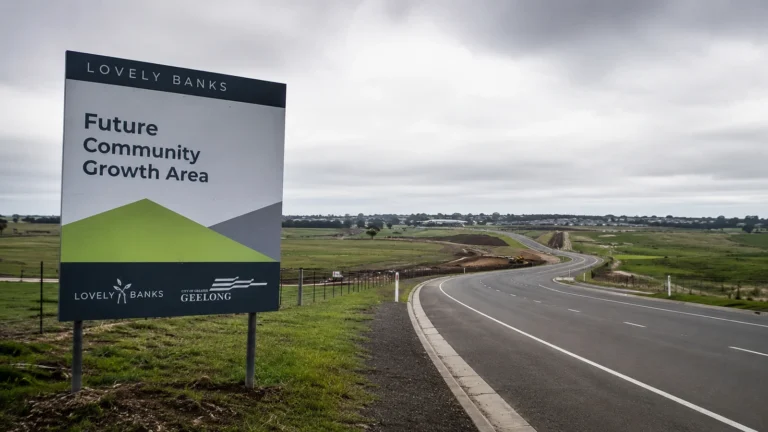
A major industrial property developer has disclosed that data centre investment now accounts for 80% of its development activity, marking one of the sharpest capital pivots in Australian commercial real estate in recent years. The shift reflects broader market pressure: logistics and warehouse demand has softened as e-commerce growth normalised post-pandemic, while AI and cloud computing infrastructure spending accelerated through 2025 and into 2026.
The concentration raises two questions for property investors. First, whether the tech infrastructure boom creates spillover opportunities in adjacent industrial land, energy infrastructure, or cooling system supply chains. Second, whether an 80% weighting in a single property type signals market timing risk if data centre demand plateaus or construction costs blow out.
The industrial property split
Traditional logistics and warehouse space saw vacancy rates climb through 2025 as retailers and third-party logistics operators pulled back on expansion. Rental growth in major metro industrial precincts slowed to low single digits or turned negative in some submarkets, pressuring yields for investors holding older stock.
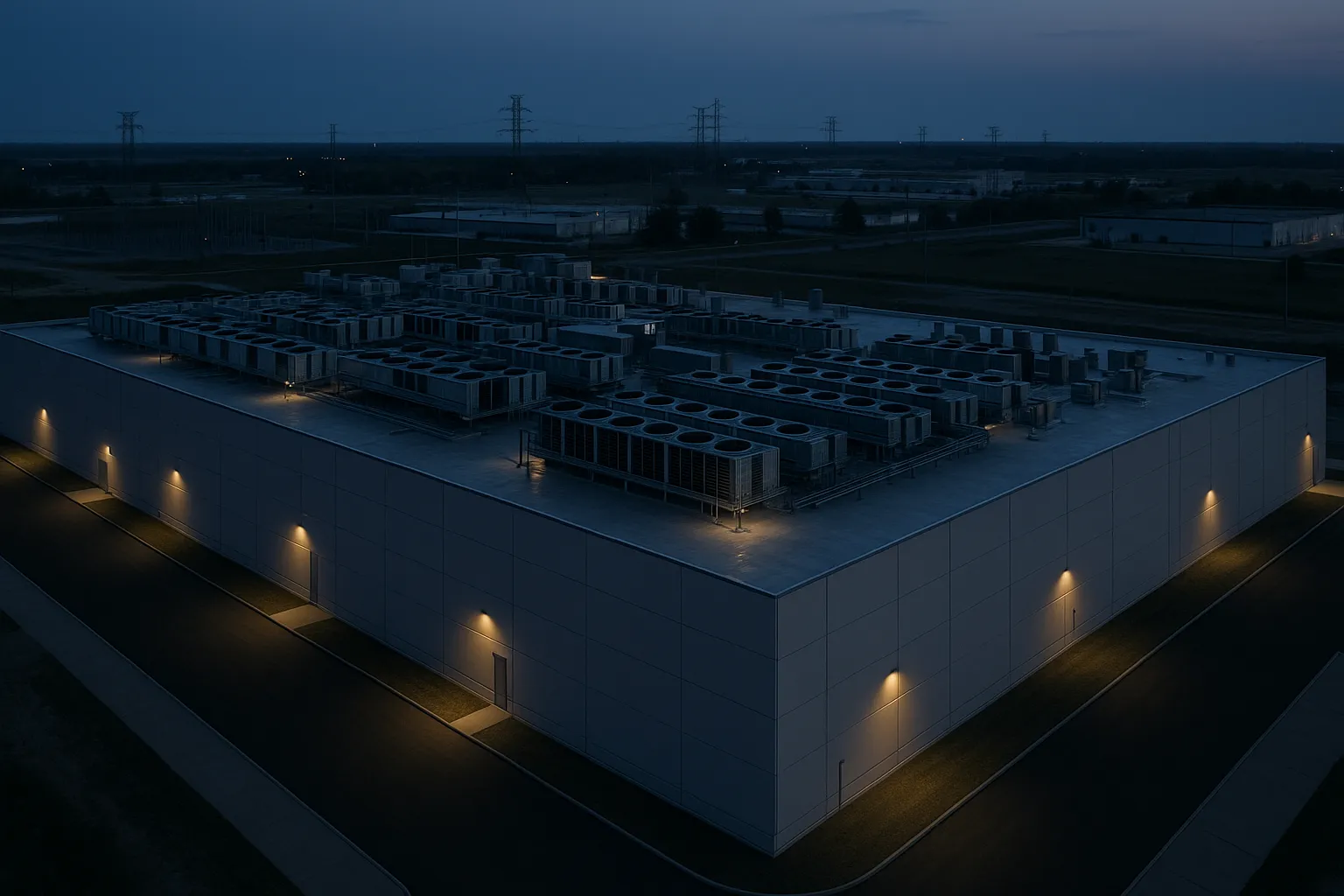
Data centre investment moved the opposite direction. Demand drivers include cloud service provider buildouts, enterprise migration to hybrid infrastructure, and AI model training requiring dedicated compute capacity. Construction pipelines lengthened as hyperscale facilities (50+ megawatts) became the baseline for institutional projects, locking up land near fibre backbone routes and reliable power grids.
The capital reallocation is visible in planning approvals and land sales. Industrial zoned sites within 20 kilometres of CBD fibre exchanges or near renewable energy hubs now trade at premiums to comparable logistics land, reflecting the higher per-square-metre returns data centres generate once operational.
What’s driving the concentration
Three factors explain why a developer would tilt this heavily toward data centre investment:
-
Rental premiums: Data centres command lease rates multiples above warehouse space due to power density, cooling requirements, and tenant credit quality (typically investment-grade tech companies or telcos on 10-15 year terms).
-
Pre-commitment: Hyperscale tenants often commit before construction starts, reducing vacancy risk compared to speculative logistics builds that sit empty if demand softens.
-
Yield compression: Institutional capital chasing tech infrastructure assets has driven cap rates down, making developments profitable to sell on completion even with higher construction costs.
The trade-off is construction complexity. Data centres require specialised mechanical, electrical, and plumbing systems, redundant power feeds, and often onsite backup generation. Cost overruns or delays in securing grid connections can erode margins quickly, and the tenant pool is narrower than logistics (if a hyperscale tenant walks, finding a replacement takes longer than backfilling a 10,000 sqm warehouse).
Pressure points
Several risks sit under this trend:
Oversupply timing: If multiple developers chase the same capital and pre-commitments dry up, the market could see a supply wave hit just as demand growth moderates. AI compute requirements are growing, but at what rate and for how long remains assumption-heavy.
Energy constraints: Data centres are power-intensive. Grid capacity limits in some regions, plus renewable energy transition goals, could slow approvals or force developers into expensive onsite generation. If power costs rise or availability tightens, tenant economics shift.
Regulatory tightening: Governments may introduce planning restrictions on data centre land use, cooling water consumption, or energy draw, particularly if facility density creates local grid stress. Policy risk is real in markets where data centres cluster.
Tenant concentration: An 80% weighting means the developer’s revenue and asset value are tied to a handful of tech and telco tenants. If one major tenant consolidates operations or delays expansion, the impact flows through the entire portfolio.
The opportunity side
For investors watching this shift, the capital reallocation creates several adjacencies worth tracking:
-
Industrial land near infrastructure: Sites within 10-15 kilometres of existing data centre hubs or fibre routes may see value uplift as the sector clusters. Check zoning, power access, and whether the land sits in a flood zone (a deal-breaker for data centres).
-
Energy infrastructure plays: Renewable energy projects, battery storage, and backup power equipment see demand lift as data centres seek carbon-neutral operations. Indirect exposure through listed infrastructure funds or energy sector plays may capture this without direct property risk.
-
Logistics repositioning: Older warehouse assets in softening markets may trade at discounts, offering value for buyers who can reposition them for last-mile distribution, cold storage, or alternative industrial uses as tenants renegotiate terms.
The risk case is simpler: if data centre demand plateaus or construction costs spiral, developers with concentrated pipelines face margin compression, delayed settlements, or forced asset sales. Investors in funds or trusts with heavy data centre weightings should pressure-test the assumptions around tenant pipelines and grid capacity.
Key numbers
- 80% of development activity now in data centres for this developer
- Hyperscale facilities typically 50+ megawatts
- Lease terms often 10-15 years with investment-grade tenants
- Industrial vacancy rates rose through 2025 as e-commerce normalised
- Data centre land near fibre routes trades at premiums to logistics land
What this means for capital flows
The industrial property market is splitting into two tracks: tech infrastructure with strong tenant demand and tight supply, and traditional logistics with softening fundamentals and rising vacancy. Capital is following the spread, which explains the 80% tilt.
For investors, the question is whether this represents early positioning in a long cycle or late-stage crowding. The answer depends on three variables: how long AI and cloud spending growth sustains above-trend rates, whether grid capacity and approvals keep pace with demand, and what happens to construction costs if multiple players compete for the same contractors and equipment.
If you hold industrial exposure through listed property trusts or unlisted funds, check the portfolio breakdown. A modest data centre weighting (10-20%) captures upside while keeping diversification. A concentration above 50% ties your returns to one sector’s demand assumptions and regulatory risk.
For those considering direct investment, data centres require specialist operational knowledge and capital reserves for technology upgrades (cooling systems and backup power age faster than warehouse roofs). Unless you’re partnering with an experienced operator or buying into a fund with in-house expertise, the risk-return may not justify stepping away from simpler industrial assets.
What happens if demand softens
Base case: AI and cloud infrastructure spending continues growing at double-digit rates through 2027, supporting data centre absorption and keeping vacancy low. Developers with pre-committed tenants and grid-connected sites deliver projects on time, achieving target yields.
Downside: A global tech spending pullback, energy cost spike, or regulatory slowdown delays tenant commitments. Construction pipelines overshoot demand, pushing vacancy higher and compressing rents. Developers with 80% concentration face margin pressure or asset write-downs. Institutional buyers step back, widening cap rates.
Upside: AI compute demand exceeds current forecasts, tightening supply further and driving rental growth above expectations. Developers with land banks near fibre and power infrastructure capture outsized returns. Adjacent industrial land rerates as the sector clusters.
The timeline for any of these scenarios playing out is 18-36 months, the lag between construction start and tenant occupation. Watch grid connection approvals, hyperscale tenant announcements, and whether construction cost inflation stabilises or accelerates.
If you’re positioned in industrial property
Start here: Review your portfolio’s data centre weighting and tenant lease expiry profile. If you’re overweight (above 30%) and tenants renew in the next 24 months, pressure-test what happens if one delays or consolidates. If you’re underweight and considering adding exposure, focus on assets with existing grid connections, long-term tenant commitments, and developers who’ve delivered hyperscale projects before.
For those tracking the broader industrial market, the logistics softening may offer value in 12-18 months if landlords capitulate on rents or sell older stock at discounts. The data centre boom is real, but so is the concentration risk.
Want the weekly signal on commercial and industrial property shifts? Subscribe to Australian Property Review.
General info, not financial advice.