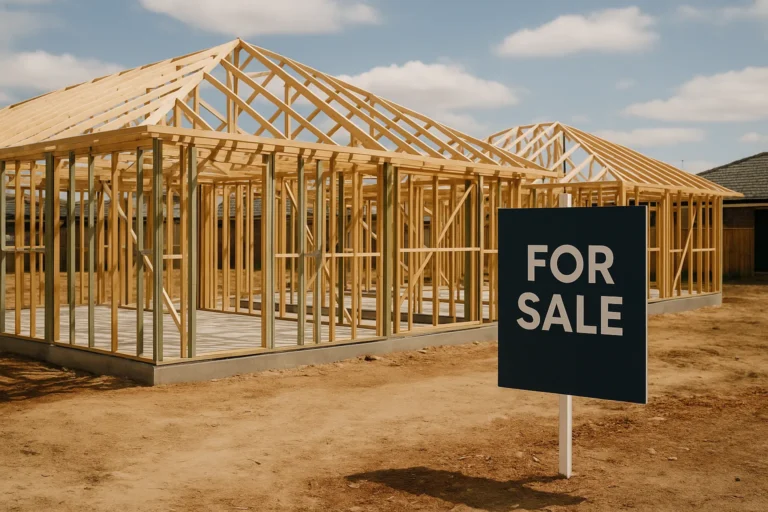
Victoria is running out of builders faster than it can zone land for them to work on. The state’s construction workforce will fall short by nearly 27,000 people within a decade, according to industry calculations based on current training rates against projected demand. That gap translates to roughly 4,000 homes that won’t get built, even if every planning approval goes through.
The deficit sits at just over 20,000 workers now. The workforce grew by about 9,200 people in 2025, less than a third of what’s needed to keep pace with population growth and the state’s 80,000-homes-a-year target. Training pipelines are expected to deliver 12,600 new workers annually by 2035, still nowhere near closing the shortfall.
New South Wales faces a bigger hole, more than 30,000 workers short in the same timeframe, but Victoria’s numbers matter because the state government is three months from an election and housing supply is the centrepiece promise.
Why the workforce can’t scale
Apprentice numbers aren’t keeping up, and retention is worse. Builders report apprentices finishing their qualifications and then leaving for mining, logistics or other sectors that pay more and demand less liability.
The incentive structure doesn’t help. Businesses hiring apprentices receive a rebate of around $3,500 spread over four years, applied against hourly wages. A few damaged tools or mistakes on site wipe out that subsidy fast. One builder described the economics bluntly: there’s almost no financial reason to train apprentices unless you’re planning to keep them long-term for business growth.
Specialist trades are thinning out even faster. Roofers, tilers and bricklayers who stay in the industry are charging premium rates because demand outstrips supply. That flows through to both new builds and basic repairs.
What it costs when supply tightens
Construction costs have climbed 50 per cent since before COVID, driven partly by materials but increasingly by labour scarcity. When tradies are scarce, small jobs become expensive. One builder estimated that fixing a sticking front door, routine maintenance, will soon cost around $2,000 because no one has spare capacity for minor work.
For new housing, the shortage pushes builders toward prefabricated and transportable homes shipped from offshore manufacturers. Quality suffers, and waiting lists stretch to one or two years for custom builds. The alternative is paying a premium for the shrinking pool of qualified local labour.
Construction costs stall housing pipeline as approvals slide 3.6% tracked how approval numbers have fallen even as governments push supply targets, workforce constraints are part of that story.
The catch
- Victoria needs 26,720 more construction workers by 2035 than current training will deliver
- Training output is rising to 12,600 workers per year, still less than half of what’s required
- The shortfall costs the state roughly 4,000 new homes that won’t get built
- Apprentice retention is falling as qualified workers leave construction for other industries
- Specialist trades (roofing, tiling, bricklaying) face the steepest shortages and highest rate inflation
Policy adding friction instead of capacity
Victorian parliament is debating a bill this week that requires apprentice trainers to hold a government-issued license. The legislation hasn’t clarified what the certification process will cost or how existing trainers will transition. Industry groups say the measure adds another compliance layer without addressing the core problem: not enough people entering the trades in the first place.
The timing compounds the problem. Builders are already navigating higher material costs, longer approval timelines and tighter credit conditions. Property tax revenue hits $34bn as builder collapses double showed insolvencies climbing as smaller operators exit under financial pressure. Adding licensing requirements for trainers makes it harder for the survivors to scale up.
Trade-offs no one wants to name
Victoria’s 80,000-homes-a-year target assumes a construction workforce that doesn’t exist yet and won’t exist by 2035 under current settings. The state can rezone land, fast-track approvals and relax density controls, but none of that matters if there’s no one to pour the slab or frame the walls.
Three paths forward, none perfect:
- Boost apprentice incentives sharply, increase rebates, tie retention bonuses to completion rates, subsidise wages for the first two years. Costs money upfront, but cheaper than the housing undersupply it prevents.
- Import skilled workers, fast-track visa pathways for qualified tradespeople from comparable markets. Fills gaps faster than training but requires federal cooperation and housing for the workers themselves.
- Accept lower output, reduce housing targets to match realistic workforce capacity and focus policy on affordability levers (taxation, credit, foreign investment rules) instead of supply alone. Politically difficult, but avoids the cycle of missed targets and credibility loss.
The worst option is pretending the problem will solve itself while announcing supply targets that require a workforce no one is building.
What happens over the next twelve months
If the apprentice trainer licensing bill passes without clarity on costs or certification, expect smaller builders to stop taking on new apprentices altogether. Larger firms will absorb the compliance cost, but the training pipeline narrows further.
Labour shortages will keep pushing construction timelines out and repair costs up. Buyers waiting on builds should factor in delays. Investors holding older stock need to budget higher for maintenance, that $2,000 door repair isn’t hyperbole if tradespeople can earn more on larger jobs.
Government will likely respond with short-term visa easements or one-off funding for apprenticeships, but unless retention improves, the cycle repeats. Watch for any policy linking trade qualification to permanent residency pathways, that’s the signal someone is taking workforce planning seriously.
Housing affordability Australia hits record low as rate hikes erase price falls explained how affordability deteriorated even as prices softened, construction cost inflation driven by labour scarcity is part of that equation.
What to do if this affects your timeline
If you’re planning a build or major renovation in the next two years, lock in quotes and trades now. Waiting for prices to soften won’t work if labour gets scarcer. For smaller repairs, get on waiting lists early or learn to do basic maintenance yourself, the cost of outsourcing routine work is heading higher.
Investors should factor construction delays into feasibility models. A project that pencils in at 12 months might stretch to 18 or 24 if trades are unavailable. Cashflow buffers need to cover that gap.
For policy watchers, the tradie shortage is the binding constraint on housing supply that no amount of zoning reform can fix. If workforce strategy doesn’t shift, supply targets will keep missing and construction cost inflation will keep eating affordability gains.
Subscribe to the newsletter for the weekly signal on what’s shifting in housing supply, costs and workforce constraints.
General info, not financial advice.