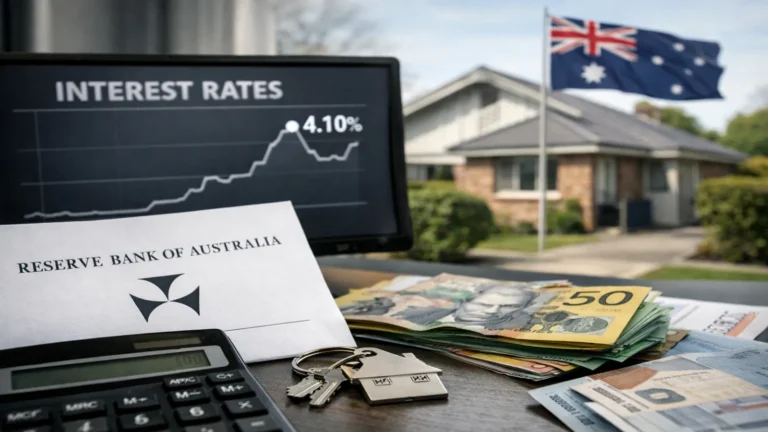
The latest spending data shows rate hikes aren’t working the way the playbook says they should. Discretionary spending jumped 7.8 per cent in July, more than double the 3.5 per cent inflation the Reserve Bank’s been trying to suppress. That’s not a rounding error.
Analysis of ABS figures by finance group Credit24 found 90 per cent of real per-person household spending growth went to discretionary categories: gambling, major sporting events, cinema tickets, recreation. Not groceries or power bills. The problem is the households doing most of that spending aren’t the ones feeling rate pressure.
Who’s spending and who’s not
Mortgage-free homeowners are driving the bulk of discretionary spending growth. They carry no variable-rate debt, so a 25-basis-point hike doesn’t touch their monthly cashflow. Credit24’s research shows they’re also the most likely group to cover an unexpected $2,000 cost from savings without difficulty.
Meanwhile, one in three mortgage holders say they couldn’t scrape together that same $2,000 in an emergency. Among borrowers under 45, 38 per cent missed a mortgage payment in the past month, compared to 26 per cent of over-45s.
The spending split creates a blunt-instrument problem: the RBA tightens to cool demand, but the tightening lands hardest on households who’ve already pulled back. The cohort still spending freely doesn’t feel the pinch.
Why this matters for the next move
The big four banks are forecasting a fourth rate hike shortly, with some pricing in a fifth by year-end. If discretionary spending stays strong among equity-rich owners, inflation may not respond the way it has in previous cycles.
That raises two scenarios. Base case: the RBA hikes once or twice more, inflation moderates slowly, and mortgage holders on variable rates absorb another $90-plus per month in repayments. Downside: spending stays elevated, inflation stays sticky, and the RBA keeps tightening past the point where serviceability becomes the binding constraint for a much larger share of borrowers.
A third of economists polled by Finder already think rate hikes are losing effectiveness. The mechanism still works on paper, higher rates mean less borrowing capacity and higher repayment costs, but when the spending comes from households with no debt exposure, the transmission weakens.
Key numbers
- Discretionary spending grew 7.8% in July, twice the inflation rate of 3.5%
- 90% of real per-person spending growth went to discretionary categories
- One in three mortgage holders can’t cover a $2,000 emergency expense
- 38% of under-45 borrowers missed a payment in the past month
- Another 0.25% hike adds roughly $91/month to the average variable mortgage
The serviceability knock-on
Every rate rise shrinks borrowing capacity. If you’re refinancing or looking to upgrade, the serviceability buffer banks use (currently around 3 percentage points above the loan rate) means you qualify for less than you did six months ago. Refinancing rejection rates have already doubled as that buffer bites.
For buyers still in the market, that’s a double constraint: you need a bigger deposit to hit the same purchase price, and your maximum loan has shrunk. First-home buyers and upgraders with thin equity feel this more than downsizers or investors recycling capital.
The equity gap also shows up in who can still transact. Cashed-up buyers and mortgage-free owners can move without rate sensitivity. Leveraged households face a rising cost of capital and falling capacity simultaneously.
What would change the picture
A few things could shift the dynamics:
- Discretionary spending cools naturally. Pent-up demand from the reopening eventually exhausts itself, or households holding savings decide to rebuild buffers instead of spending.
- Inflation falls faster than expected. Supply chains normalise, energy prices ease, wage growth moderates. The RBA pauses or cuts sooner.
- Policy mix broadens. Some economists argue for varying superannuation contribution rates or using fiscal levers alongside monetary policy to avoid overloading the cash rate. That’s a structural shift, not a near-term scenario.
- Fixed-rate rollovers accelerate. A large cohort of borrowers who locked in 2-3 per cent rates during 2020-2021 will roll onto variable rates in the next 12 months. When those repayments jump, spending behaviour may shift sharply.
The base case remains: the RBA hikes, inflation moderates slowly, and the gap between cashed-up and leveraged households widens further.
Pressure points over the next quarter
Watch for:
- Arrears data. If missed payments tick up materially among under-45 borrowers, that’s an early signal serviceability is binding for a broader group.
- Retail spending breakdown. If discretionary categories start to flatten, it suggests rate hikes are finally reaching the equity-rich cohort or that savings buffers are depleting.
- Fixed-rate expiry volume. The bigger the wave of rollovers, the sharper the potential demand shock when those households adjust to higher repayments.
- RBA commentary on transmission. If the Bank signals concern that tightening isn’t feeding through to the right parts of the economy, that could flag a longer pause or a shift in approach.
Mortgage stress crosses the line when rate rises move from uncomfortable to unsustainable. The discretionary spending split suggests we’re in a two-speed economy: one cohort still has room to spend, the other is already cutting.
What to do if you’re carrying mortgage debt
Start here: pressure-test your cashflow against another two 0.25 per cent hikes. If that puts you in the red or leaves no buffer for an unexpected cost, the practical steps are:
- Lock in a portion of your loan at a fixed rate if you expect further hikes and want repayment certainty.
- Redirect any discretionary spending to building a three-month repayment buffer in offset or redraw.
- If you’re refinancing or upsizing, get pre-approval early, serviceability will only tighten if rates keep rising.
For buyers still looking: the affordability paradox means even if prices ease, higher rates shrink what you can borrow. Focus on total cost of ownership, repayments plus opportunity cost, not just the sticker price.
If you’re not leveraged and you’re watching from the sidelines, the trade-off is simple: higher rates mean better returns on cash, but they also mean anyone you’re competing against for property has less borrowing power. Timing depends on whether you think rates have peaked or there’s more tightening to come.
Subscribe to the newsletter for the next data drop and RBA move analysis.
General info, not financial advice.