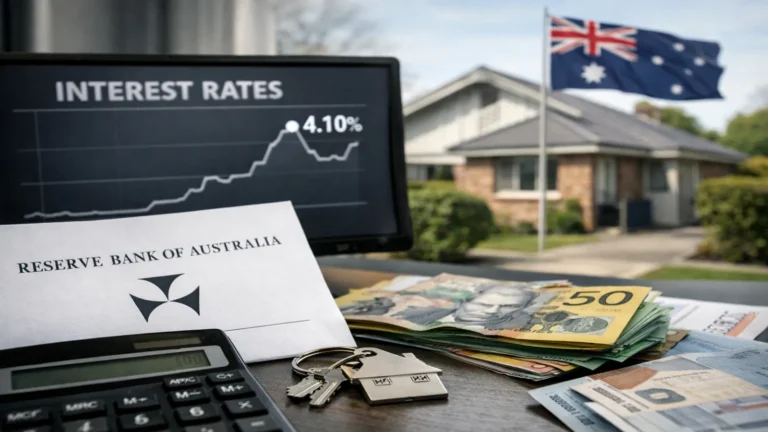
Financial markets are pricing a four-in-ten chance of another cash rate increase this month, even as household budgets buckle under petrol, grocery and existing mortgage cost rises. The August decision lands amid a growing argument about what is actually pushing inflation higher, and whether borrowers should pay the price for forces outside their control.
The RBA lifted rates three times earlier this year, in February, March and May, before pausing in June. The cash rate now sits at 4.35 per cent. Most economists expect the board to hold again, but the probability hasn’t collapsed to zero.
The inflation attribution question
The central tension is straightforward: if price pressures stem mainly from global energy shocks, supply chain bottlenecks and imported inflation, does tightening domestic credit conditions achieve anything beyond shrinking household cashflow?
A major finance commentator argues households are already retrenching wherever possible, but many of the largest cost increases, fuel driven by Middle East conflict, for example, sit beyond their spending choices. Filling the tank effectively delivers a shadow rate hike each week petrol climbs another few cents.
Another 0.25 percentage point move would lift monthly repayments by roughly $120 on a $735,000 mortgage, $81 on a $500,000 loan, $163 on $1 million of debt. Those figures land on top of the cumulative impact from the three hikes already delivered this year.
What the RBA’s recent language suggests
The governor has made clear the board remains focused on returning inflation to the 2–3 per cent target band within a reasonable timeframe. June minutes noted services inflation staying elevated and goods disinflation slowing. Wage growth, while moderating slightly, continues to run ahead of productivity gains in several sectors.
That framing implies the RBA still sees demand-side heat in parts of the economy, even if households feel tapped out. The bank distinguishes between aggregate spending (which includes government outlays, business investment and net exports) and individual household perception. A family cutting discretionary spend doesn’t automatically mean economy-wide demand has cooled enough to bring inflation down at the required pace.
The fiscal policy counterfactual
One strand of the critique targets government spending. If fiscal policy adds demand while monetary policy tries to subtract it, the central bank may need to tighten further than it otherwise would to offset that stimulus. The argument goes: trim public expenditure, reduce aggregate demand from that side, and monetary policy can do less heavy lifting.
The counter-view is that much recent government spending targets cost-of-living relief (energy rebates, rent assistance top-ups), which may dampen measured inflation in the near term even if it supports household incomes. The net effect on underlying demand depends on how recipients adjust behaviour, save the rebate, or spend it.
Trade-offs the board is weighing
Raising rates again risks tipping more borrowers into genuine financial stress, particularly those who refinanced or purchased at low fixed rates in 2020–21 and have since rolled onto variable loans 200–300 basis points higher. Serviceability buffers have tightened; savings accumulated during the pandemic have eroded for many households.
Holding rates steady risks letting inflation expectations drift higher if businesses and workers start building persistent price growth into contracts and wage negotiations. Once that embedding occurs, unwinding it typically requires a sharper, longer tightening cycle later.
The RBA also watches the labour market closely. Unemployment remains low by historical standards, and job vacancies, while off their peak, are still elevated. That suggests the economy retains enough momentum to absorb another modest tightening without triggering a sharp rise in joblessness, but the lag between rate moves and real-economy impact means past hikes may not have fully played out yet.
Scenarios over the next four months
Base case: RBA holds in August, watches quarterly inflation and wage data through spring, keeps live the possibility of one more hike later in the year if services inflation and unit labour costs stay sticky. Markets reprice probability lower if September quarter CPI undershoots, higher if it comes in firm.
Upside (for borrowers): Imported disinflation accelerates, services inflation rolls over faster than expected, wage growth continues gradual deceleration. Board shifts language toward neutral by year-end, cuts become the 2025 conversation.
Downside: Another supply shock (energy, shipping, agricultural commodities) pushes headline inflation back above 4 per cent, or domestic demand proves more resilient than current surveys suggest. RBA hikes 0.25 percentage points in August or November, holds there into early 2025.
Red flags for the next decision
Watch the July monthly CPI indicator (due mid-August). A print above 3.8 per cent year-on-year keeps hike risk alive; below 3.5 per cent tilts the board toward patience. Pay attention to petrol price movements, another leg higher adds to headline inflation but muddies the demand signal. Services CPI components (insurance, rents, hospitality, health) matter more for the board’s assessment of domestic momentum than goods prices.
Employment data in early August will show whether job creation stayed firm or softened. A sharp rise in underemployment or participation drop would complicate the case for further tightening, even if inflation stays elevated.
What this means for your next move
If you are carrying variable-rate debt, the threat has not passed. Review your current rate against what new customers at your lender are getting, the gap often sits between 0.50 and 1.00 percentage points. Call your bank and ask for a discount; if they decline or offer less than 0.30 percentage points, get a refinance quote. Switching costs (application fees, valuation, discharge and settlement fees) typically run $800–$1,200, but the interest saving can recover that outlay within three to six months on a loan above $400,000.
Build a cashflow buffer if you have not already. Model what another $120–$160 per month would do to your budget, and identify which discretionary line items could absorb that clip if it arrives. Do not assume rates will fall soon, the earliest cuts are unlikely before mid-2025, and that timeline depends on inflation behaving.
For those considering a purchase: another hike would tighten serviceability calculations further, shrinking borrowing capacity by roughly 2–3 per cent per 0.25 percentage point move. If you are at the margin of what a lender will approve, that could push your target price range down $15,000–$25,000 on a typical loan.
Subscribe to Australian Property Review’s weekly newsletter for RBA decision analysis and borrowing-capacity updates as they happen.
General info, not financial advice.