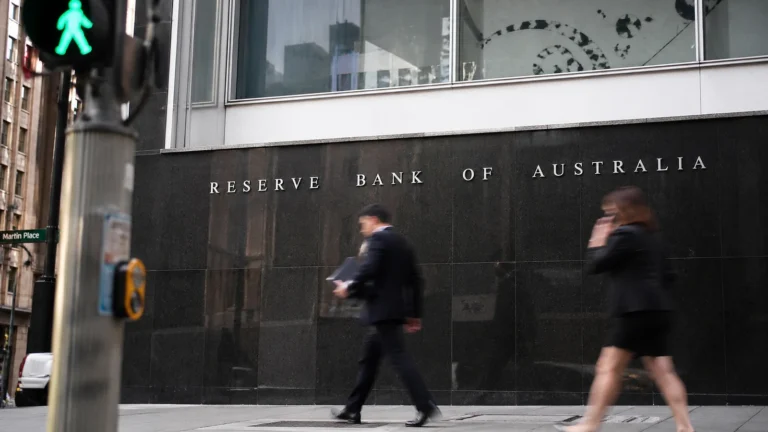
A 20% fall in home prices would push roughly one in 20 mortgages underwater, according to the Reserve Bank’s latest Financial Stability Review. That is the number worth sitting with, because it describes a severe shock, not today’s market.
Today’s reality is milder. The RBA estimates fewer than 1 in 100 borrowers currently owe more than their property is worth, even with prices sliding in Sydney and Melbourne. The exposure is not spread evenly. It is concentrated among recent buyers who borrowed heavily and had little deposit to begin with.
Why recent buyers are the weak link
Negative equity is a timing problem as much as a price problem. A buyer who purchased in 2015 has had a decade of capital growth and years of principal paid down. A buyer who purchased in the last two years, with a small deposit, has neither cushion.
That is why the RBA singles out high-loan-to-value borrowers, including first home buyers who used the federal 5% deposit guarantee. Their starting equity was thin on day one. A modest price dip is enough to erase it.
Key numbers
- Under 1%: share of borrowers currently in negative equity
- About 5%: share of mortgages that would go underwater in a 20% price fall
- A little under 2%: mortgaged households unable to cover essentials plus repayments
- Nearly 5%: the peak of that last figure in 2024
Underwater is not the same as in trouble
The RBA draws a line that matters for anyone worried about forced sales. Owing more than the home is worth only becomes a financial event if the borrower cannot keep paying. As long as income covers the repayments, the loan keeps performing and nobody is forced to sell into a falling market.
That is the real check on this risk. The RBA points to a strong labour market, household savings and accumulated equity as the buffers keeping arrears low. The share of first home buyers on the guarantee scheme falling behind is described as contained.
So the chain to watch has three links: prices fall, equity disappears, then income fails. Negative equity only becomes dangerous when the third link breaks. Job losses are the trigger, not price falls on their own.
What could derail this
The comfort rests on assumptions. Unemployment staying low is the big one. If the labour market weakens while prices are also falling, thin-equity borrowers lose both their income buffer and their exit option. They cannot refinance, and they cannot sell without crystallising a loss.
The RBA also flags external risks as the most prominent threats to financial stability. Those include a sharp correction in global share and corporate debt markets, possibly tied to an AI investment unwind, plus a sudden bond market sell-off and cyber threats. A shock of that kind could hit jobs and credit availability at once, which is the combination the household buffers have not been tested against.
Two caveats on the data. The RBA’s modelling covers averages, and the 5% figure assumes a uniform 20% fall. Real price drops are uneven, and a steeper fall in one capital city would hit that city’s recent buyers much harder than the national number implies.
What it means for borrowers and lenders
For recent buyers with a small deposit, the practical lever is cashflow buffer, not property price. Keeping several months of repayments in an offset or savings account does more to protect against forced selling than any view on where prices go next.
For lenders and brokers, the finding sharpens the focus on high-LVR lending vintages. Expect continued attention on serviceability buffers and verification for borrowers who entered the market near the top with minimal equity, a theme already running through the mortgage broker oversight review.
The broader stress picture is also worth tracking alongside this. Our look at mortgage stress and resilience data shows how unevenly pressure is landing across households, which matters more for default risk than headline negative equity counts.
The bottom line
Negative equity is currently a niche risk, not a systemic one. It sits with recent, high-LVR buyers, and it only bites if income fails. If you hold a high-LVR loan, build a repayment buffer now, and confirm your lender’s hardship options before you need them.
Subscribe to the Australian Property Review newsletter for weekly signals on rates, credit and policy.
General info, not financial advice.