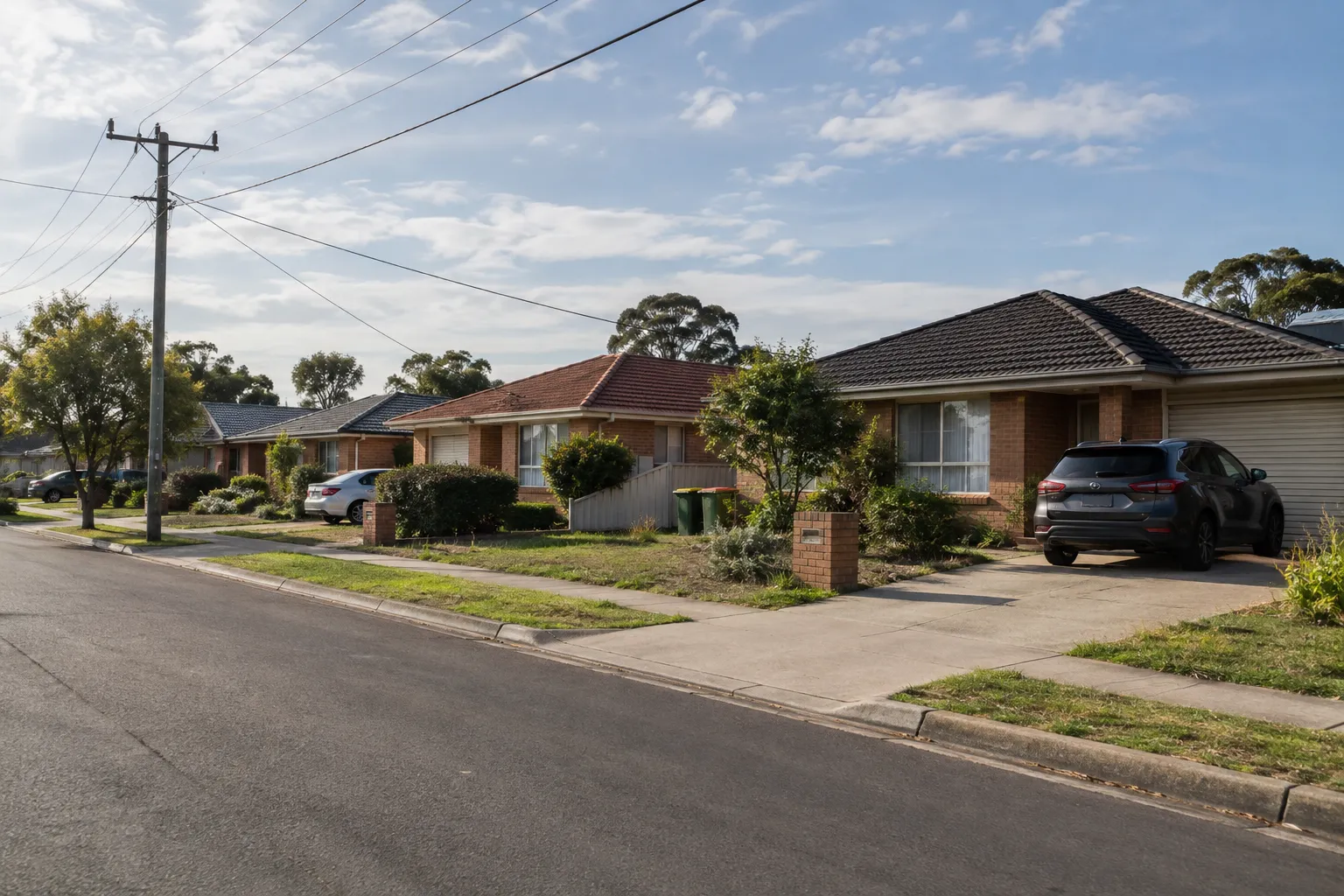
A survey of mortgage holders has quantified something the market has been pricing in quietly for months: a meaningful share of borrowers are one or two rate moves from reconsidering ownership. Nine per cent say they’d seriously look at selling after a 25-basis-point hike. Another 20 per cent after two hikes. That’s not a stress scenario, that’s the current RBA guidance window.
The numbers matter because they expose a supply risk no capital city has modelled properly. If even half of that nine per cent, call it 450,000 households, listed within six months, absorption capacity in most submarkets would be overwhelmed. Distressed inventory doesn’t clear at the same pace as voluntary turnover. Buyers wait. Lenders slow pre-approvals. Prices adjust faster than normal because the seller’s timeline is compressed.
The catch in the survey data
Thirty-nine per cent of mortgage holders say they’re not confident they can continue meeting repayments if rates rise again. That’s a broader cohort than the nine per cent flagging immediate distress, but it’s the leading indicator. Confidence erosion happens before payment default. These households have already cut discretionary spending, delayed maintenance, stopped saving. The next rate move doesn’t just increase the repayment, it removes the last buffer.
The RBA’s assessment framework assumes borrowers tested at a 3-percentage-point buffer above the loan rate can absorb hikes. That serviceability test was designed for a different cycle. It doesn’t account for real wage stagnation, energy bill increases, or the compounding effect of multiple hikes in quick succession. A household that passed serviceability at origination two years ago is now carrying materially higher non-discretionary costs with no income growth.
Key numbers
- 39% of mortgage holders lack confidence in repayment capacity if rates rise
- 9% would consider selling after one 25-basis-point hike
- 20% would reconsider after two hikes (50 basis points total)
- 15% could absorb four hikes (100 basis points) before reaching the same decision point
- Cash rate currently 4.35%, one hike takes it to 4.6%, highest since 2010’s 4.75% peak
What forced-sale supply does to local markets
Distressed inventory behaves differently. Voluntary sellers can wait for the right buyer. Forced sellers can’t. That compression changes the clearing mechanism. In a normal turnover cycle, Sydney absorbs roughly 3,500–4,000 settled sales per month. Melbourne sits around 3,000–3,500. If 10,000 distressed listings hit those markets simultaneously, days-on-market extends, negotiation leverage flips entirely to buyers, and comparable sales data, the foundation of every valuation, breaks down.
The absorption constraint is tighter in middle-ring and outer suburbs where the borrower cohort at risk is concentrated. Inner-city submarkets with higher incomes and equity buffers can absorb small volumes of distressed stock without material price impact. Outer-ring markets, where loan-to-value ratios are higher and household buffers thinner, cannot. A street with three forced sales in six months resets the price floor for the entire pocket.
Lenders face a capacity problem too. Workout teams are sized for normal arrears rates, not systemic distress. If 5–10 per cent of the mortgage book enters hardship negotiation at once, processing times extend. Borrowers who might have refinanced to a better rate or negotiated a repayment pause instead get pushed toward sale because the lender can’t move fast enough. That’s when distress becomes self-reinforcing.
The scenarios that change the math
Base case: the RBA holds rates through the end of the year. Inflation moderates without further tightening. Borrowers in the marginal zone, the nine per cent flagging immediate distress, refinance to longer terms, draw down offset accounts, or negotiate hardship arrangements. Forced-sale volumes stay within normal absorption range. Prices drift lower in rate-sensitive outer suburbs but don’t collapse.
Upside case: rates come down sooner than the market expects. The RBA sees inflation tracking back to band without further tightening and begins easing in early 2027. Serviceability improves, refinancing capacity opens up, and distressed borrowers move out of the risk zone before listing. Supply tightens again as voluntary sellers withdraw, and prices stabilise.
Downside case: inflation stays sticky. The RBA hikes twice more over the next six months. The nine per cent becomes 20 per cent, and forced-sale volumes exceed 500,000 nationally over 12 months. Absorption capacity is overwhelmed. Prices fall 15–25 per cent in outer suburbs. Lenders tighten credit further to protect their own risk position, which reduces buyer demand and extends the clearing cycle. Banks report rising arrears and provisions. The government intervenes with a distressed-borrower support package, but it arrives too late to prevent the initial supply shock.
The survey data also shows two-thirds of Australians prefer prices to keep falling. That includes 53 per cent of homeowners. The conventional read is that homeowners with equity don’t mind a correction if it helps the next generation enter. The alternate read: homeowners are preparing for a price fall and adjusting their expectations accordingly. If enough sellers believe prices are going lower, they list now rather than wait. That brings forward supply and accelerates the adjustment.
Red flags over the next quarter
Watch arrears data from the major banks in their next quarterly updates. A jump in 30-day and 60-day arrears is the early signal that borrowers are running out of runway. Days-on-market trends in outer suburbs, if median DOM extends past 45 days and keeps climbing, buyers are waiting for distress. Auction clearance rates below 55 per cent for three consecutive weeks suggests seller expectations haven’t adjusted to the new demand setting. Refinancing approval rates, if lenders tighten serviceability further, borrowers in the marginal zone lose the option to term-extend and are pushed toward sale.
The RBA’s next move isn’t priced as a certainty. Markets are split on whether September brings a hike or a hold. But the borrower survey data shows the transmission mechanism is working, households are feeling the pressure. The question is whether the central bank believes it needs more pressure to bring inflation down, or whether the current setting is already doing enough damage that another hike tips the system into distress it can’t manage.
Bottom line
Nine per cent of mortgage holders flagging immediate distress risk after one rate hike translates to potential forced-sale volumes most local markets have no capacity to absorb without a price correction. The borrowers at risk are concentrated in outer suburbs with thinner equity buffers and higher loan-to-value ratios. If the RBA hikes again and distressed inventory exceeds 10,000 listings in any major capital city over a six-month window, absorption breaks down and prices adjust faster than the normal clearing cycle.
If you’re in the marginal zone, repayments above 35 per cent of household income, offset balance below three months of repayments, no refinancing capacity, pressure-test your position now. Model what two more hikes do to your cashflow. If the answer is “I’d need to sell,” start that conversation with your lender before you’re forced into it. Early hardship negotiation gives you more options than waiting until you’re in arrears.
Interest rate hikes affordability paradox: when cheaper prices cost more breaks down how rate increases can make housing less accessible even as nominal prices fall. Borrowing capacity cuts hit $58k: which states lose hardest shows which markets are most exposed to serviceability tightening.
Subscribe to the newsletter for weekly distress signals and absorption data across capital city submarkets.
General info, not financial advice.