Here is the number that matters: for every extra investor loan written on a new home, about 16 fewer loans were written on an established one. That is not a rotation of capital. It is capital leaving the room.
The quarterly lending figures show investor loans for new dwellings reaching 10,923, up just 441. Loans for existing property landed at 40,647 after shedding 7,080. Total investor commitments dropped 8.6%. If the policy goal was to steer investors into new stock, the early read is that the steering wheel moved a little and the brakes went on hard. For more on the headline drop, see our breakdown of investor lending falling 8.6% in Q2.
Why the headline gain flatters the story
A rise in new-home investor loans sounds like the budget changes to negative gearing and capital gains tax are working. The detail says otherwise. A gain of 441 loans sits against a loss of 7,080 elsewhere. Most investors who left did not pick up a new apartment instead. They stopped buying.
Two caveats apply. The May 2026 budget measures only partly overlap this quarter, so the full behavioural response is not yet in the data. And one quarter is one quarter. But the direction of travel is clear enough to take seriously.
The catch: more demand for new stock needs more new stock
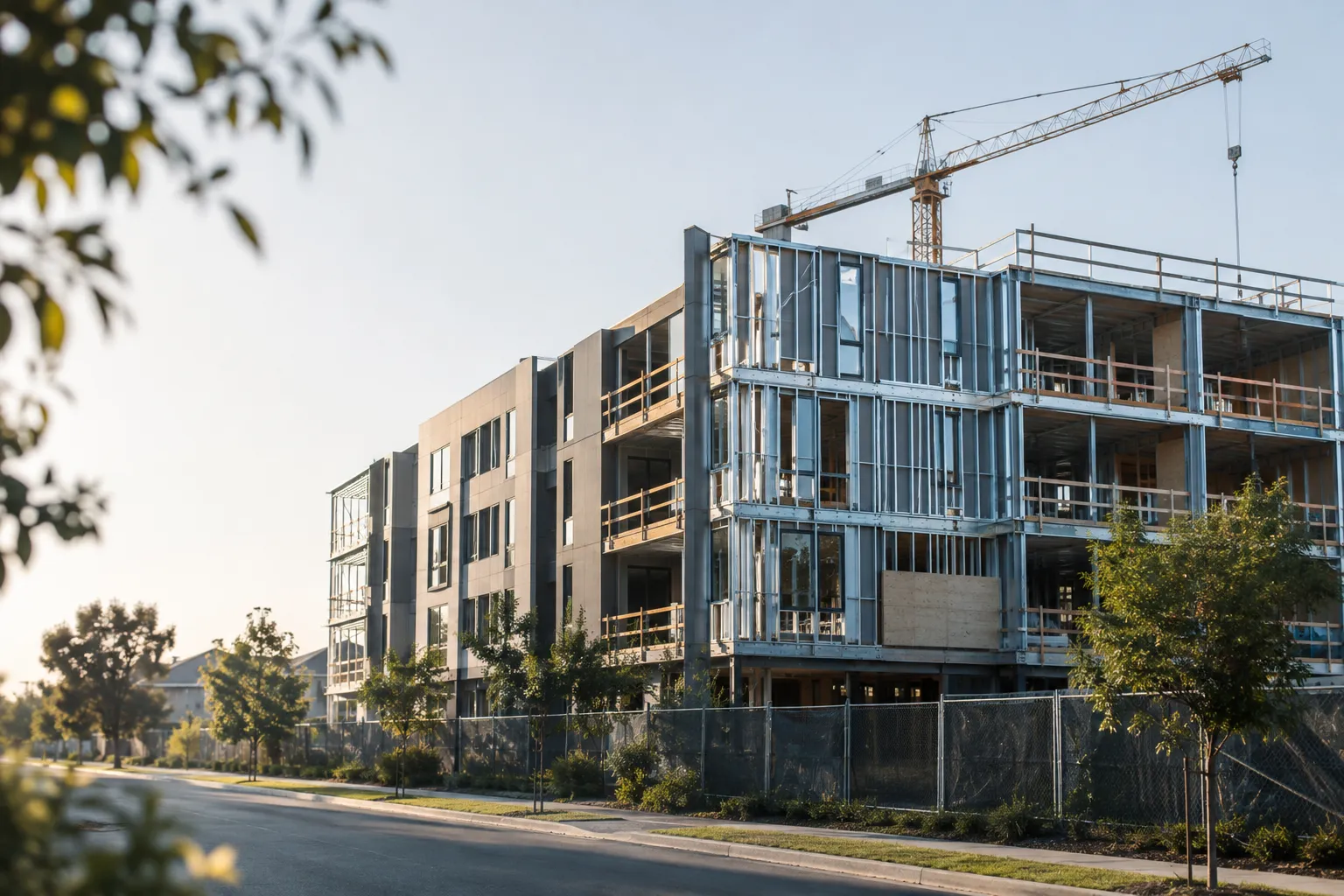
Policy that pushes investors toward new dwellings only helps if those dwellings get built. The construction signals are mixed, and that is the real tension here.
- Completions rose 5.8% to 47,168 in the June quarter, which reflects projects approved and started well before this policy shift.
- August approvals fell 6.1%, and that is the forward-looking number.
- Within approvals, non-house private dwellings (apartments and townhouses) dropped 21.2%, while detached houses rose 3.7%.
In other words, the part of the market investors are being nudged toward is the part where approvals are shrinking fastest. Investors are more likely to buy off-the-plan apartments and townhouses than a detached home on acreage. A pipeline that thins exactly where demand is being directed is a supply paradox, and our guide to supply, approvals and building costs explains why the lag between approval and completion makes this hard to fix quickly.
Costs, finance and viability are the real brakes
Building is not constrained by a shortage of buyers alone. Construction costs, labour availability, development finance and project viability all decide whether a site gets built. Demand-side tweaks do not fix any of those.
There is also a new wrinkle. Changes to borrowing limits for self-managed super funds, which take in new apartments, could hurt developers who rely on presales to secure finance. Presales are the proof of demand that lenders want to see before releasing construction funds. If a pool of presale buyers shrinks or becomes more cautious, projects can stall before the first slab is poured.
Commentary on all this has split along familiar lines. One side reads the numbers as a policy that is steering money where it is wanted. The other reads them as a demand shock that supply cannot absorb. The data so far leans toward the second reading, though a single quarter cannot settle it.
What this means for investors, buyers and renters
- Investors weighing a new-build purchase should pressure-test the developer’s funding and presale position, not only the price per square metre. A stalled project is a bigger risk than a slightly higher entry price.
- First home buyers may benefit if investor competition for established homes keeps easing. We have already seen first home buyers returning as investor competition drops.
- Renters should watch rental supply. Fewer investors overall can mean fewer rental properties, which tends to tighten vacancy and push rents up.
The base case is slow adjustment rather than a sudden change. The downside is that new-stock demand rises into a thinning pipeline. The upside is that completions already under way cushion the gap while costs ease. None of these is a certainty.
If you want the weekly signal on housing supply and lending, subscribe to the newsletter.
General info, not financial advice.