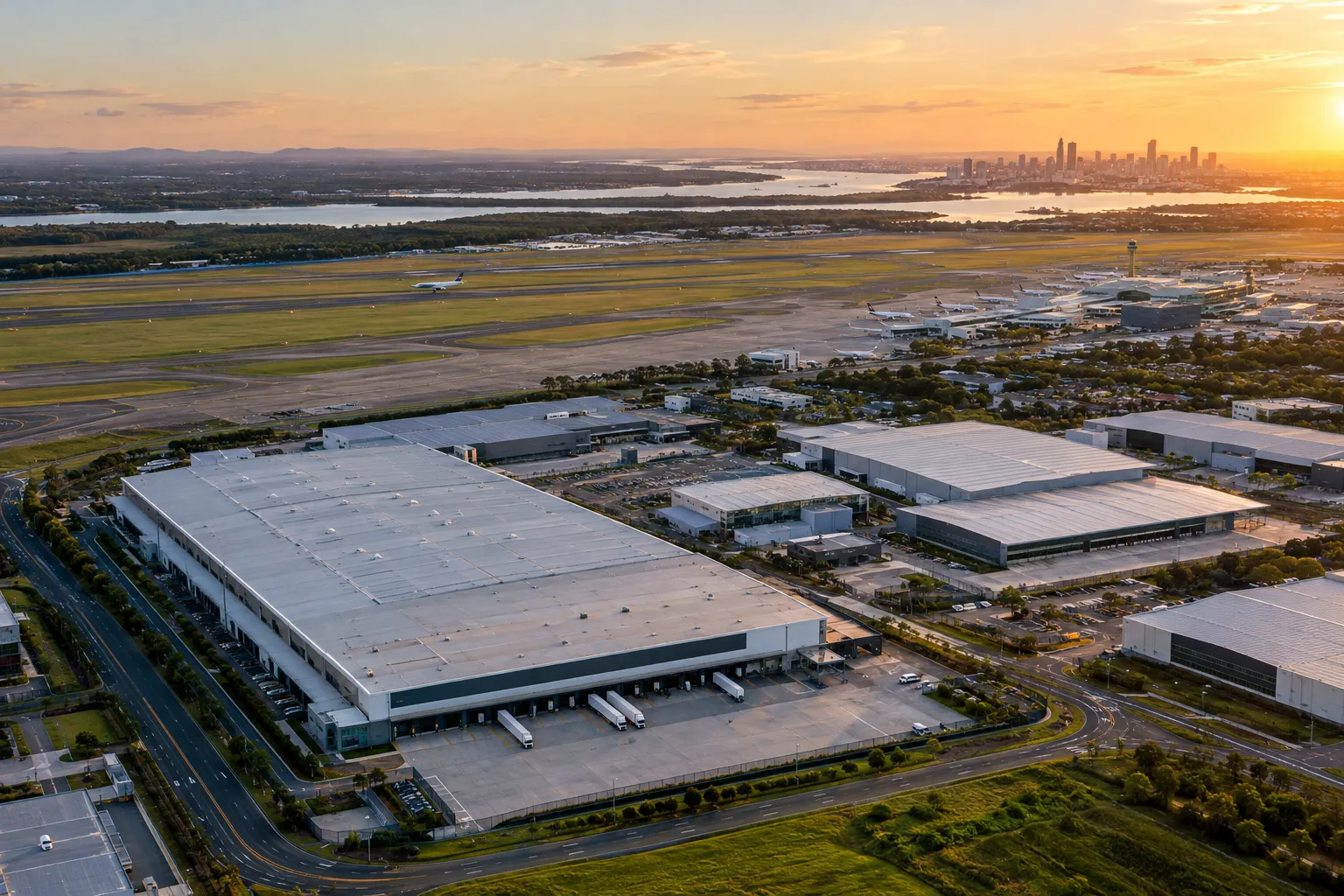
Brisbane Airport industrial land is about to become one of the most closely watched supply events in South-East Queensland. The airport corporation says it will release 30 hectares over three years, with a value of more than $400 million and over 150,000 square metres heading into its investment holdings.
That is a big number in a market where options are thin. Citywide industrial vacancy has dropped to 3 per cent, and the airport’s own precincts are already full. For logistics, warehousing and advanced manufacturing tenants, connected sites have been hard to find.
Why 3 per cent vacancy changes the maths
A 3 per cent vacancy rate is tight by any measure. It means tenants have little room to negotiate and landlords hold most of the pricing power. When a large parcel of well-located land comes to market in that setting, it tends to attract attention from occupiers who have been waiting.
The airport’s leases add to the picture. Its industrial leases carry a weighted average expiry of 8.55 years, which points to long, stable income rather than short churn. That is the kind of profile income-focused investors look for.
Airport land versus the surrounding market
Here is the catch. Airport land is not just another industrial estate. It sits within a single, large landholding of 2,700 hectares, controlled by one owner with a long-term plan. That is different from a fragmented market where many developers compete on price and timing.
For surrounding industrial landowners, the release cuts two ways:
- It adds supply to a market that badly needs it, which could soften rental growth at the margin.
- It may also lift the profile of the broader precinct, drawing tenants who then look at nearby sites once airport land runs out.
The airport’s own description of the release as one of the last chances of such scale in the region suggests supply of this kind is not easily replaced. That supports the case that it complements the market rather than floods it.
What the capital commitment signals
The release sits inside a much larger program. The property portfolio is valued above $2.6 billion, up more than $500 million in two years. The wider Future BNE program covers over $5 billion across five years and more than 150 projects.
That scale tells you the owner expects demand to hold. Stage two of the Airport Industrial Park, a 25-hectare site, is roughly 40 per cent pre-committed, with completion expected mid-2027. Pre-commitment before completion is a useful signal, because it shows occupiers are willing to lock in space ahead of delivery.
Two caveats matter:
- Pre-commitment at 40 per cent still leaves 60 per cent to lease.
- Ideas such as hotels, shopping centres and data centres remain possibilities, not confirmed projects, so they should not be priced in.
Key numbers
- 30 hectares of industrial land released over three years
- More than $400 million in value, over 150,000 square metres
- Citywide industrial vacancy at 3 per cent
- 8.55-year weighted average lease expiry
- Stage two is roughly 40 per cent pre-committed, due mid-2027
Yields and where investors may allocate
A tight vacancy rate usually supports rents, and long leases support income stability. But yields respond to more than vacancy. They also reflect interest rates, borrowing costs and how much capital is chasing the same assets.
If more investors move into Queensland industrial property because of the airport’s expansion, competition for quality assets could compress yields over time. That would help existing owners through higher values, and make new entry more expensive.
For investors, the practical question is whether to chase airport-linked exposure directly or to look at nearby, well-located industrial stock that benefits from the same demand. The airport’s land is controlled by one owner, so access is limited. Adjacent markets may offer more flexibility.
What the numbers do not tell us
There are gaps. The material does not give rental rates for the new land, expected yields, or the pricing the airport will seek. It also does not say how much of the release will be sold versus leased, or how fast tenants will absorb it.
That matters. Supply released over three years will be absorbed alongside whatever else comes to market. If other projects arrive at the same time, the 3 per cent vacancy rate could rise. If they do not, it could fall further.
The approval of the 2026 Master Plan by the federal government in June gives the program a firm planning base. It does not remove risks around construction costs, finance availability or tenant demand.
The practical take
The release looks more like an added layer of supply into a hungry market than a threat to it. Long leases, early pre-commitment and a vacancy rate of 3 per cent all point to demand that is currently outrunning supply.
The risk is concentration. Airport land is a single-owner story, and investors relying on one precinct take on that exposure. Spreading across nearby industrial markets can reduce it.
If you want the weekly signal on commercial and residential property, subscribe to the Australian Property Review newsletter.
General info, not financial advice.