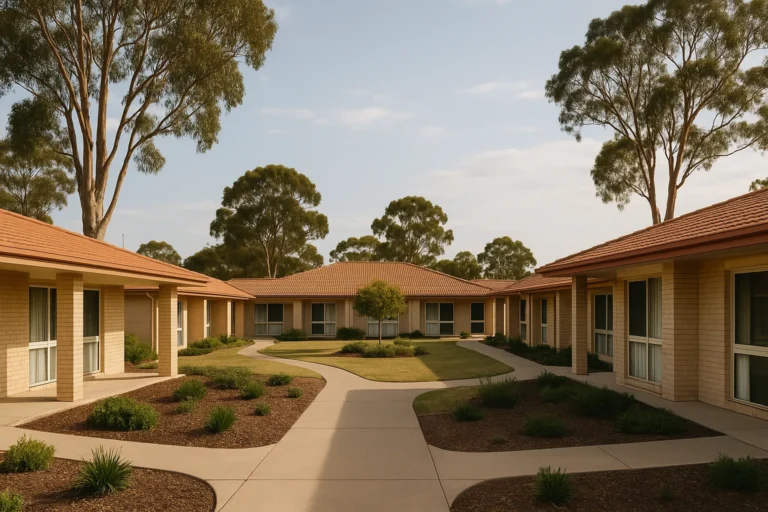
Australia keeps building its way towards a housing fix, and keeps falling short. A less discussed lever is already built: the spare bedrooms sitting in homes owned by older Australians.
Almost nine in ten households aged over 55 are sitting on a bedroom they do not need, according to a 2026 downsizing study from a property portal and a retirement-community operator. People over 55 make up almost 30 per cent of the population. If even a slice of them moved to smaller homes, larger family houses would reach the market without a single new slab being poured.
Where the wealth and the space sit
The scale is the point. Research from a Perth-based economics centre puts net property wealth held by households aged 65 and over at $2.8 trillion. That is just above 30 per cent of national housing assets.
Much of that is tied up in homes that suit a household of four, but now house one or two people. That is not a moral failing. It is the predictable result of people staying where their lives are, in a system that makes moving expensive.
Key numbers
- Nearly 9 in 10 over-55 households have a spare bedroom
- Over-55s are almost 30 per cent of the population
- Net property wealth of $2.8 trillion sits with households aged 65 or older, which is just above 30 per cent of national housing assets
- 79 per cent of prospective downsizers want easy upkeep
What would actually get people to move
The appeal is real. Easy upkeep was cited by 79 per cent of prospective downsizers, which tells you the demand is about lifestyle and effort, not only money.
The obstacles are just as clear. Three in ten people pointed to the stress of relocating. Another 26 per cent named stamp duty. Stamp duty is the one that policy can change, and it is a blunt cost: it lands at the exact moment someone is trading down and trying to release equity. We have looked at how stamp duty keeps big homes full, and the logic is simple. A tax on moving reduces moving.
The catch is that the problem is not only tax. Pension rules, capital gains considerations for those with other property, and a thin supply of well-located smaller homes all weigh on the decision. If the right product does not exist nearby, a tax concession alone will not create it. For a wider read on why spare bedrooms stay empty, that earlier piece covers the behavioural side.
Land lease and the product gap
One operator said land lease living is among the fastest-growing models. In plain English, residents typically own the home but lease the land beneath it, which lowers the upfront cost and suits people who want a smaller footprint with less maintenance.
Growth there suggests demand for purpose-built downsizing options is running ahead of supply. That matters for policy. If the aim is to shift older owners, the pipeline of appealing, accessible, affordable smaller homes needs to be part of the plan, not an afterthought.
Older listings are now showing up
There is a market signal worth noting. A real estate group chairman said on 22 October that, across 35 years in the industry, he had never seen so many listings for properties offered after four, five or even eight decades of ownership.
That could mean some downsizing is already happening. It also carries a warning for buyers. Long ownership does not guarantee a bad or good property. The advice was to scrutinise condition, location and price regardless of how long the seller held it. A home untouched for decades may need real money spent on it.
Could reform beat new construction?
It would be a stretch to say downsizing alone solves the shortage. Moves are chains: one older owner sells, a family buys, and that family’s smaller home or rental then frees up something else. The effect is real but slow, and it depends on people choosing to go.
The case for reform is about cost and speed. Building is constrained by labour, materials and finance. Changing incentives for people already sitting on space does not need a crane. If construction stays weak, the stock already in the ground looks like the cheaper source of supply to tap.
The trade-offs are fiscal. Cutting or waiving stamp duty for downsizers costs state revenue, and pension and tax tweaks can create new distortions or unfairness between owners. Any design needs to target genuine downsizing, not simply hand a windfall to people who were moving anyway.
What readers can take from this
If you are an older owner weighing a move, price the full cost of moving, including duty, before you decide, and check what smaller options actually exist near your community. If you are a buyer eyeing a long-held home, treat condition and price as the deciding factors. Our guide to negative gearing, CGT and investor tax is a useful starting point if tax on a second property is part of the picture.
Start here: Subscribe to the newsletter for weekly analysis on supply, policy and prices.
General info, not financial advice.