Downsizing housing supply is one of those ideas that sounds like free money. Older Australians sit in homes with bedrooms they never use, younger families can’t find a place, so swap them over and the market loosens. A new 2026 study on downsizing makes the first half of that story vivid. The second half is where it gets harder.
The numbers frame the scale. People aged over 55 make up 29 per cent of the population, and official forecasts have that rising to 35 per cent by 2050. The research behind the headline surveyed more than 2,100 buyers, including a group over 50 who want to downsize. So this is not a sample of reluctant retirees being nagged to move. It is people who say they would like to.
The demand side is clearer than the headline suggests
Asked what they want, roughly half of those prospective downsizers prefer two bedrooms. More than a third still value three. That matters, because a downsizer rarely wants a shoebox. They want something smaller to maintain, not something that can’t host a visiting grandchild.
Their priorities are practical. Easy upkeep ranked first at 79 per cent, feeling safe and at ease came next at 62 per cent, and being near amenities followed at 61 per cent. None of that is about squeezing every last dollar out of a sale. It is about a home that works at 70 the way the family home worked at 40.
Stock that does not match the wish list
Here is the catch. Just under half of dwellings completed between 2016 and 2021 had one to three bedrooms. On paper that sounds like plenty of smaller homes. In practice it suggests supply of the right kind, in the right locations, is falling short of what this group is asking for. Smaller homes that are also low-maintenance, secure and close to shops and transport are a narrower slice of that total.
An industry economist quoted in the coverage put the emphasis on using existing stock more efficiently. That is a fair framing, but it quietly assumes the swap is available. If the home a downsizer wants does not exist near where they live, the spare bedrooms stay occupied, and the family who would have bought them stays in the rental queue.
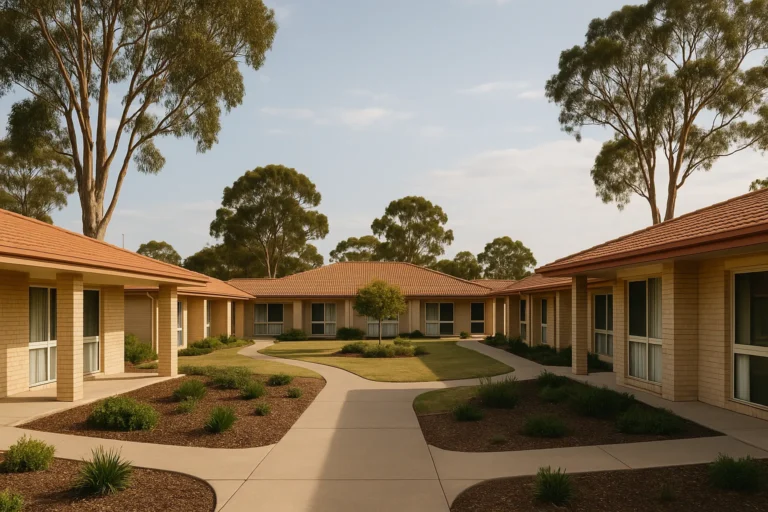
A retirement-resort executive pointed to fast growth in land lease communities. They are one answer to the stock gap, though they work for some buyers and not others, and they sit alongside rather than replace conventional apartments and townhouses.
Obstacles are not all about willingness
The survey’s own list of barriers is revealing. The stress of relocating was cited by 29 per cent. Stamp duty was named by 26 per cent. That is a sizeable share pointing at a tax that is a pure policy setting, charged on the very transaction the housing system wants to encourage.
There is a useful way to read that. A move that costs a transfer tax, agent fees, removalists and months of disruption is a big bill for the privilege of freeing up a bedroom. Older owners who also rely on the family home for pension eligibility, retirement planning and a sense of security face trade-offs that a headline about empty rooms simply skips. Those settings sit outside this survey, so treat the point as a general question rather than a finding. But any plan that leans on persuasion alone is leaning on the weaker lever.
The family factor adds another layer. Among those with adult children, 66 per cent said their children influence the decision. Some of that will be encouragement. Some will be concern about leaving a long-held home, or hopes about what happens to it later. Either way, downsizing is rarely a solo calculation.
How the commentary splits
The debate tends to divide along predictable lines. One camp treats empty bedrooms as an underused asset and focuses on nudging owners to move. The other points at the cost and stock constraints that make moving unattractive in the first place. The survey data lands closer to the second reading: the willingness is there, and the friction sits in tax, supply and the stress of the move itself.
What would change my mind
If a wave of suitable two and three-bedroom homes appeared near established neighbourhoods, and the cost of moving fell materially, the spare-bedroom figure would start to look like genuine slack. Until then, it reads more like a measure of how few good options older owners have.
The practical take
If you are weighing a downsize, price the whole move, not just the sale. Add transfer costs, selling costs and the cost of the smaller home you actually want, then compare that with staying put. Ask what the move does to your retirement income before you list. Write down which of the survey’s three priorities, upkeep, safety or location, matters most to you, because that narrows the search fast.
For readers following the supply story, the housing supply, approvals and building costs guide sets out why new stock is slow to arrive, which is the other half of this equation.
Key numbers
- 29 per cent: over-55s as a share of the population, forecast at 35 per cent by 2050
- 29 per cent and 26 per cent: buyers citing relocation stress and stamp duty as obstacles
- 66 per cent: those with adult children who say the children influence the decision
Subscribe to the newsletter for the weekly signal on housing supply and policy.
General info, not financial advice.