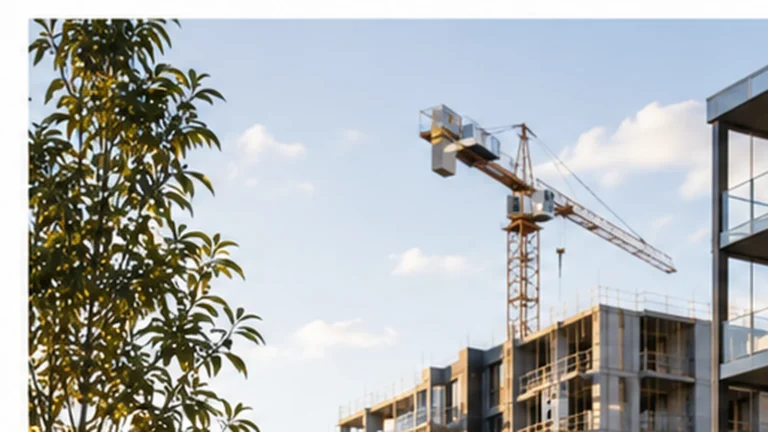
NSW foreign investment waiver is the latest attempt to get more housing built by making large projects easier to finance.
The Minns Government will waive the state’s 9 per cent foreign purchaser surcharge duty for qualifying large-scale build-to-rent and retirement living developments from 1 July 2026. The Property Council has welcomed the move, arguing it will help attract global capital into housing sectors that need long-term money.
That is the clean version.
The more useful version is this: the change may improve project feasibility, but it will not magically turn stalled sites into completed homes overnight. Planning delays, construction costs, debt markets and investor return hurdles still matter.
For renters, investors and downsizers, the key question is not whether foreign capital is good or bad. It is whether this tax change is large enough to shift actual supply.
What NSW is changing
The policy targets a specific problem inside the housing pipeline.
Foreign investors that buy residential-related land in NSW can face surcharge purchaser duty. From 1 July 2026, qualifying large-scale institutional build-to-rent and retirement living projects will be exempt from that 9 per cent surcharge.
Build-to-rent means apartment projects held in single ownership and operated as rental housing, rather than being sold off one unit at a time. Retirement living is different, but the capital problem is similar: both models often need patient, institutional money and large upfront commitments before income arrives.
That is why the tax setting matters.
A 9 per cent surcharge can make a development site materially harder to justify. On a $50 million site, the surcharge could add $4.5 million before a single apartment is built. On larger projects, it becomes a major drag on feasibility.
For developers and fund managers, that cost does not sit in isolation. It sits on top of construction cost inflation, finance costs, planning delays, land tax, infrastructure contributions and return requirements from investors.
Here’s the catch: removing one cost can help a project stack up, but it does not remove every constraint.
Why this matters for housing supply
NSW has a supply problem, but not every supply problem is the same.
Some projects fail because the planning system is too slow. Some fail because construction costs move faster than sale prices or rents. Others fail because capital is available, but only at a return that the project cannot support.
The NSW foreign investment waiver is aimed at that third problem.
If global pension funds, sovereign wealth funds or large property institutions view NSW as less competitive than other markets, capital can simply go elsewhere. That does not always mean another Australian state. It can mean Singapore, the United States, Europe or other real asset markets where the risk-return equation looks cleaner.
The Property Council’s argument is straightforward: if NSW wants more large-scale rental housing and seniors housing, it needs tax settings that do not push institutional capital away before projects are assessed on their merits.
That argument has weight.
Build-to-rent projects usually need long holding periods. Retirement living projects depend on demographic demand, specialised operations and site-specific delivery. These are not quick flip developments. They need investors who can wait years for income and absorb early project risk.
But that does not mean the policy is a complete housing solution.
It is a financing change, not a construction guarantee.
The part renters may not feel quickly
The political risk is that this sounds more immediate than it is.
A tax waiver can improve a spreadsheet today. New dwellings still take years.
A project needs a site, planning approval, design resolution, funding, builder capacity, pre-commitment where required, construction and then leasing or occupation. Even when the economics improve, the physical supply response is slow.
That means renters should not expect this policy to ease vacancy pressure in the next few months. The realistic impact, if it works, is likely to show up over a multi-year pipeline.
That matters because Australia’s rental pressure is already being felt now. More institutional rental supply may help over time, especially in markets where vacancy is tight and apartment delivery has been weak. But the short-term rental market will still be driven by listings, migration, household formation, interest rates and investor behaviour.
Australian Property Review has covered this supply timing problem before in relation to Sydney’s apartment pipeline. When major builders slow down or redirect capital, the impact does not always show up immediately. It tends to arrive later through fewer launches, fewer completions and tighter future choice. Read more: Meriton’s Sydney freeze is a warning shot for housing suppy.
In plain English
NSW is trying to make large rental and retirement projects more attractive to global capital by removing a 9 per cent foreign buyer tax impost.
That may help some projects move from “too hard” to “possible”.
But it does not guarantee lower rents, faster approvals or cheaper construction.
The policy improves one part of the housing equation. It does not solve the whole equation.
Who wins and who is left waiting
The clearest winners are institutional developers and capital partners with projects that were close to viable but held back by the surcharge.
That does not mean they receive a free pass. They still need to satisfy the qualification rules, secure sites and deliver projects that work commercially. But a major upfront tax saving can improve the numbers enough to bring some projects back into discussion.
The next likely winners are renters and older Australians, but only if projects actually get built.
Build-to-rent can add professionally managed rental stock. It can also give tenants more certainty than smaller private rental arrangements, depending on lease settings and operator behaviour. Retirement living can free up larger established homes if older owners move into more suitable housing, although that second-order effect is never automatic.
The more complicated group is existing property investors.
More rental supply can increase competition in some precincts over time, especially around high-density corridors. That may be good for renters but less comfortable for landlords relying on tight vacancy to drive rent growth. On the other hand, better supply can also support a healthier, more stable market by reducing the risk of blunt political interventions such as rent controls.
That is the trade-off.
Property investors often benefit from scarcity, but too much scarcity invites policy risk.
Why foreign capital keeps coming back into the housing debate
Foreign investment is politically sensitive because housing is already expensive.
When voters hear “foreign capital”, many think of offshore buyers competing with locals for established homes. That is not what this specific waiver is aimed at.
The policy is designed around large-scale housing delivery, not individual buyers purchasing existing dwellings. That distinction matters.
If foreign money buys established homes and leaves them underused, the public concern is obvious. If foreign capital funds hundreds of new rental apartments or retirement dwellings that otherwise may not be built, the supply argument is stronger.
But the politics will still be difficult.
Governments need to prove the public benefit. That means clear eligibility rules, delivery conditions and consequences if promised housing does not eventuate. Otherwise, the policy can be attacked as a tax break for institutions without enough evidence of new homes.
Now, the part most people miss: the credibility test is not the announcement. It is the completion data.
What could derail the policy
The first risk is planning.
If approvals remain slow or uncertain, cheaper tax settings will only go so far. Capital dislikes uncertainty because time is money. A site stuck in process can lose feasibility even after a tax saving.
The second risk is construction cost.
Build costs have eased in some areas but remain high compared with pre-pandemic assumptions. Labour availability, materials, builder margins and insolvency risk still shape whether projects proceed.
The third risk is rent assumptions.
Build-to-rent depends on long-term rental income. If required rents are too high for the local market, projects may struggle to lease at the level investors need. That can delay starts or push projects into premium segments, where the affordability benefit is weaker.
The fourth risk is policy instability.
Institutional capital does not just price today’s tax setting. It prices the chance that future governments change the rules. If NSW wants long-term capital, the rules need to look durable.
The bigger test for NSW housing policy
This move should be judged as one part of a broader supply strategy.
On its own, the NSW foreign investment waiver is not enough. It may unlock some projects, but housing supply depends on the full chain: zoning, approvals, infrastructure, finance, construction and final occupancy.
The strongest version of the policy is clear. NSW lowers a tax barrier, attracts more institutional capital, brings forward build-to-rent and retirement living projects, and adds housing choice over several years.
The weaker version is also possible. Developers welcome the change, a handful of projects improve on paper, but planning friction and construction costs keep the actual supply response modest.
That is why readers should watch approvals, commencements and completions, not just announcements.
A good rule of thumb: housing policy is only real when it changes the number of homes people can live in.
What this means for buyers and investors
For renters, this is a medium-term supply story, not immediate relief.
For downsizers, it could help if retirement living supply improves in the right locations and at the right price points. More choice can matter, particularly for older Australians who want to move but cannot find suitable housing near family, health services and transport.
For investors, the lesson is more strategic.
Policy is slowly shifting toward new supply, institutional rental models and targeted tax settings. That does not remove the role of mum-and-dad investors, but it does mean the rental market may become more segmented over time.
In some areas, private landlords will compete with professionally managed rental buildings. In others, especially detached-house and middle-ring family markets, institutional supply may barely touch the tenant pool.
The practical step is to pressure-test your suburb against future supply, not just current vacancy.
If a market has a large build-to-rent pipeline, strong apartment approvals and improving infrastructure, future rent growth may look different from the past three years. If a market has little new supply and strong household formation, the pressure may remain.
For related reading on how policy can help one group while adding pressure elsewhere, see Australian Property Review’s analysis of the first-home buyer scheme: The 5% deposit trap pushing first-home prices even higher.
Bottom line
The NSW foreign investment waiver is a practical supply-side move, but it is not a silver bullet.
It should make some large build-to-rent and retirement living projects easier to finance. That matters in a state where housing delivery is under pressure and capital can move elsewhere.
But the real test is not whether the industry welcomes the announcement. It is whether NSW gets more completed homes, in locations where renters and older Australians actually need them, within a timeframe that makes a difference.
Start here: track the next 6 to 12 months of NSW build-to-rent approvals, commencements and project funding decisions. That will tell you whether this is a genuine pipeline shift or just another policy headline.
If you want the weekly signal, subscribe to the free Australian Property Review newsletter
General info, not financial advice.