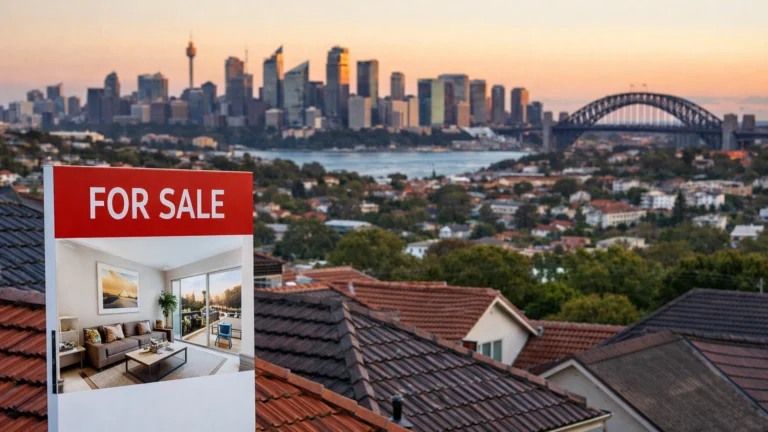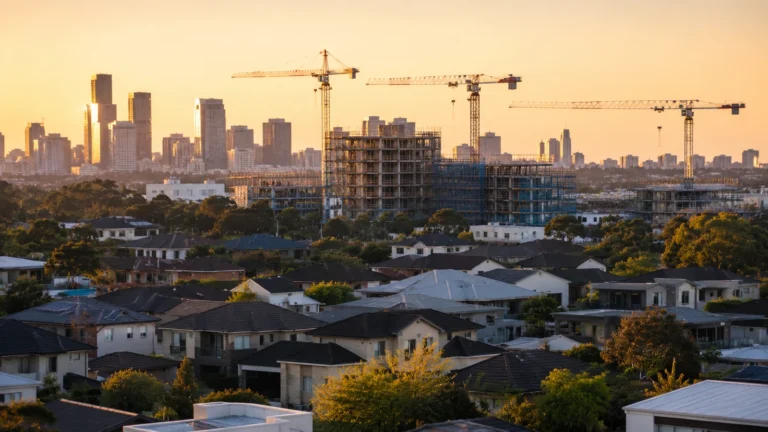
Home ownership affordability is no longer just a first-home buyer problem.
It is becoming a confidence problem.
A new consumer survey reported by news.com.au suggests 35 per cent of Australians now identify as having given up on buying a first home or investment property. That is up from 25 per cent in 2024 and 30 per cent in 2025.
The same report said only 24 per cent believe they can save for a mortgage, down from 38 per cent two years ago.
That is the headline. The bigger issue is what sits underneath it.
Australians are not only reacting to high prices. They are reacting to a system where deposits take longer to build, borrowing power moves against them, rents eat into savings, and the bank may assess their loan at a rate much higher than the one they actually pay.
For buyers and investors, this is not a “property dream is dead” story.
It is a story about the price of entry rising faster than confidence.
The dream did not vanish overnight
The idea of owning property still carries weight in Australia.
For many households, it remains tied to security, retirement planning, family formation and the belief that hard work should eventually translate into a stable home.
What has changed is the perceived path.
A decade ago, the question for many buyers was: “Which suburb can I afford?”
Now, it is often: “Can I get into the market at all without outside help?”
That shift matters because housing markets run on more than listings and interest rates. They also run on belief. If enough would-be buyers decide the goal is unrealistic, they stop behaving like buyers. They delay inspections. They avoid pre-approval. They keep renting. They invest elsewhere. They move home. They leave the city.
That does not crash a market by itself. Supply is still tight in many areas. Population growth still supports demand. Rental vacancy remains a pressure point in several cities.
But it changes the tone of the market.
It turns urgency into hesitation.
Home ownership affordability is really a borrowing power story
Most affordability debates focus on prices.
That is understandable. Prices are visible. They are in auction results, suburb reports and listing alerts.
But the more important issue for many households is borrowing power.
A buyer does not purchase a median house with a headline wage. They buy with a deposit, an approved loan and a monthly repayment they can survive.
That means four things matter at once:
- income
- savings
- living costs
- the lender’s assessment test
Australian Property Review has previously explained this in Why You Still Can’t Afford to Buy in Australia: buying power is not just about house prices. It is the interaction between income, deposits, expenses and bank rules.
Here’s the catch.
Even if a borrower is offered a mortgage rate in the 6 per cent range, lenders may test whether they could cope with a much higher rate because of the serviceability buffer.
Serviceability means the bank’s test of whether you can afford the loan. It is not just what you think you can pay. It is what the lender believes you could still pay if conditions worsen.
That is why many buyers feel like they are moving backwards despite earning more.
Their wage may rise. But rent, food, insurance, utilities and loan assessment rates can rise too. The finish line shifts.
In plain English
A buyer can still want property and still walk away from the process.
That is not always defeatism. Sometimes it is basic risk management.
If the deposit is too thin, repayments are too tight, or the purchase depends on strong price growth to make the numbers work, pausing may be more rational than stretching.
Why this matters for investors too
The survey’s “quitting” point is not limited to first-home buyers.
It also captures Australians walking away from property investment plans.
That is important because investors help set demand in many markets, especially in rental-heavy suburbs and apartment-heavy areas. When investors pull back, the first effect may not be a sharp price fall. It may be weaker auction depth, fewer competing bidders and more selective lending.
Australian Property Review recently covered this wider shift in Housing Market Outlook 2026: CBA’s Warning Just Got Sharper, where flat-price assumptions and weaker investor lending made cashflow more important than hope.
For investors, the maths has changed.
Higher interest costs are only one part of it. Insurance, strata, repairs, land tax, property management fees and vacancy risk also matter. Rents can offset some of the pressure, but not every landlord can lift rent without increasing turnover or vacancy risk.
That creates a second-order effect.
If fewer investors buy, rental supply may remain tight. But if too many investors sell or stop adding new stock, tenants can face even more pressure.
So the affordability problem does not sit neatly on one side of the market.
First-home buyers struggle to enter. Renters struggle to save. Investors struggle to make cashflow work. Developers struggle to build at prices households can afford.
That is how a housing shortage can exist at the same time as buyer fatigue.
What changed and what did not
What changed is sentiment.
More Australians are saying the property path no longer feels realistic. The reported fall in the share of people who believe they can save for a mortgage is the clearest signal. A deposit is not just a savings target. It is the psychological entry ticket.
If people stop believing they can save it, they stop planning around ownership.
What did not change is the underlying demand for shelter.
Australia still has a housing supply problem. Many households still want security. Many renters still want ownership. Many investors still see property as a long-term asset class.
The difference is that demand is now hitting a tougher credit wall.
Australian Property Review has made a similar point in Australia’s Housing Shortfall and House Price Outlook: a housing shortage can support prices, but it does not remove the ceiling created by borrowing capacity.
That is the uncomfortable middle ground.
A market can be undersupplied and still unaffordable.
The risk is a two-speed property market
This does not mean every property market weakens equally.
A more likely outcome is a sharper split.
Affordable markets with jobs, population growth, infrastructure and tight rental conditions may still attract demand. Expensive markets that rely on large mortgages may be more exposed to weaker borrowing power.
Sydney and Melbourne sit closer to the pressure point because larger loan sizes make buyers more sensitive to interest rates. Brisbane, Perth and Adelaide may have different demand dynamics, but even there, buyers still need the loan to work.
The rule of thumb is simple.
If a market depends on buyers stretching, it is more exposed when confidence falls.
If a market offers better relative affordability, stronger rental support or lower debt levels, it may hold up better, but not without risk.
What could change the story
There are three main things that could shift sentiment.
First, interest rates. Australian Property Review’s recent coverage of RBA interest rates made the key point: a rate hold gives borrowers breathing room, but it does not reverse the pressure already built into repayments.
Second, wages. If wage growth improves without inflation forcing rates higher, more households may rebuild confidence. But that is a narrow path.
Third, supply. More homes in the right locations and at prices households can actually finance would help. More homes that still land above buyer budgets will not solve the affordability gap.
Now, the part most people miss: lower prices alone do not automatically fix affordability.
If prices fall because the economy weakens, unemployment rises or banks tighten credit, buyers may not feel better off. They may feel less secure.
That is why the next phase is not just about house prices.
It is about whether households regain confidence in their own numbers.
The practical take
If you are a first-home buyer, do not start with listings.
Start with borrowing capacity.
Ask your broker or lender to model three cases:
- your current approval limit
- repayments if rates rise by another 0.25 percentage points
- repayments if one income is disrupted for three months
If the purchase only works in the best case, it probably does not work.
If you are an investor, run the same discipline on cashflow. Do not assume capital growth will rescue a weak yield. In a flatter market, the holding costs matter more.
If you are already a homeowner, this is a reminder not to overread your paper value. Equity is useful, but only if your cashflow and refinancing position are sound.
The property dream has not disappeared.
But for more Australians, it now needs a harder test before it becomes a decision.
Start here: pressure-test your borrowing capacity before you fall in love with a property.
For independent property analysis without hype, subscribe to the free Australian Property Review newsletter.
General info, not financial advice.