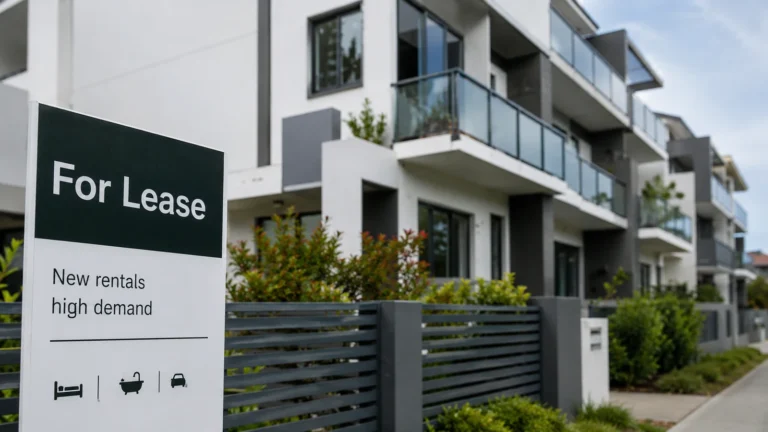
Melbourne build-to-rent has received another vote of confidence, with Malaysian developer UEM Sunrise securing Kio Investment Management as capital partner for a $315 million Collingwood rental project.
The plan is straightforward on paper. More than 400 apartments are proposed for 21-53 Hoddle Street, across two buildings with studios, one-bedroom, two-bedroom and three-bedroom apartments. Kio will fund the project and become the long-term owner-operator once it is completed.
That matters because Melbourne is already Australia’s most active build-to-rent market. It also matters because renters do not live in funding announcements.
They live in completed homes.
A funding deal is not the same as rental relief
The Collingwood project is a useful signal for the market. Institutional capital is still willing to back well-located rental housing in inner Melbourne, even after an earlier agreement with Greystar did not proceed.
That is the part that changed.
What did not change is the delivery challenge. Early works are expected towards the end of 2026, with completion targeted for 2030. In plain English, the project may support future supply, but it is unlikely to shift rental pressure in the next one or two years.
That is not a criticism of the project. Large apartment projects take time. Planning, funding, construction costs, labour availability and builder capacity all matter.
But it does mean the supply benefit should be read carefully.
Australia’s rental problem is immediate. Build-to-rent is a medium-term response.
Why institutions like Collingwood
Collingwood has the ingredients institutional rental investors usually want.
It is close to the CBD, connected to jobs, transport, hospitality and services, and has a renter base that can support smaller apartments. For a build-to-rent operator, that matters because the model depends on occupancy, rent collection, operating discipline and tenant retention over many years.
Build-to-rent is different from build-to-sell.
A normal apartment developer usually sells units to individual buyers, then moves on. A build-to-rent owner typically keeps the building, leases the apartments and manages the asset for income.
That changes the investment lens. The operator is not just asking, “Can we sell these apartments?” It is asking, “Can this building hold tenants, rents and operating margins across the cycle?”
Here’s the catch. That does not automatically make rents cheaper.
Institutional rental housing can add professionally managed stock and improve tenant experience. It can also target premium rents if the location, amenities and service model justify it. Renters may get more choice and security, but not necessarily a bargain.
In plain English
Build-to-rent can help supply, but only when projects move from announcement to completion.
The Collingwood deal is positive because capital is backing new rental housing. The limitation is timing. If completion is targeted for 2030, the near-term rental market still depends on vacancy rates, completions, population growth and household incomes between now and then.
The part renters may miss
The second-order effect is not just more apartments.
If more institutional investors back build-to-rent, developers may find it easier to fund large rental projects without relying entirely on individual off-the-plan buyers. That can help supply where pre-sales are hard to secure.
This is important in a market where apartment feasibility has been under pressure. Construction costs remain high, finance is tighter than during the cheap-money cycle, and planning approvals do not always turn into completed homes.
Australian Property Review has covered this broader delivery problem before in Dwelling approvals jumped, but Australia’s housing fix still looks shaky. The short version: approvals matter, but completions matter more.
The same logic applies here.
A $315 million funding deal is a good sign for confidence. It is not proof that Melbourne’s rental shortage is being solved.
Why Melbourne keeps attracting build-to-rent money
Melbourne has an advantage over Sydney in this part of the market.
Sydney has strong rental demand, but land costs can make large-scale rental projects harder to stack up. Melbourne has more inner-city development opportunities, more apartment depth and a planning environment that has already seen multiple build-to-rent proposals move forward.
That does not make Melbourne easy.
The model still has to work on land price, construction cost, rent assumptions, operating expenses and exit value. If any of those numbers move the wrong way, the project can become harder to justify.
For investors watching the sector, the rule of thumb is simple: build-to-rent is not magic supply. It is capital-intensive housing with a long payback period.
That is why well-located sites matter so much.
What this says about housing affordability
The Collingwood project sits inside a bigger affordability problem.
When home ownership gets harder, more people stay in the rental market for longer. That increases demand for rental stock, especially close to jobs and transport. At the same time, smaller investors can pull back if borrowing costs rise, taxes change or rental regulation becomes harder to price.
Institutional rental housing is one response to that gap.
But it is not a full substitute for broad housing supply. Australia still needs more private rentals, more social housing, more affordable housing and more homes for owner-occupiers.
Australian Property Review has also looked at the national shortage in Australia is short 262,000 homes. Will prices surge again?
The key point is that shortage can support prices and rents at the same time households remain under pressure.
That is the uncomfortable part of this story.
More capital is entering rental housing because the demand case is strong. Renters feel that same demand case as competition.
The investor angle
For property investors, the Collingwood deal is another sign that rental housing is becoming more institutional.
That does not mean individual landlords disappear. Australia’s rental market is still heavily dependent on private investors. But it does mean large platforms are moving into locations where they believe long-term rental demand is durable.
This creates two practical questions.
First, will build-to-rent compete with nearby private landlords? In some pockets, yes. A professionally managed building with modern amenities can pull tenants away from older stock if rents are comparable.
Second, will it reduce vacancy risk across the broader suburb? Not necessarily. More supply helps renters, but local impacts depend on how many similar projects complete around the same time and at what rent level.
If you own or are considering an apartment investment near a major build-to-rent pipeline, do not just look at today’s rent. Look at future competing stock.
Australian Property Review has covered the investor side of new housing in Negative gearing shake-up sends investors into new apartments. The same discipline applies here: do not buy the theme without pressure-testing the numbers.
What could derail the promise
The base case is that well-located build-to-rent projects will keep attracting capital, especially in inner Melbourne. The upside case is that more institutional funding helps get apartments built that otherwise may have stalled.
The downside case is slower and less comfortable.
Construction costs could rise again. Labour shortages could delay delivery. Planning conditions could create friction. Rents may not grow enough to support the underwriting. Interest rates may stay higher for longer than project backers expect.
There is also a political risk. Build-to-rent often gets talked about as a housing solution, but if completed projects target premium rents, public support can weaken. Governments want supply. Renters want affordability. Investors need returns.
Those goals overlap, but they are not identical.
The practical take
The Collingwood deal is a positive signal for Melbourne build-to-rent, but it should not be oversold.
It shows capital is still available for large rental housing projects in strong inner-city locations. It also shows why the housing supply debate needs more patience and more precision.
Announcements are not keys. Funding is not completion. More rental stock is helpful, but timing and rent level decide how much relief households actually feel.
Start here: if you are a renter, buyer or investor in inner Melbourne, track the local pipeline, not just the headline deal value. The question is not only how many homes are announced. It is when they complete, who they serve, and what rent they need to charge.
Want the weekly signal without the property spin? Subscribe to the free Australian Property Review newsletter
General info, not financial advice.