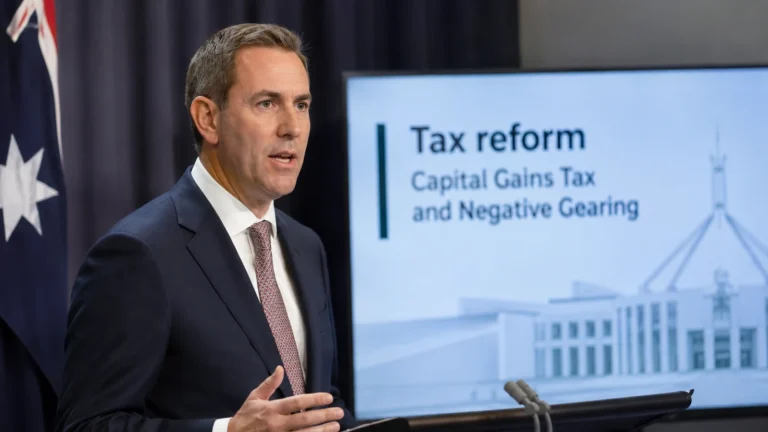
The SMSF borrowing ban debate has turned into the latest front in Australia’s property policy fight.
The reported proposal would stop future borrowing for residential property inside self-managed super funds by targeting limited recourse borrowing arrangements, known as LRBAs. In plain English, that is the special loan structure that allows some SMSFs to borrow to buy property while limiting the lender’s claim to that asset.
The political argument is simple enough. If investors can use super to borrow into housing, they may add demand to a market already stretched by affordability pressure.
The practical question is harder.
Will this actually make housing cheaper, or will it mainly block one group of retirement investors from using a structure that was already complex, regulated and out of reach for many households?
The policy shift that matters
What changed is the direction of travel.
Until now, SMSF borrowing has been a recurring target in housing debates, but not a settled ban. Australian Property Review recently noted that SMSF investors appeared to have gained a relative tax edge because proposed changes outside super made property inside super look more attractive by comparison.
That logic now looks less secure.
If future residential property borrowing inside SMSFs is banned, the main mechanism for leveraged SMSF property investment would be removed. Existing arrangements may depend on final legislation, transition rules and grandfathering, which means investors should not assume every current loan or strategy is automatically safe.
What did not change is the basic SMSF test.
An SMSF is not a shortcut. It is a structure. It can give trustees more control, but it also brings compliance obligations, liquidity pressure, concentration risk and higher decision-making responsibility.
Australian Property Review has made this point before in The SMSF trap trustees see too late: control is not the same as an investment edge.
Why SMSF property is back in the firing line
The government is trying to show it is acting on housing affordability.
That is understandable. Australia’s housing debate is stuck between high prices, tight rental markets, weak supply delivery and stretched household budgets. Any policy that appears to reduce investor demand can look politically attractive.
But housing policy often gets messy when it treats every investor dollar as the same.
An investor buying an established family home in a tight suburb affects the market differently from an investor funding new supply, taking settlement risk on an apartment, or holding a rental that would otherwise be sold to an owner-occupier. The label “investor” hides a lot of different behaviour.
The same is true inside SMSFs.
Some trustees use property as one part of a broader retirement strategy. Others may end up with too much money tied to one illiquid asset. Some have enough cashflow and advice to manage the structure. Others are exposed if rent falls, repairs rise, rates stay higher or retirement timing changes.
That is why the SMSF borrowing ban debate should not be reduced to “investors bad” or “government overreach”.
The real issue is whether the reform targets the problem it claims to solve.
The catch
A ban on future SMSF property borrowing may reduce one source of leveraged investor demand, but it does not automatically create more homes. Affordability improves when supply, incomes, borrowing capacity and prices move in the right direction together.
The affordability claim needs pressure-testing
The case for a ban is that leveraged SMSF buyers may add competition for residential property.
That can happen at the margin. Borrowed money increases purchasing power, and property markets are sensitive to credit. If a buyer can use debt, they can usually bid more than if they were limited to cash.
But the scale matters.
If SMSF residential property borrowing is a small slice of the national market, removing it may not move prices much. It may change who can buy, not how many homes exist. In some locations, the effect could be invisible. In others, especially investor-heavy markets, it may matter more.
There is also a second-order effect.
If investors are pushed away from SMSF borrowing, some may still buy property outside super. Others may shift into shares, commercial property, managed funds or cash. Some may leave property altogether. The policy does not necessarily remove investment demand from the economy. It changes the wrapper and the rules.
That matters because governments are also trying to redirect property investment towards new supply. Australian Property Review has covered that tension in Housing Investment Tax Changes Leave Supply Risk, where the central issue was whether tax settings actually produce more dwellings or simply redirect buyers into the same limited pool of new stock.
A policy can reduce one form of demand and still fail to fix supply.
Who feels it first
The first group affected would be trustees planning to use an SMSF loan for a future residential property purchase.
That includes some wealthier investors, but not only them. The “ordinary Australian” argument is that many SMSF trustees are not ultra-rich. They are households trying to build retirement savings with more control than a standard super fund provides.
That argument has some force, but it needs a qualifier.
SMSF property borrowing was never simple. It usually required advice, a suitable fund balance, a compliant structure, a lender willing to finance the arrangement, and enough liquidity to handle costs inside the fund. A household could be ordinary in income terms and still be taking on a very complex structure.
The second group affected is advisers, brokers, accountants and property professionals who built strategies around SMSF borrowing. Their business models may need to adjust if the reform proceeds.
The third group is the broader investor market.
If SMSF property borrowing is restricted while tax settings outside super also tighten, investors may face fewer clean routes into residential property. That does not mean they stop investing. It means they become more selective, more cautious and more sensitive to yield, vacancy risk and tax treatment.
For readers following the broader tax angle, Australian Property Review has also covered how proposed Budget changes could alter investor behaviour in Budget Tax Concessions: The Investor Trap.
The risk is policy by patchwork
Here’s the part most people miss.
The SMSF borrowing ban is not happening in isolation. It sits beside a wider debate about negative gearing, capital gains tax, trust structures, superannuation tax and housing supply.
Each policy may have its own logic. Together, they can create a different problem: uncertainty.
Investors can handle bad news better than unclear rules. A clear tax rate can be modelled. A clear borrowing rule can be planned around. A half-finished reform package makes people pause, delay and wait for advisers to interpret the final law.
That delay has consequences.
A landlord may avoid selling because the tax outcome is unclear. A trustee may pause a purchase. A developer may question whether investor demand will still be there at settlement. A buyer may wait for the rules to settle before making a move.
In housing, confidence is not fluff. It affects listings, approvals, purchases, financing and rental supply.
What would make the ban more defensible
A tighter SMSF borrowing rule could be defended if the government can show three things.
First, that SMSF borrowing is large enough to affect residential prices or affordability in a meaningful way.
Second, that the ban will not simply push investors into other structures with similar demand effects.
Third, that the policy sits inside a credible supply plan, not just a demand-reduction headline.
Without those three tests, the policy risks looking symbolic. It may be politically neat, but economically blunt.
That does not mean the current SMSF borrowing system is perfect. It is not.
Direct property inside super can create concentration risk. A single residential asset can dominate a fund. Vacancy, repairs, interest costs and delayed sales can create liquidity stress. Trustees also need to manage compliance over many years, not just at purchase.
A sensible reform could target weak lending, conflicted advice, unsuitable gearing and poor disclosure.
A broad ban does something simpler. It removes the pathway.
What investors should do now
The worst move is to restructure on rumour.
The second-worst move is to assume nothing will change.
If you already have an SMSF property loan, get advice on the specific documents, loan terms and likely grandfathering treatment once draft legislation is released. If you were planning to buy residential property through an SMSF, pause the strategy until the final rules are clear.
A practical starting point is a three-part review:
- Structure: Is the SMSF still the right vehicle if borrowing is restricted?
- Liquidity: Can the fund handle costs, vacancies and retirement payments without relying on a forced sale?
- Concentration: Would one property dominate the fund’s risk profile?
The rule of thumb is simple: if the investment only works because the structure is clever, the investment probably needs another look.
Property inside super can still make sense for some trustees. But it needs to work after tax, after costs, after vacancies and after the rules change.
Bottom line
The SMSF borrowing ban debate is really a test of housing policy discipline.
If the goal is affordability, the government needs to show how this reform improves the supply and price equation, not just how it limits one group of investors. If the goal is retirement-system safety, it needs to explain why a ban is better than tighter guardrails.
For investors, the message is less political and more practical.
Do not build a retirement property strategy around rules that may be rewritten. Pressure-test the asset first, the debt second and the structure third.
Start here: list every assumption behind your SMSF property plan, including borrowing, tax, rent, vacancy, liquidity and exit timing, then take it to a licensed SMSF adviser before acting.
Want the weekly signal without the noise? Subscribe to the free Australian Property Review newsletter.
General info, not financial advice.