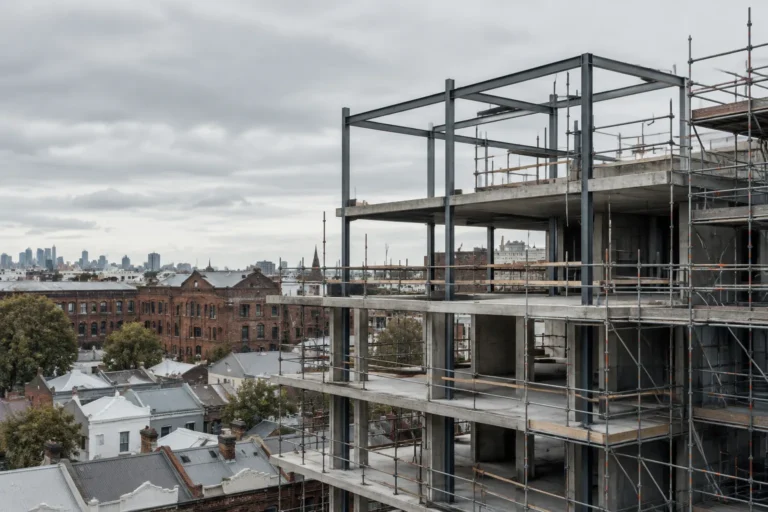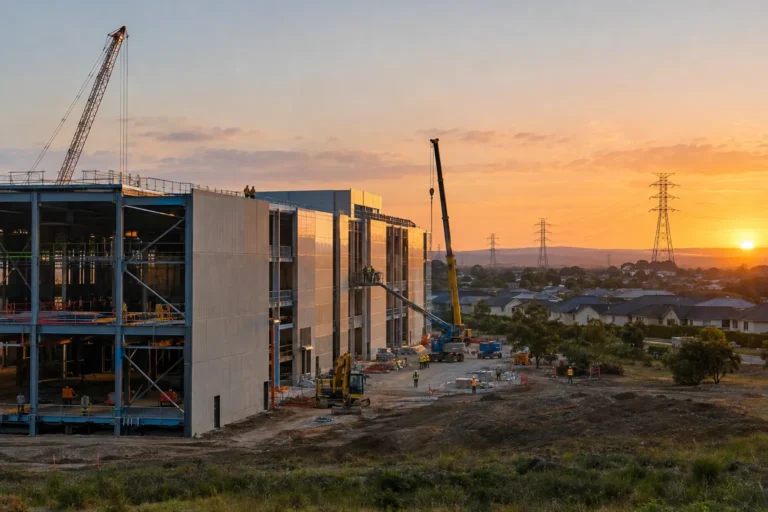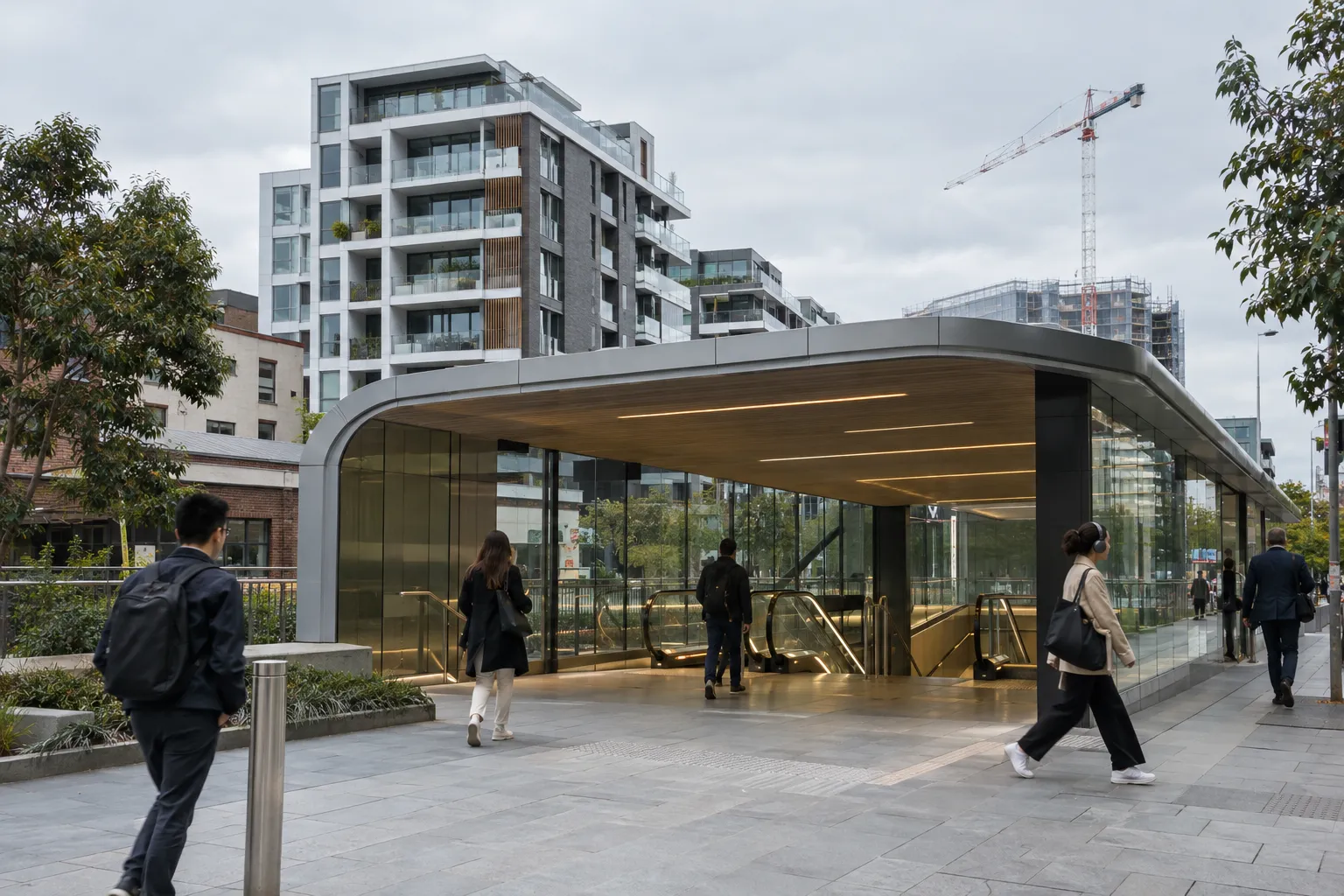
New rail stations tend to arrive with a promise attached: more homes, close to transport, in suburbs that already want them. The Sydney Metro stations housing story follows that script. Planning settings around the new stops are being used to lift allowable density. The harder question is whether that uplift turns into finished apartments, or just into better-looking zoning maps.
That gap between permission and completion is where this story will be decided.
What a station does and does not change
A Metro station improves access. It can lift land values and make higher density more acceptable to councils and residents. Those are real effects.
What it does not change is the arithmetic inside a development site. A developer still has to buy land, pay for design and approvals, fund construction, and sell or lease the result for more than all of that costs. Rezoning widens what is allowed. It does not make a project profitable.
Where apartment feasibility breaks
The pressure points are well known:
- Construction costs have stayed high after the surge of recent years, and trades and materials remain expensive.
- Interest rates raise the cost of holding land and funding the build, and rate-hike risk has not gone away. See our read on why 4.3% CPI keeps hikes alive.
- Presales are harder to secure when buyers face tighter borrowing capacity, and lenders usually want a high share of presales before releasing construction finance.
When those three line up badly, a site can carry generous density on paper and still not stack up. Developers sit on approved land and wait. That is not a failure of planning. It is a failure of feasibility.
Why uplift alone can disappoint
Higher density can also push up what landowners expect for their sites. If sellers price in the full uplift before anything is built, the developer’s margin gets squeezed from the land side as well. The planning gain ends up in the land price instead of in new dwellings.
This is a rule of thumb worth keeping: a zoning change moves value to the landowner first. It only moves homes into the market if the project still works after that.
The numbers to watch
Key numbers
- Approvals versus completions in the station catchments, tracked over several quarters
- Construction cost growth against achievable sale prices per square metre
- Share of approved apartment projects that actually reach a construction start
Where the pipeline is more likely to deliver
Projects tend to move when the numbers are tighter and risk is lower. That usually means smaller or mid-rise builds, sites already held by owners with funding in place, and projects backed by government or institutional capital rather than reliant on heavy presales.
That is also why location matters as much as headline targets. Our piece on how the 1.2 million homes target risks missing the mark on location makes the broader point: homes have to land where they are viable, not only where planners want them. For the wider picture on approvals and costs, our housing supply, approvals and building costs guide lays out the mechanics.
What would show the uplift is working
Base case: approvals rise near stations, a slice reaches construction, and completions trickle in over several years. Upside: costs ease or rates fall, feasibility improves and starts accelerate. Downside: approvals climb, starts stay flat, and land prices absorb the uplift.
None of these is certain. The signal to track is the conversion rate from approval to construction start, not the headline number of homes a rezoning could theoretically allow.
What it means for readers
If you are weighing a purchase or investment near a new station, treat the planning uplift as a possibility, not a delivery schedule. Check whether nearby approved projects have started construction, and how long they have been sitting. That tells you more about future supply and price pressure than the zoning map does.
Start here: subscribe to the newsletter for weekly analysis on supply, rates and policy.
General info, not financial advice.