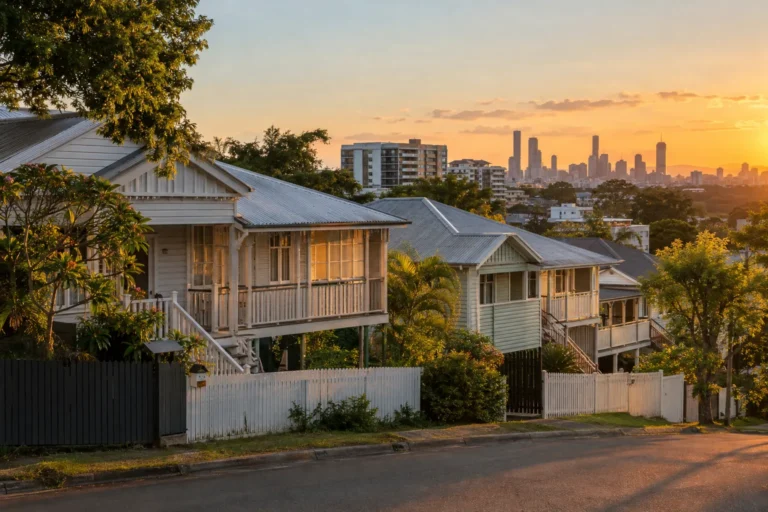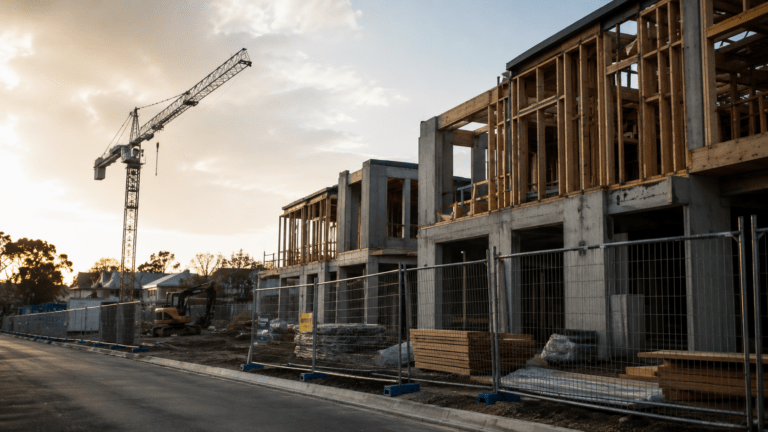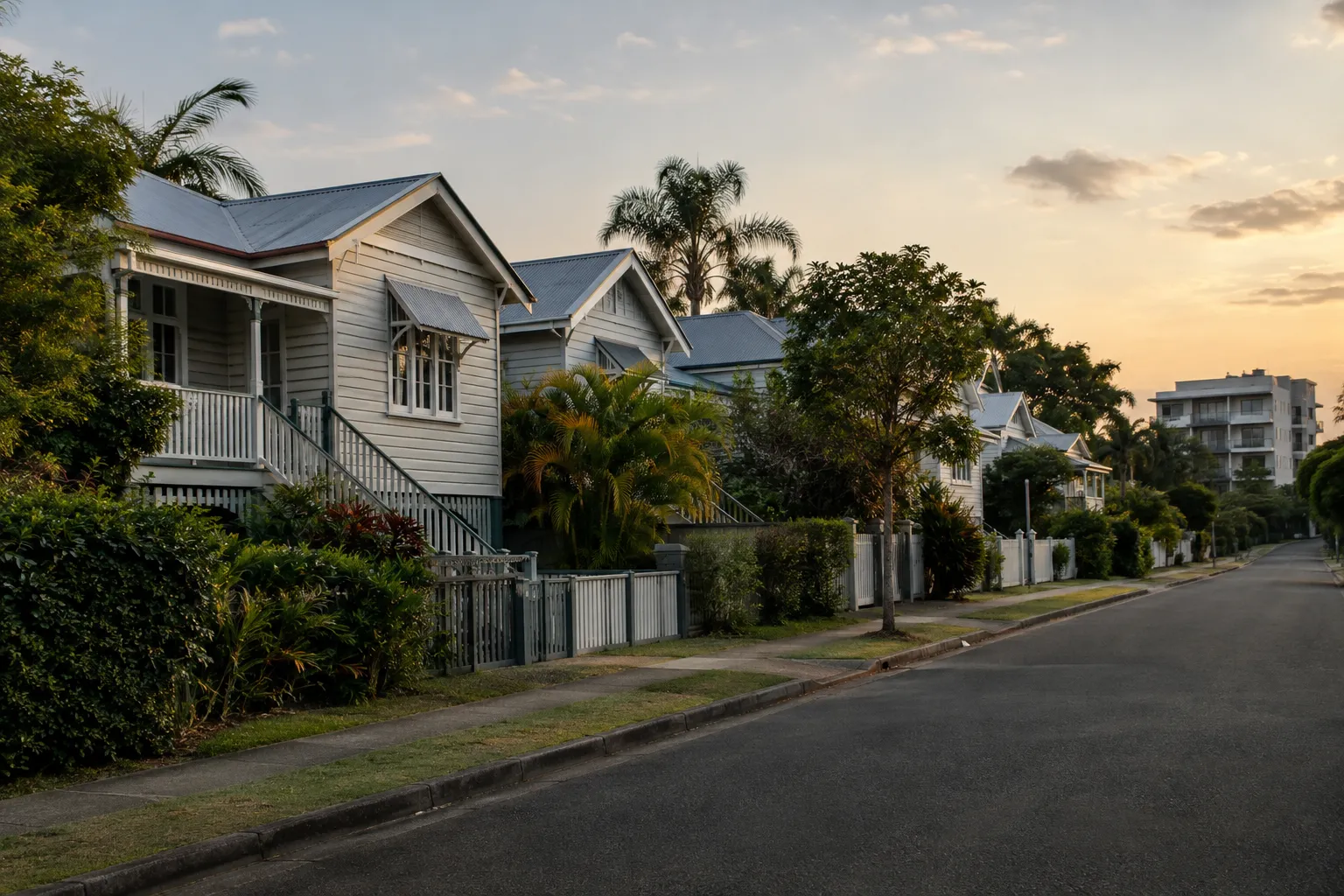
Five years ago, a median newly leased four-bedroom house in Queensland cost about $500 a week. By mid-2026, the same $500 secured a one-bedroom dwelling. That is the finding from a Queensland valuation firm’s data, presented at its 38th annual market forum to more than 600 industry figures.
Headline rent growth tends to understate what tenants are living through. When the same money buys far less space, the real increase is much bigger than any median percentage suggests. This is the story of rental affordability Queensland tenants are facing, and why it may not ease soon.
What $500 actually buys now
The comparison is blunt, which is why it lands. In December 2021, $500 a week was the median for a freshly leased four-bedroom house. By mid-2026, that budget stretched only to a one-bedroom place.
A few points worth separating out:
- Median rents are a blend of dwelling types, so mix shifts can blur the picture.
- A fixed-dollar budget, by contrast, strips out that blur. It asks one question: what does this much money get you?
- The answer has shrunk from four bedrooms to one.
For a household, that is not an abstract statistic. It is the difference between a family home and a studio-sized compromise at the same weekly cost.
Key numbers
- $500 a week: four-bedroom house (Dec 2021) versus one-bedroom dwelling (mid-2026)
- $30,400: annual holding cost on the firm’s modelled $1.35 million Brisbane home
- $45,400: the same cost for investors hit by state land tax surcharges
- 3.5 to 4 per cent: the cash rate range forecast by the keynote economist
Why landlords are weighing up an exit
The forum’s managing director argued that rising holding costs and federal negative gearing changes will push investors out. Under the changes, buyers of established homes can no longer offset rental losses against their wages.
The firm’s modelling shows why that matters. It looked at a $1.35 million mid-ring Brisbane home let at $900 a week, funded by an 80 per cent interest-only loan at 6.5 per cent. The annual holding cost came to $30,400. For investors facing state land tax surcharges, it rose to $45,400.
That is a large gap to carry out of after-tax wages. Once the tax offset is gone, a property that loses money each year becomes a much harder hold. This is a single scenario from one firm’s model, not a market-wide average, but it shows how the arithmetic can tip.
The feedback loop nobody enjoys
Here is the catch. Higher rents are usually read as good news for landlords. But if the tax and rate settings make holding costs outrun that rent, investors may sell instead.
The loop runs like this:
- Holding costs rise through interest, land tax and lost tax offsets.
- Some investors sell rather than carry the shortfall.
- Fewer rentals are available, so competition for the remainder rises.
- Rents climb further, and tenants get even less for the same money.
Each step is plausible on its own terms. Whether it plays out at scale depends on how many investors actually sell, and whether new owners (including owner-occupiers) absorb the stock without adding rentals. Sold investor homes that become owner-occupied leave the rental pool permanently. If you want the wider mechanics of how vacancy and rents interact, our rents, vacancy and tenants guide covers the basics.
Supply policy elsewhere carries the same warning. Our look at whether a three-strike landlord ban in Victoria could shrink supply raises a similar question about what happens when rules make renting out a home less attractive.
Rates and the weakest affordability on record
The keynote economist forecast cash rates settling between 3.5 and 4 per cent. That would be below the 6.5 per cent loan rate used in the firm’s modelling, so the holding cost picture could ease at the margin if borrowing costs come down. But a lower rate does little for land tax surcharges or the loss of the wage offset.
On the buyer side, Brisbane affordability sits at its weakest since at least 2000. That matters for the exit story, because investors who sell need someone to buy. If purchasers are stretched too, some listings could sit, or sell for less, which complicates the decision to leave.
For context on how shaky price floors have been, see our piece on why a floor keeps slipping away for Australian house prices.
What it means for tenants and landlords
For tenants, the practical read is that the squeeze may not be a short blip. If investor exits thin supply, expect competition to stay fierce, so budget on the basis that a given weekly rent buys less than it did.
For landlords, the point is to run your own numbers, not the headline ones. Work out your holding cost with and without the tax offset and any land tax surcharge, then test it against a few rate scenarios. Treat the firm’s $900-a-week example as one illustration, not a forecast for your property.
Next step: price your own holding cost before deciding to hold or sell, using real loan, rate and land tax figures.
If you want the weekly signal, subscribe to the free newsletter.
General info, not financial advice.